Rent concessions are one of the first tools most multifamily operators learn to use. When occupancy slows or leasing targets feel out of reach, offering free rent or discounts often feels like the fastest and safest option. For teams under pressure, concessions provide a clear and familiar response.
Over time, this pattern has made rent concessions a standard part of multifamily operations. They appear in lease-ups, during slow seasons, and in competitive markets where similar properties are fighting for the same prospects. Because they deliver quick results, they are rarely questioned at the start.
For new operators, junior asset managers, and marketing teams, concessions can seem like a normal cost of doing business. They are widely used, easy to explain, and supported by industry habits. What often gets overlooked is how quickly these offers become expected and how difficult they are to unwind once introduced.
This article explains what rent concessions are in multifamily housing, why operators rely on them, and why they tend to stick around longer than intended. The goal is to build a clear foundation before exploring smarter ways to approach incentives in later discussions.
What are rent concessions in multifamily housing?
Rent concessions in multifamily housing are offers that reduce what a resident pays during a lease term. They are tied directly to rent and affect the total revenue a unit generates. While concessions are often described as temporary promotions, they almost always impact effective rent.
At a basic level, a concession lowers the financial barrier to signing a lease. Instead of changing the advertised rent permanently, the property offers a short-term reduction that makes the deal feel more attractive. This is why concessions are commonly used when operators want fast results.
A simple definition of rent concessions
A rent concession is any incentive that reduces the amount of rent collected over the life of a lease. Even if the listed rent stays the same, the concession lowers the actual income earned from that unit.
This distinction matters. Market rent reflects what a unit is priced at. Effective rent reflects what the property truly earns after concessions are applied. Concessions directly affect that second number.
Common examples of rent concessions
The most widely used rent concessions in multifamily include:
- Free rent
A free week or month applied at move-in or spread across the lease term. - Reduced rent
A lower monthly rate offered for part or all of the lease. - Waived fees
Application fees, admin fees, or amenity fees removed to reduce upfront cost. - Move-in credits
One-time credits applied to the resident’s ledger to offset rent owed.
All of these offers share one thing in common. They change how much money the property collects, even if only for a short time.
Why concessions are viewed as incentives
Concessions are often grouped with incentives because they influence behavior. They encourage prospects to apply faster, choose one property over another, or renew instead of moving out. From a leasing perspective, they work because the value is easy to understand.
However, unlike non-rent incentives, concessions are embedded in the lease economics. Once applied, they are difficult to separate from pricing discussions. This is why understanding what qualifies as a concession is critical for operators who want more control over revenue and long-term performance.
When rent concessions typically appear
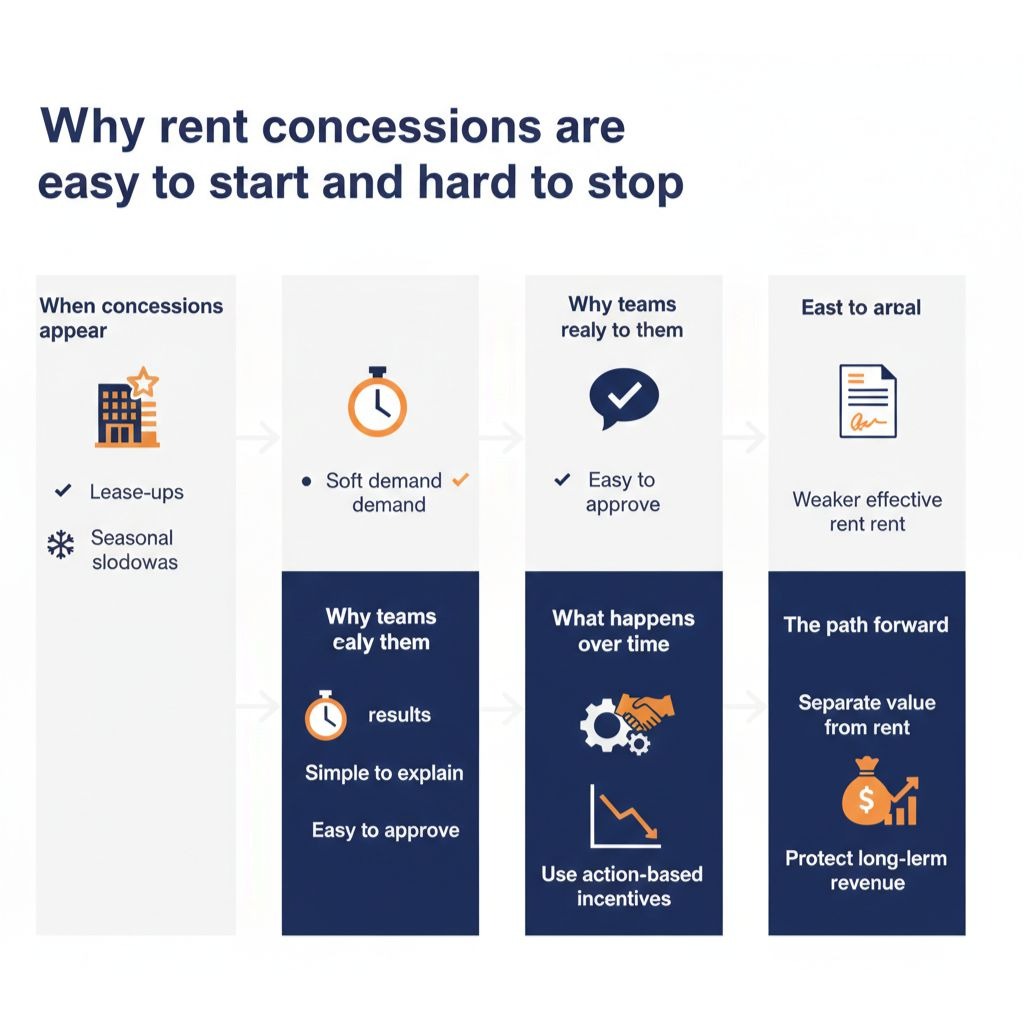
Rent concessions do not show up at random. They tend to appear in predictable situations where leasing pressure increases and teams need fast results. Understanding when concessions are most commonly used helps explain why they become so widespread and why operators rely on them so heavily.
Lease-up periods for new communities
Concessions are most common during lease-ups. New properties need to reach stabilized occupancy quickly, and early momentum is often tied to investor expectations and financing terms. Offering free rent or discounts helps reduce hesitation for early prospects and speeds up initial absorption.
During this phase, concessions feel justified. The priority is filling units, building activity, and establishing a resident base. Because lease-ups are temporary by nature, discounts are often seen as a short-term tactic rather than a long-term risk.
Soft or uncertain demand
Concessions also appear when demand slows. This can happen due to local market conditions, economic shifts, or an increase in nearby supply. When traffic drops and leads take longer to convert, concessions are often introduced to keep leasing moving.
In these moments, concessions provide a sense of control. Teams can quickly adjust offers without changing marketing strategy or pricing models. This makes them an appealing response when the market feels unpredictable.
Seasonal leasing challenges
Seasonality plays a major role in concession use. Off-peak leasing seasons, such as winter months in many markets, naturally bring lower traffic and fewer move-ins. To offset this dip, properties often introduce short-term discounts to maintain activity.
Because these patterns repeat every year, concessions can become a routine seasonal tactic. Over time, what started as a seasonal adjustment becomes a default expectation for both teams and prospects.
Competitive market pressure
Concessions also spread through competitive imitation. When nearby properties begin offering discounts, others often follow to avoid losing traffic. Even well-performing communities may feel forced to match offers simply to stay visible in listing searches.
This is how concessions move from being a targeted response to becoming a market norm. Once multiple properties rely on them, stepping away feels risky, even if the underlying demand does not fully justify the discount.
Why concessions become the default lever
Once rent concessions are introduced, they tend to become the easiest tool to reach for. Over time, many multifamily teams rely on them not because they are the best option, but because they are the most familiar and least disruptive to existing processes.
They are easy to understand and explain
Concessions require very little explanation. A free month of rent or a discounted rate is immediately clear to prospects. Leasing teams do not need to adjust their pitch or educate renters on new programs. The value is obvious, which makes conversations faster and simpler.
For new team members, concessions are also easy to learn. There is little training required, and the offer speaks for itself. This simplicity makes concessions attractive in high-turnover environments.
They are fast to approve and deploy
Another reason concessions become the default lever is speed. In many organizations, rent discounts are already built into approval workflows. Teams know who can authorize them and under what conditions.
When occupancy goals are at risk, there is rarely time to test new approaches. Concessions can be turned on immediately, adjusted weekly, and removed just as quickly. That flexibility reinforces their use, even when the long-term impact is negative.
They show immediate short-term results
Concessions often work in the short term. Traffic converts faster, leases are signed, and reports improve. These quick wins make concessions feel effective and justify their continued use.
However, the success is usually measured only by occupancy or move-ins. The cost of the discount is not always weighed against the quality of the revenue or the long-term impact on pricing.
They fit existing systems and habits
Perhaps the biggest reason concessions become the default is that they do not require change. No new tools, platforms, or processes are needed. Teams continue working the same way, just with a different number.
Over time, this creates dependence. Concessions become the go-to answer whenever performance dips, even if better options exist.
Why concessions are hard to stop once introduced
Rent concessions are often introduced with the intent to be temporary. In practice, they are one of the hardest strategies to unwind. Once discounts become part of the leasing conversation, they shape expectations internally and externally in ways that are difficult to reverse.
Prospect expectations reset quickly
When prospects see concessions advertised, they anchor their expectations around them. A discounted offer becomes the baseline, not a bonus. Even if demand improves, renters may delay decisions or negotiate harder, expecting a similar or better deal.
Over time, this trains prospects to wait. Instead of responding to the value of the community, they respond to timing and discounts. Removing concessions in this environment can feel risky, even when market conditions support higher pricing.
Renewal conversations become price-focused
Concessions do not stay limited to new leases. Once residents know discounts are part of the strategy, they often expect them during renewal. A renewal offer without a concession can feel like a loss, even if rent remains competitive.
This shifts renewal discussions away from experience, service, and community value. Price becomes the primary driver, which increases churn risk and puts additional pressure on revenue year over year.
Internal teams grow dependent on discounts
Concessions also shape internal behavior. Leasing teams learn that discounts are the fastest way to close. Marketing teams plan campaigns around them. Over time, fewer alternatives are tested because concessions feel reliable.
This dependence makes change harder. When teams are used to solving problems with rent discounts, introducing new approaches requires training, alignment, and patience. Without leadership support, concessions remain the easiest option.
Market norms reinforce the cycle
In competitive markets, concessions can spread quickly. When one property offers free rent, others often follow to avoid losing visibility. Even properties that could perform well without discounts may feel pressure to match the market.
Once concessions become common, stepping away feels like breaking an unwritten rule. This is how temporary tactics turn into long-term norms.
Why this matters for operators
The longer concessions are used, the harder they are to remove without disruption. Expectations are set, habits are formed, and pricing flexibility is reduced. Understanding this cycle is critical for operators who want more control over revenue and long-term performance.
How this topic connects to smarter incentive strategies
Understanding rent concessions is only the first step. Knowing what they are and why operators rely on them explains how they became so common, but it does not solve the underlying problem. Once concessions are embedded in leasing strategy, removing them without increasing risk becomes the real challenge.
This is where smarter incentive strategies come into play. The issue is not that incentives are bad. The issue is that rent has become the incentive. When value is delivered through discounts, it directly affects revenue, pricing expectations, and long-term asset performance.
Smarter approaches separate value from rent. Instead of lowering the price of the lease, they focus on motivating specific actions, such as applying sooner, renewing earlier, or adopting behaviors that reduce operational cost. This shift allows operators to stay competitive while protecting effective rent.
For many teams, this change feels unfamiliar at first because it requires moving away from habits that feel safe and proven. But as markets tighten and margins matter more, relying solely on concessions becomes harder to justify.
If you want to understand how multifamily operators are replacing rent discounts with targeted incentives that protect occupancy, revenue, and asset optics, this next guide walks through the strategy in detail:
How multifamily operators can reduce concessions without hurting occupancy
This progression is intentional. Before concessions can be replaced, they must be clearly understood. Once that foundation is in place, operators can evaluate better options with confidence instead of reacting under pressure.
FAQs for quick answer engines
What is a rent concession in multifamily?
A rent concession in multifamily is an offer that reduces how much rent a resident pays during the lease term. Common examples include free rent, discounted rent, or rent credits. Concessions directly affect effective rent, even if the advertised rent stays the same.
Are rent concessions the same as incentives?
No, rent concessions and incentives are not the same. Concessions reduce rent and lower revenue. Incentives add value without changing rent. This difference is why incentives are often used as an alternative when operatorsjani to avoid long-term pricing impact.
Why do operators offer free rent?
Operators offer free rent to create urgency and increase lease conversions during lease-ups, slow demand, or competitive periods. Free rent is easy to understand and deploy, which makes it a common short-term solution to occupancy pressure.
Do concessions always lower effective rent?
Yes, concessions always lower effective rent. Even when rent is advertised at full price, any free rent or rent credit reduces the total income collected over the lease term.