Key takeaways
- Protect base rent to preserve pricing power and valuation strength.
- Replace blanket discounts with targeted, behavior-based incentives.
- Structure incentives separately from base rent for cleaner reporting.
- Focus on retention and lifetime value to stabilize long-term revenue.
- Compete on value and resident experience, not price alone.
Introduction: protecting effective rent without racing to the bottom
In today’s leasing environment, competition is intense. New supply, aggressive lease-up strategies, and seasonal slowdowns often push operators toward one common solution: lowering rent.
But reducing base rent comes at a cost.
When operators discount rent to win leases, they compress effective rent, weaken renewal leverage, and impact long-term asset value. For ownership and asset management teams, this decision goes far beyond short-term occupancy.
Understanding how multifamily operators can protect effective rent in competitive markets is no longer optional. It is a strategic necessity.
The good news? Competing does not require cutting rent. It requires smarter positioning.
This guide outlines practical, proven ways property managers and ownership groups can:
- Compete without lowering base rent
- Use targeted incentives instead of blanket discounts
- Maintain premium positioning
- Improve reporting and valuation optics
- Strengthen long-term resident value
If your portfolio is facing pricing pressure, this framework will help you stay competitive while protecting revenue integrity.
What effective rent really means for ownership and asset value
Effective rent is more than a leasing metric. It directly influences asset performance, valuation, and long-term strategy.
At its core, effective rent reflects the actual income collected after concessions. When operators offer free months or reduce base rent, the difference shows up in the numbers. Over time, that difference compounds.
For ownership and asset management teams, effective rent impacts:
- Net operating income (NOI)
- Cap rate–based valuation
- Investor reporting
- Refinance positioning
- Renewal pricing power
When base rent drops, the effect is visible across the rent roll. Comparable properties react. Market perception shifts. Renewal conversations become harder.
That is why understanding how multifamily operators can protect effective rent in competitive markets is critical at the ownership level, not just at the leasing office.
The valuation ripple effect
Consider two scenarios:
Scenario A: Reduced base rent
- Base rent lowered to win leases
- Comps reflect lower pricing
- Renewal spreads compress
- Asset valuation softens
Scenario B: Protected base rent with structured incentives
- Published rent remains stable
- Concessions are tracked separately
- Renewal pricing remains anchored
- Financial reporting stays cleaner
The second approach preserves long-term asset value. It also strengthens future refinancing and disposition discussions.
For operators navigating competitive conditions across the residential real estate industry, protecting effective rent is especially important in high-supply markets where pricing signals travel quickly.
Why base rent integrity matters
Once you lower base rent publicly, raising it again becomes difficult. Prospects expect similar pricing. Residents negotiate renewals. Market perception adjusts.
Protecting effective rent means protecting pricing credibility.
This does not mean ignoring competition. It means responding strategically instead of reactively.
Why blanket rent cuts create long-term damage
When occupancy slows, lowering rent feels like the fastest solution.
It creates quick activity. It generates new tours. It fills units.
But blanket rent cuts often create long-term pressure that is harder to reverse.
Understanding how multifamily operators can protect effective rent in competitive markets starts with recognizing why broad discounts weaken both short-term performance and long-term asset value.
The problem with across-the-board discounts
Blanket rent reductions typically:
- Apply to every new lease
- Lower advertised rent publicly
- Reset market expectations
- Reduce renewal pricing flexibility
- Impact comp positioning
Once base rent drops, it becomes the new reference point.
That affects:
- Future renewals
- Neighboring properties
- Portfolio-level pricing strategy
- Investor reporting
Short-term occupancy gains often come at the expense of long-term pricing power.
Renewal pressure becomes harder
Residents who move in at discounted rates expect similar treatment at renewal.
If you try to return to market rent:
- Renewal conversion declines
- Negotiation increases
- Retention weakens
Instead of stabilizing revenue, you create future volatility.
Reporting and investor optics suffer
Ownership teams closely monitor:
- Gross potential rent
- Concessions as a percentage of revenue
- Effective rent trends
- Renewal spreads
When base rent is lowered, financial reporting becomes less favorable. Recovering prior performance levels may take multiple cycles.
By contrast, protecting base rent while using structured value strategies helps preserve cleaner performance metrics. Many operators are shifting toward resident-focused engagement models within the broader real estate industry solutions framework to maintain competitive positioning without lowering published rents.
Competitive markets do not require price wars
High-supply markets often trigger aggressive discounting.
But price wars benefit no one long-term.
The operators who win are those who:
- Maintain premium positioning
- Protect base rent integrity
- Compete on value instead of price
- Structure incentives strategically
Competing without cutting rent
Competing in a tight market does not require lowering base rent. It requires offering value in smarter ways.
When operators focus only on price, they enter a race that is difficult to win and even harder to exit. When they focus on value, they protect both effective rent and long-term asset strength.
Understanding how multifamily operators can protect effective rent in competitive markets means shifting from blanket discounts to targeted incentives.
The difference between price reduction and value addition
Lowering rent reduces revenue immediately.
Adding value increases perceived benefit without weakening pricing power.
Here is the distinction:
Price reduction
- Reduces the advertised rent
- Impacts comps
- Lowers renewal leverage
- Compresses NOI
Value addition
- Keeps base rent intact
- Enhances resident experience
- Preserves reporting optics
- Supports long-term retention
The key is structure.
Using targeted incentives instead of blanket discounts
Instead of offering two months free to everyone, consider targeted incentives tied to behavior or timing.
Examples include:
- Renewal bonuses for early commitment
- Resident referral rewards
- Move-in credits tied to lease term length
- Engagement rewards for community participation
These incentives can be delivered through structured programs like resident perks programs, which allow operators to offer meaningful value without reducing base rent.
The result?
- Base rent remains stable
- Incentives are time-bound
- Concessions are trackable
- Renewal pricing stays anchored
Maintaining premium positioning
Class A and luxury communities rely heavily on brand perception.
If you lower rent publicly:
- You signal oversupply
- You invite negotiation
- You weaken premium positioning
If you offer curated, structured value instead:
- You reinforce brand quality
- You reward commitment
- You maintain pricing confidence
This shift is central to how multifamily operators can protect effective rent in competitive markets while still driving leasing momentum.
Incentives should drive behavior, not replace price
The strongest strategies tie incentives to actions that strengthen property performance, such as:
- Long-term lease commitments
- On-time payments
- Referrals
- Renewals
When incentives are behavior-based, they support operational goals rather than erode revenue.
Structuring incentives to protect effective rent
Targeted incentives work only when they are structured correctly.
If incentives are vague or ongoing, they begin to look like discounts. But when they are intentional and time-bound, they support revenue goals while preserving base rent.
This structured approach is central to how multifamily operators can protect effective rent in competitive markets.
Step 1: Keep base rent visible and consistent
Base rent should remain:
- Publicly consistent
- Competitive with market comps
- Anchored to asset positioning
Avoid reducing the advertised rent unless absolutely necessary. Instead, separate incentives from the base rate.
This preserves pricing integrity and renewal leverage.
Step 2: Tie incentives to specific behaviors
Incentives should encourage actions that improve performance.
Examples include:
Early renewals
Reward residents who commit before lease expiration. This improves forecasting and reduces vacancy risk.
On-time payments
Encourage residents to enroll in recurring payments through programs tied to automatic payment solutions. This strengthens cash flow reliability.
Digital engagement
Offer value for residents who adopt paperless billing or digital communication through switch to paperless programs.
Longer lease terms
Provide incentives for 15- or 18-month leases rather than default 12-month terms.
Each reward supports operational stability while protecting effective rent.
Step 3: Make incentives time-bound and measurable
Every incentive should:
- Have a clear start and end date
- Be documented separately from base rent
- Be measurable in terms of ROI
- Align with a specific operational goal
Avoid ongoing concessions with no defined timeline. That weakens pricing power and makes future increases difficult.
Step 4: Track incentives separately from rent
One of the biggest mistakes operators make is blending concessions into rent reporting.
Instead:
- Track incentive spend separately
- Monitor cost per lease
- Evaluate renewal impact
- Compare against marketing spend
This keeps reporting clean and supports stronger investor communication.
Step 5: Focus on long-term resident value
Protecting effective rent is not only about new leases. It is about resident lifetime value.
When residents feel rewarded and engaged, retention improves. Higher retention reduces turnover costs and vacancy exposure.
Operators looking to strengthen portfolio performance often focus on strategies that increase resident retention while preserving pricing integrity.
Retention is one of the strongest levers in protecting effective rent over time.
Maintaining premium positioning in competitive markets
In competitive markets, perception drives pricing power.
When a community appears stable, well-positioned, and confident in its value, prospects are less likely to negotiate aggressively. When a property publicly reduces rent, that confidence weakens.
Protecting brand perception is a core part of how multifamily operators can protect effective rent in competitive markets.
Why premium positioning matters
Premium positioning influences:
- Tour-to-lease conversion
- Renewal willingness
- Online reputation
- Referral activity
- Investor perception
If pricing signals distress, prospects respond cautiously. They wait for deeper discounts. They compare aggressively.
But when pricing remains steady and value is added through structured programs, residents perceive strength rather than oversupply.
Competing on experience instead of price
Residents do not choose a home based on rent alone.
They consider:
- Community quality
- Convenience
- Digital experience
- Added lifestyle value
- Ease of payments
- Resident benefits
Offering curated value through structured engagement programs strengthens perceived experience without reducing base rent.
For example, operators can deploy centralized benefit hubs such as perk centers for residents that provide everyday savings and exclusive offers. These programs enhance perceived value while keeping rent intact.
The resident experiences more benefits. The rent roll remains protected.
The psychology of pricing stability
Consistent pricing sends a signal:
- This property is confident in its value.
- This community does not need to discount heavily.
- This asset is stable and well-managed.
Frequent rent cuts send the opposite message.
Premium positioning does not mean ignoring competition. It means competing strategically while maintaining base rent integrity.
Supporting ownership and asset management goals
Ownership teams prioritize:
- Clean financial reporting
- Stable rent growth
- Controlled concession levels
- Strong renewal spreads
When incentives are structured, and base rent remains intact, reporting stays cleaner and valuation conversations become easier.
Operators who protect effective rent through structured value strategies are better positioned during refinancing, recapitalization, or sale discussions.
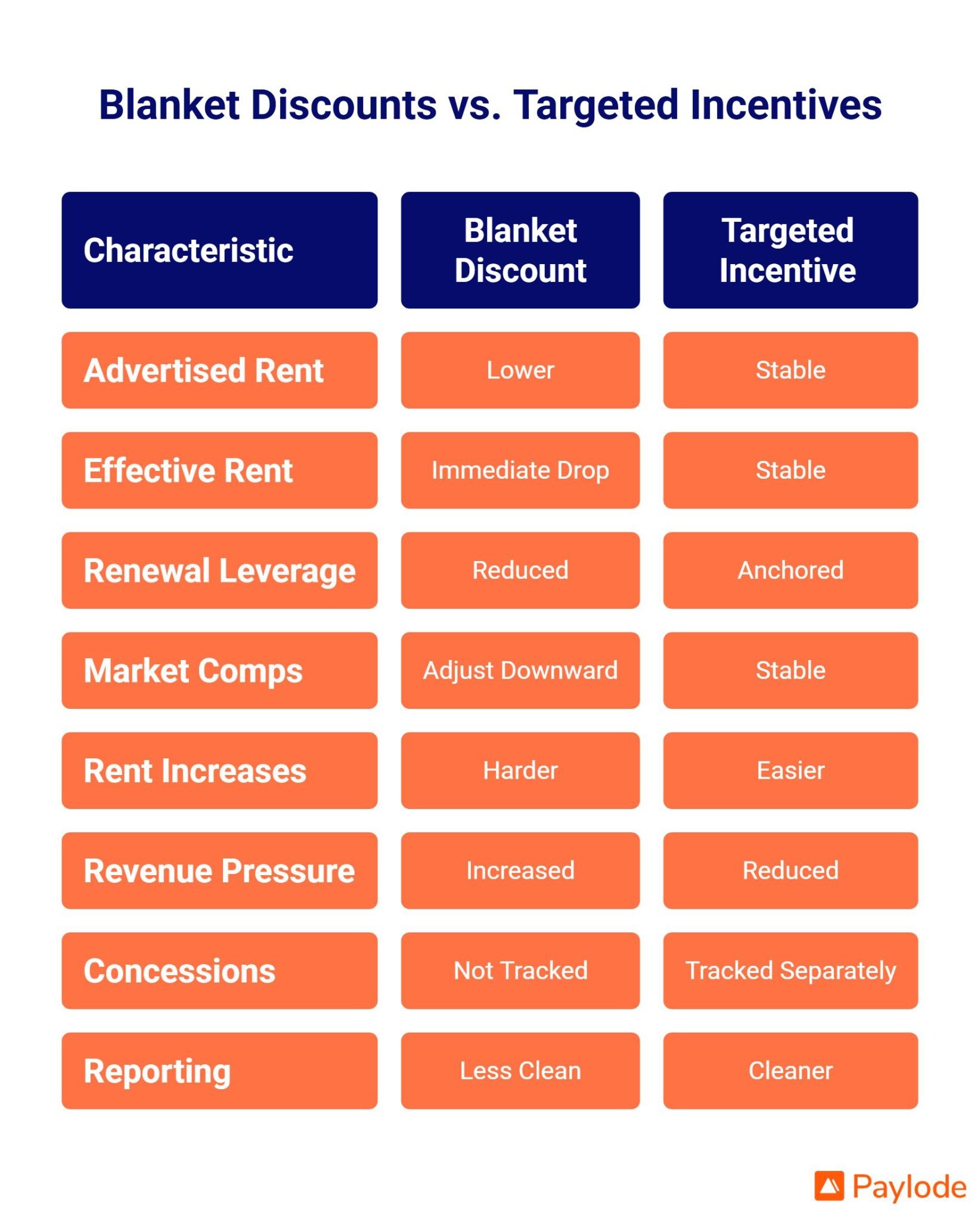
Why this comparison matters
When operators lower base rent, they reduce pricing benchmarks across the market. Recovery takes time, and renewal conversations become more difficult.
When operators maintain base rent and deploy structured incentives instead, they:
- Preserve comp integrity
- Maintain reporting clarity
- Improve retention stability
- Support long-term valuation
This is not about avoiding incentives. It is about structuring them correctly.
In the next section, we will outline a practical framework that property managers can use to implement an effective rent protection strategy across their portfolio.
A practical framework to protect effective rent across your portfolio
Protecting pricing integrity requires a structured plan. It cannot be reactive or property-specific only. Ownership and asset management teams need a repeatable approach across the portfolio.
This framework outlines how multifamily operators can protect effective rent in competitive markets while staying competitive and maintaining occupancy.
1. Audit your current concession strategy
Start with clarity.
Review:
- Total concessions as a percentage of gross potential rent
- Number of leases with base rent reductions
- Renewal spreads over the past 12 months
- Incentive cost per signed lease
- Retention rate by property
Ask direct questions:
- Are we discounting across the board?
- Are incentives tied to specific behaviors?
- Are concessions helping long-term retention or only short-term move-ins?
This baseline assessment reveals where effective rent may be eroding.
2. Replace blanket discounts with structured resident value
If concessions are being applied broadly, shift toward structured resident value programs.
Instead of lowering rent, introduce organized benefit strategies through a centralized engagement system like the Paylode platform.
A structured platform allows you to:
- Deliver incentives without altering base rent
- Track engagement separately
- Maintain reporting transparency
- Standardize programs across properties
This protects pricing integrity while improving resident experience.
3. Align incentives with operational goals
Every incentive should serve a purpose.
Examples:
- Early renewal bonuses → Improve forecasting
- Referral rewards → Lower acquisition cost
- Payment-based rewards → Improve cash flow consistency
- Long-term lease incentives → Reduce turnover
When incentives are aligned with operational goals, they drive measurable results rather than erode revenue.
4. Measure cost per lease vs. lifetime value
Effective rent protection requires understanding the total impact.
Compare:
- Cost of incentive per lease
- Marketing cost per lease
- Renewal rate improvements
- Reduction in turnover expense
If incentives increase retention and reduce vacancy days, the long-term financial benefit often outweighs short-term concession pressure.
This is especially important when evaluating strategies to raise customer lifetime value in multifamily portfolios through structured engagement programs like raise customer LTV initiatives.
Retention is revenue protection.
5. Standardize reporting for ownership
Ownership and asset managers need clear visibility.
Create standardized reporting that separates:
- Base rent
- Incentive cost
- Concession percentage
- Renewal spread
- Retention rate
Clean reporting strengthens valuation conversations and builds investor confidence.
Protecting effective rent is not just about pricing strategy. It is about financial clarity.
6. Shift the narrative from discounts to value
Leasing teams should position incentives as value enhancements, not price reductions.
Messaging should focus on:
- Exclusive resident benefits
- Community engagement
- Convenience
- Digital ease
- Long-term value
When teams communicate value confidently, prospects are less likely to focus solely on price.
Bringing it all together
The most resilient operators in competitive markets are not those who discount aggressively.
They are those who:
- Maintain base rent discipline
- Deploy targeted incentives
- Protect premium positioning
- Strengthen retention
- Track performance clearly
This is the strategic foundation of how multifamily operators can protect effective rent in competitive markets while remaining competitive and growth-focused.
Frequently asked questions
Below are direct, clear answers designed to support search visibility and help ownership and property management teams make informed decisions.
How can multifamily operators protect effective rent in competitive markets without lowering occupancy?
Multifamily operators can protect effective rent by keeping base rent consistent and replacing blanket discounts with targeted incentives. Instead of reducing advertised rent, operators can offer structured rewards tied to renewals, referrals, long-term leases, or on-time payments. This approach preserves pricing integrity while still encouraging leasing activity.
Are concessions always harmful to asset value?
Not necessarily. The issue is how they are structured.
Blanket rent reductions impact comps and renewal pricing. Structured, time-bound incentives that are tracked separately from base rent are less likely to harm valuation optics. When properly reported, these incentives preserve pricing benchmarks while supporting occupancy goals.
Why is protecting base rent important for renewals?
Renewals are anchored to the original lease rate. If residents move in at heavily discounted rates, renewal increases become harder to justify. Maintaining base rent allows operators to preserve pricing confidence and sustain healthy renewal spreads over time.
What types of incentives are most effective?
Incentives tied to specific behaviors tend to perform best. Examples include:
- Early renewal rewards
- Referral bonuses
- Long-term lease incentives
- Digital engagement rewards
- Payment consistency incentives
These programs strengthen operational performance without weakening effective rent.
How does resident engagement impact effective rent?
Higher engagement often leads to stronger retention. When residents feel valued, they are more likely to renew. Higher retention reduces vacancy days and turnover costs, which supports overall revenue stability.
Structured engagement programs such as resident value programs through Paylode Perks help operators deliver everyday benefits while protecting rent integrity.
Is protecting effective rent only relevant in high-supply markets?
No. While competitive markets increase pressure, pricing discipline matters in all cycles.
Operators who build value-based strategies during stable periods are better prepared during slowdowns. Protecting effective rent should be a consistent portfolio strategy, not a reactive measure.
Conclusion: protect rent, preserve value, compete strategically
In competitive environments, it is tempting to lower rent to win leases.
But long-term success requires discipline.
Multifamily operators who understand how to protect effective rent in competitive markets focus on:
- Maintaining base rent integrity
- Replacing blanket discounts with targeted incentives
- Supporting renewals through engagement
- Protecting valuation optics
- Aligning incentives with measurable goals
Competing without cutting rent is possible. It simply requires structure, consistency, and clear reporting.
If your portfolio is feeling pricing pressure, the solution is not deeper discounts. It is a smarter positioning.