A tenant estoppel certificate is a signed statement in which a resident confirms the key terms of their lease for a third party, such as a buyer or a lender. It covers rent, lease dates, the security deposit, concessions, side agreements and any default. Once signed, the resident can be held to what it says.
The name comes from the legal idea of estoppel: a person who certifies a set of facts can be stopped from contradicting them later. A California Lawyers Association article on tenant estoppel certificates notes that lenders and buyers rely on the certificates in finalizing loans and purchases. For an operator selling or refinancing an apartment community, accurate estoppels confirm that the leases match what the seller has represented.
When Do Landlords Ask For A Tenant Estoppel Certificate?
Landlords request estoppel certificates when selling a property or refinancing a building, according to the San Francisco tenant law firm Tobener Ravenscroft. The two main triggers are:
- A sale: the buyer wants confirmation that the rent, deposits and lease terms match the seller's rent roll.
- A new loan or refinance: the lender wants confirmation that the leases producing the property's income are in force and that no resident claims a default.
The request comes from the current landlord, and the signed certificates go to the buyer or lender, so the resident confirms the facts to someone who was never part of the lease.
What Does A Tenant Estoppel Certificate Confirm?
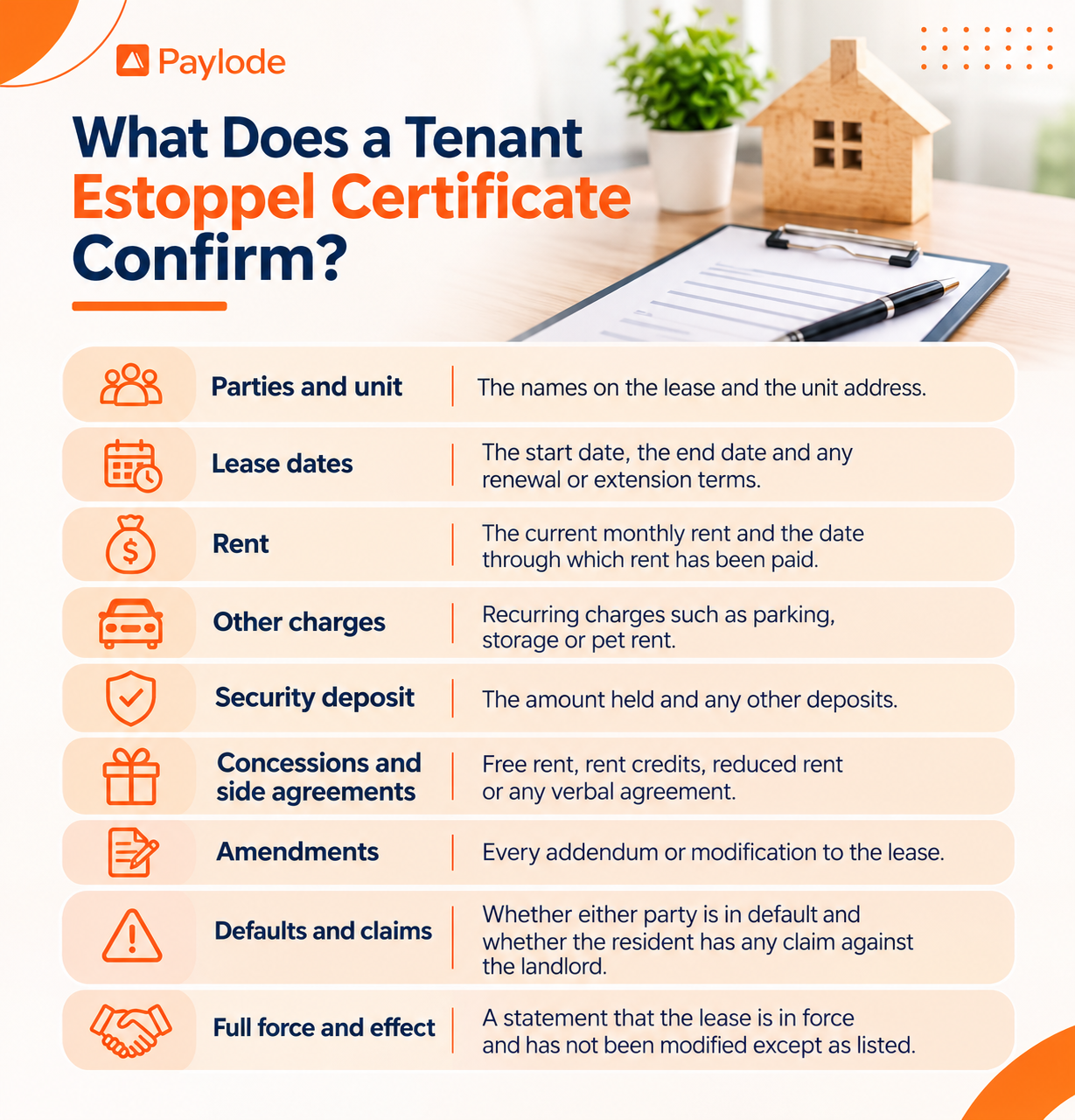
A commercial leasing alert from Holland & Knight lists the security deposit, the current rental rate and the time left on the lease, including any extension options, among the items landlords should seek. It also warns that broad statements are simple to state but hard to check, so specific questions produce more useful certificates.
Estoppel Certificate, Rent Roll Or Lease Audit?
Buyers and lenders check leases in three ways, and each one covers a different gap.
Fannie Mae's Multifamily Selling and Servicing Guide includes a lease audit section that tells lenders to include new and recently renewed leases to verify rent trends. An estoppel adds the one thing an audit cannot: the resident's own confirmation.
Does A Residential Tenant Have To Sign An Estoppel Certificate?
It depends on the lease. According to Tobener Ravenscroft, a tenant must sign an estoppel certificate when the written lease contains a provision requiring it, and ignoring a request the lease requires can be treated as a breach. Without such a clause, the resident can decline.
The deadline also comes from the lease. A sample lease clause in the California Lawyers Association article gives the tenant 10 days after the landlord's request to sign. Holland & Knight notes that two weeks may feel long to a landlord, while a short window is harder for tenants to meet during vacations or holidays, so allow time for follow-up.
Accuracy matters on both sides. In a commercial lease case the California Lawyers Association article discusses, an appellate court found the tenant was estopped from contradicting the termination date it had represented in its estoppel certificate. Tobener Ravenscroft warns residents that the contents can be treated as conclusive even when they are wrong. A resident who signs a certificate that leaves out a rent reduction or a parking agreement may lose the ability to claim it from the new owner, so residents should check the form closely and dispute anything that does not match their records.
Sample Residential Tenant Estoppel Certificate
Adapt the sample below and have your legal team approve it for each state.
Tenant Estoppel Certificate. To: [Buyer or Lender name] and its successors and assigns. Re: Lease dated [Date] between [Landlord] and [Resident names] for [Unit address].
The undersigned Resident certifies the following as of [Date]:
- The Lease is in full force and effect and has not been modified except by the following addenda: [List addenda, including pet, parking and renewal addenda].
- The Lease began on [Start date] and ends on [End date]. Renewal or extension terms: [None or describe].
- Current monthly rent is $[Amount]. Other recurring charges: [Parking $__, Storage $__, Pet rent $__]. Rent has been paid through [Date].
- The Landlord holds a security deposit of $[Amount] and the following other deposits: [None or describe].
- Rent concessions, credits or reduced rent in effect or promised: [None or describe, with amounts and dates].
- To the Resident's knowledge, neither the Landlord nor the Resident is in default under the Lease, except: [None or describe].
- The Resident has no claims, offsets or defenses against the Landlord, except: [None or describe].
- There are no other agreements, written or verbal, between the Landlord and the Resident about the unit, except: [None or describe].
Resident signatures and dates: ______. Please return by [Date] to [Contact name, email and phone].
Why Do Rent Concessions Cause Estoppel Problems?
Zillow reported that 39.7% of rental listings on its site offered a concession in June 2026, up from 35.2% a year earlier. Every free month, rent credit or reduced rent promised at signing or renewal is a term the estoppel must capture.
Problems start when a concession lives outside the lease. A leasing agent promises a renewal credit by email, the credit never reaches the rent ledger and the resident lists it on the estoppel. The buyer now sees a rent that does not match the rent roll. Concessions also lower the rent a resident really pays, which Paylode's guide to net effective rent explains.
Two habits keep concessions clean. Write every concession into a signed addendum and post it to the ledger the day it is approved. Where the goal is to reward a behavior, such as enrolling in auto-pay or renewing early, a reward paid outside the lease can leave the lease rent unchanged. Paylode's comparison of concessions and marketing rewards covers the difference.
How Do Large Operators Collect Estoppels Across A Portfolio?
- Agree on scope early. Confirm with the buyer or lender which units need estoppels and which form they require. Holland & Knight notes that knowing a lender's preferred form is helpful.
- Reconcile before you send. Match the rent roll, the signed leases and the resident ledgers first, so each prefilled form shows the same numbers the resident sees in the portal.
- Prefill every form. Fill in rent, lease dates, deposits, charges and concessions from records, so the resident confirms facts and only writes in exceptions.
- Send with a clear deadline. Use the deadline in the lease and explain in plain language why the form matters to the resident.
- Track responses by unit. Keep a live list of sent, returned, disputed and missing certificates for every community.
- Resolve disputes fast. When a resident disagrees, check the lease file and the ledger, correct the record if the resident is right and send a revised form.
- Report the results. Give the buyer or lender a summary of returned certificates and every exception.
Math for a 10,000-unit portfolio (illustrative only): if the operator refinances eight communities with 300 units each and the lender asks for estoppels from every occupied unit, that is up to 2,400 certificates to prepare, send and track. At that volume, a single mismatch between the ledger and the lease can turn into hundreds of disputed forms.
What Tenant Estoppel Mistakes Should You Avoid?
- Sending blank forms. A blank form invites guesses. A prefilled form shows the resident exactly what to confirm.
- Leaving out addenda. Pet, parking, storage and renewal addenda change the lease and belong on the certificate.
- Ignoring verbal promises. A side deal a resident remembers and the file does not show can surface on the estoppel.
- Using stale numbers. Rent and balances change monthly, so prefill from records pulled close to the send date.
- Treating a dispute as a delay. A disputed certificate is information the buyer or lender will want before closing.
Where Do Resident Relationships Fit In?
An estoppel request asks residents to do paperwork for a deal they are not part of. Residents who already trust their operator can be easier to reach and quicker to respond. Clear communication at renewal, covered in Paylode's lease renewal letter guide, keeps terms documented before anyone asks for an estoppel.
Rewards can also keep residents engaged. When FirstKey Homes used Paylode to reward residents for enrolling in auto-pay, it saw a 25% increase in auto-pay enrollments in the first campaign period, with perks delivered only after enrollment. On-time payments also keep the "rent paid through" line on every estoppel simple to confirm.
Paylode is now part of Moved. When the acquisition was announced, the companies said they will support over 1.2 million residential units together.
Frequently Asked Questions
What is a tenant estoppel certificate?
A signed statement in which a resident confirms the key terms of their lease, such as rent, lease dates, deposits, concessions and defaults, for a buyer or lender.
What is the purpose of a tenant estoppel certificate?
It gives a buyer or lender the resident's own confirmation of the lease terms, and the resident may be barred from contradicting those facts later.
Does a tenant have to sign an estoppel certificate?
According to Tobener Ravenscroft, a tenant must sign when the written lease requires it, and refusing can be a breach of the lease. Check the lease and state law with counsel.
What happens if a tenant estoppel certificate is wrong?
The resident may be held to what they signed. A California court held a tenant to the termination date it certified, so both sides should check the form against the lease and the ledger.
How long does a tenant have to return an estoppel certificate?
The lease sets the deadline. A sample clause discussed by the California Lawyers Association gives the tenant 10 days after the landlord's request.
Is an estoppel certificate the same as a rent roll?
No. A rent roll is the owner's list of units, rents and lease dates. An estoppel certificate is the resident's signed confirmation of their own lease.
Keep Lease Terms Clean Before Anyone Asks
With Paylode, property managers can reward residents for actions such as enrolling in auto-pay and deliver rewards only after residents take the action. See how it works for residential real estate or book a demo.