Property operators increasingly recognize the value of rewarding positive resident behavior. Actions like on-time payments, digital engagement, and renewals directly support retention, cash flow, and overall portfolio performance. The challenge is that many reward programs introduce new layers of work, creating more overhead instead of operational efficiency.
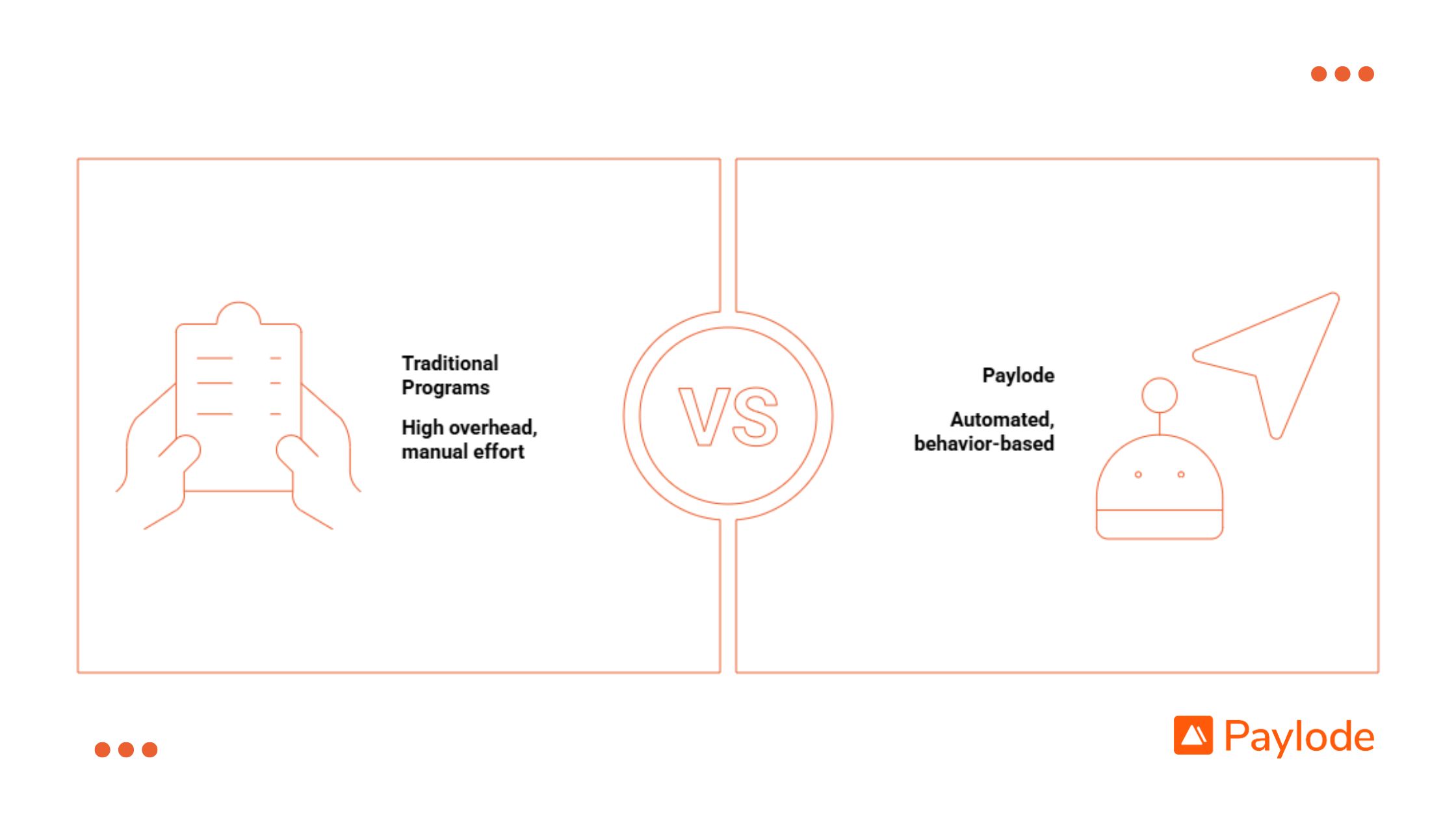
Traditional rewards often require manual tracking, added staff involvement, and ongoing coordination across systems and vendors. What starts as a well-intentioned engagement initiative can quickly become another operational responsibility that strains onsite teams and increases costs.
This is where Paylode changes the approach. By focusing on behavior-based rewards that are automated and embedded into existing workflows, Paylode helps operators recognize the actions that matter most without increasing administrative workload or operational complexity.
Why traditional reward programs often increase overhead for operators
Many reward programs are introduced with the goal of improving engagement, but their structure often creates more work for operators instead of reducing it. The added overhead usually comes from manual processes and fragmented technology that do not align with how property teams already operate.
Manual processes that strain onsite teams
- Tracking eligibility manually
Traditional programs often require staff to monitor which residents qualify for rewards. This manual tracking takes time and increases the risk of errors, especially across larger communities. - Handling reward fulfillment and exceptions
When rewards are delayed, disputed, or incorrectly issued, onsite teams must step in to investigate and resolve issues. These exceptions quickly add to the daily workload. - Managing resident questions and disputes
Residents frequently need clarification on how rewards work or why they did not receive one. Each inquiry pulls staff away from leasing and service responsibilities.
Technology and vendor complexity
- Multiple tools for payments, rewards, and reporting
Many programs rely on separate systems that do not communicate well with each other. Managing multiple platforms increases training needs and operational friction. - Vendor coordination and support overhead
Working with several vendors for rewards, fulfillment, and reporting requires ongoing coordination and follow-ups. This complexity grows across a multifamily real estate portfolio, making consistency difficult to maintain. - Ongoing maintenance and configuration effort
System updates, rule changes, and reporting adjustments require continuous attention, adding hidden costs that scale over time.
These challenges explain why many traditional reward programs unintentionally increase overhead. Without automation and workflow alignment, the operational burden often outweighs the engagement benefits operators hope to achieve.
What “rewarding behavior” means in a modern property operation
Rewarding behavior today is less about promotions and more about reinforcing actions that already support efficient operations. For operators, this means encouraging the right behaviors without adding steps, tools, or workload for teams or residents.
Moving beyond points and promotions
- Why points-based systems add friction
Points programs require residents to track balances and rules, and staff to manage exceptions. This added complexity increases confusion and support requests. - How behavior-based rewards simplify participation
Modern rewards recognize actions automatically, without requiring residents to learn new systems. Programs designed around built-in resident perks make participation intuitive and reduce administrative effort.
Identifying behaviors that matter most to operators
- On-time rent payments
Encouraging timely payments improves cash flow and reduces follow-ups for onsite teams. - Digital engagement and paperless actions
Rewards tied to digital behaviors streamline communication and lower operational friction. - Lease renewals and long-term residency
Recognizing consistency and longevity supports retention without relying on last-minute concessions.
By focusing on behaviors that already align with operational goals, operators can reward residents in ways that feel natural, efficient, and scalable—without introducing new overhead.
How Paylode rewards behavior without increasing overhead
Paylode is designed to reward the behaviors operators care about most without adding operational complexity. Instead of layering new processes onto existing workflows, Paylode integrates rewards directly into how properties already operate.
Automation at the core of reward delivery
- Rewards triggered automatically by resident actions
Paylode links rewards directly to resident behaviors such as payments or digital engagement. When an action is completed, the reward is triggered automatically without staff involvement. - No manual tracking or approvals required
Because rewards are action-based and automated, onsite teams do not need to monitor eligibility, approve redemptions, or resolve routine exceptions. This removes one of the largest sources of administrative overhead.
Automation built into the Paylode rewards platform ensures consistency while freeing staff to focus on leasing, service, and resident relationships.
Embedded rewards within existing workflows
- Rewards aligned with payment and communication behaviors
Paylode rewards actions residents already take as part of their normal interactions with the property, reducing confusion and support requests. - No new systems for residents or staff to learn
Because rewards are embedded into familiar workflows, residents do not need separate logins or dashboards, and staff do not need additional training.
By automating reward delivery and embedding it into existing operations, Paylode helps operators encourage the right behaviors while keeping overhead flat—even as portfolios grow.
Reducing staff workload while improving resident engagement
One of the biggest advantages of Paylode is its ability to improve resident engagement without increasing demands on onsite teams. By removing manual work and standardizing execution, operators can scale rewards while keeping staff workload under control.
Eliminating repetitive administrative tasks
- Fewer support tickets and follow-ups
When rewards are automated and clearly tied to resident actions, confusion is reduced. Residents understand why they earned a reward, which lowers inbound questions and follow-ups. - Reduced need for manual reporting
Automated tracking removes the need for spreadsheets or manual updates. Operators can monitor engagement without pulling staff away from daily responsibilities.
Consistent execution across properties
- Standardized reward logic across portfolios
Paylode applies the same reward rules across communities, ensuring fairness and consistency regardless of property size or location. - Centralized visibility for operators
With behavior-based automation managed through portfolio-level reward automation, operators gain a single view into engagement trends without relying on property-by-property reporting.
By eliminating repetitive tasks and ensuring consistent execution, Paylode allows operators to reward residents effectively while protecting staff time and operational focus.
Controlling costs while scaling rewards across portfolios
Scaling rewards should not mean scaling overhead. For operators managing multiple properties, cost control depends on whether reward programs can grow without adding staff, vendors, or complexity.
Predictable operational effort as portfolios grow
- No proportional increase in staff workload
As portfolios expand, Paylode maintains the same level of automation and control. Rewards continue to trigger based on resident actions without requiring additional oversight from onsite or corporate teams. - Consistent experience across communities
Residents receive the same reward experience regardless of location, reducing confusion and ensuring fairness across the portfolio. This consistency helps operators scale engagement without operational variability.
Lower total cost compared to manual reward programs
- Reduced labor dependency
Automation minimizes reliance on staff for tracking, approvals, and reporting, keeping labor costs stable even as participation grows. - Fewer vendors and integrations
By consolidating rewards into a single system, operators avoid the added cost and coordination required when working with multiple vendors.
This approach is supported by a predictable pricing structure designed for portfolio growth, allowing operators to scale rewards without unexpected cost increases.
By keeping operational effort and costs predictable, Paylode enables operators to expand rewards programs confidently while maintaining financial discipline across their portfolios.
How Paylode supports measurable outcomes for operators
Rewarding behavior is only valuable if it drives clear business outcomes. Paylode is designed to connect resident actions directly to metrics operators care about, making the impact of rewards visible and measurable.
Linking rewarded behaviors to retention and NOI
- Encouraging actions that reduce churn
By rewarding behaviors that support stability—such as timely payments and digital engagement—operators influence habits that lower churn risk over time. - Supporting long-term resident value
Consistent recognition strengthens resident relationships and contributes to improving resident retention across multifamily portfolios, helping protect NOI without increasing operational effort.
Visibility into participation and impact
- Clear reporting on engagement trends
Operators gain insight into which behaviors are being rewarded and how residents are engaging, without relying on manual reports from onsite teams. - Data to refine reward strategies
With visibility into participation patterns, operators can adjust incentives to focus on the behaviors that deliver the strongest retention and financial outcomes.
By tying rewards directly to measurable actions and outcomes, Paylode helps operators move beyond engagement for engagement’s sake and use rewards as a practical lever for performance improvement.
Common misconceptions about rewards and operational complexity
Many operators hesitate to introduce rewards because of assumptions about cost and workload. In practice, these misconceptions often come from experiences with outdated or manual programs rather than modern, behavior-based approaches.
Rewards always require more staff time
- The misconception
Rewards are often viewed as another task for onsite teams to manage, track, and explain. - The reality
When rewards are automated and tied to resident actions, staff involvement is minimal. Programs built around resident perks that trigger automatically reduce questions, follow-ups, and manual work instead of adding to it.
Incentives must be costly to be effective
- The misconception
Operators often assume rewards need to be large or expensive to influence behavior. - The reality
Small, consistent incentives tied to everyday actions are often more effective than one-time, high-cost offers. Consistency matters more than size.
Scaling rewards means scaling overhead
- The misconception
Expanding rewards across more properties will automatically increase workload and cost. - The reality
With automation and standardized logic, rewards can scale across portfolios without increasing staff workload or operational complexity.
Addressing these misconceptions helps operators evaluate rewards based on how they actually work today, rather than outdated assumptions that no longer apply.
Best practices for implementing low-overhead reward strategies
Operators can maximize the impact of resident rewards by focusing on simplicity, automation, and alignment with existing behaviors. These best practices help ensure rewards drive results without adding operational strain.
Start with behaviors already happening
- Keep participation effortless for residents
Rewards are most effective when they recognize actions residents already take, such as paying rent or engaging digitally. This reduces confusion and avoids the need for education or behavior change. - Minimize staff involvement
When rewards are tied to existing behaviors, there is less need for explanation, tracking, or follow-up from onsite teams.
Prioritize automation over customization
- Focus on consistency and scalability
Highly customized programs often increase complexity. Standardized, automated rewards are easier to manage and scale across portfolios. - Evaluate platforms based on operational impact
Operators should assess reward solutions based on how easily they can be implemented and managed, including the ability to get started with automated rewards quickly without disrupting current workflows.
By starting with existing behaviors and prioritizing automation, operators can implement reward strategies that improve engagement while keeping overhead predictable and low.
Conclusion: Rewarding the right behaviors without operational trade-offs
Operators no longer need to choose between resident engagement and operational efficiency. By focusing on behavior-based rewards that are automated and embedded into existing workflows, it is possible to encourage the actions that matter most without increasing staff workload or costs.
Paylode demonstrates that rewarding behavior does not have to mean added complexity. Automation removes manual tracking, standardized logic ensures consistency across portfolios, and embedded rewards align naturally with how residents already interact with their property.
For operators evaluating rewards programs, the key is to look beyond engagement metrics alone and assess total operational impact. Solutions that prioritize simplicity, automation, and scalability are better positioned to drive retention, protect NOI, and support long-term portfolio growth without operational trade-offs.
FAQs
How does Paylode help operators reward behavior without increasing overhead?
Paylode automates reward delivery based on resident actions, eliminating manual tracking, approvals, and follow-ups. Because rewards are embedded into existing workflows, operators can encourage positive behavior without adding staff workload or operational complexity.
What types of resident behaviors can operators reward using Paylode?
Operators can reward behaviors that already support efficient operations, such as on-time rent payments, digital engagement, paperless communication, and lease renewals. These actions align naturally with retention and cash flow goals.
Does Paylode require changes to existing property workflows?
No. Paylode is designed to work within current payment and communication workflows. Residents and staff do not need to learn new systems, which helps keep adoption simple and overhead low.
How does Paylode help control operational costs?
By reducing labor dependency, limiting vendor complexity, and automating reporting, Paylode keeps operational effort predictable. This allows operators to scale rewards across portfolios without proportional increases in cost.
Can Paylode scale across large multifamily portfolios?
Yes. Paylode uses standardized, automated reward logic that works consistently across properties. This makes it suitable for portfolios of any size while maintaining a consistent resident experience and centralized operator visibility.