Rent referral reward programs are becoming a highly effective way for property operators to reduce acquisition costs, attract qualified renters, and strengthen community engagement. These programs allow existing residents to refer friends, family members, and colleagues in exchange for rewards—creating a win-win scenario where operators gain new residents and renters receive meaningful, instant-value incentives.
Modern programs go far beyond traditional gift-card-based referrals. Today’s residents want rewards that are simple, immediate, and valuable. This is why many operators are embracing merchant-funded, automated referral systems that eliminate operational costs and streamline reward delivery. These systems align with the expectations of renters while improving satisfaction and loyalty.
Referral programs are especially impactful in the residential real estate industry, where word-of-mouth is one of the most trusted and effective acquisition channels. Communities that implement strong rent referrals for rewards programs see higher-quality leads, faster conversions, and improved resident satisfaction—ultimately increasing retention across the portfolio. You can see similar engagement strategies used across leading operators in the residential real estate sector.
In this blog, we break down how rent referral reward programs work, why renters love them, and how operators can use automation and merchant-funded perks to create a referral system that strengthens both acquisition and retention.
1. Why referrals matter in modern multifamily communities
Referrals have always played a valuable role in residential leasing, but in today’s competitive market, they are more important than ever. Renters trust recommendations from friends and family far more than ads or listings, which makes referrals one of the highest-converting acquisition channels available to operators. When implemented well, rent referrals for rewards can significantly reduce marketing expenses while improving the quality of incoming residents.
Referred renters tend to be more satisfied and more aligned with the community culture because they arrive through a trusted source. This often leads to stronger resident relationships, fewer early move-outs, and a more stable community environment. In addition, referrals enhance social cohesion—friends and family living together naturally creates stronger networks, leading to better engagement and increased emotional attachment to the property.
From a business perspective, referral programs lower acquisition costs, accelerate leasing timelines, and help operators maintain occupancy with less effort. Referrals also help leasing teams reach prospects who may not be active on listing websites but trust a recommendation enough to consider moving.
These benefits create a powerful ripple effect:
Because referrals generate better leads, stronger communities, and higher retention, more operators are modernizing their referral programs using automated, reward-driven platforms.
2. Traditional referral programs: what worked and what didn’t
Traditional referral programs were often designed with good intentions, but they lacked the convenience, immediacy, and transparency that today’s renters expect. Most programs relied on manual processes, paper forms, emailed confirmations, or slow verification cycles—resulting in inconsistent adoption and low participation from residents.
Historically, referral incentives came in the form of:
- Gift cards
- Rent credits
- Discounts applied after move-in
- Small, one-time bonuses
While these rewards were appreciated, they were expensive for operators and slow to deliver. Renters frequently waited weeks—or even months—to receive their incentive due to lengthy verification steps or manual administrative workflows. This delay reduced enthusiasm and discouraged future referrals.
Another major weakness was lack of visibility. Renters often had no way to track the progress of their referral. They didn’t know if their friend applied, toured, or signed the lease. This uncertainty caused mistrust and made referrals feel like a hassle rather than an opportunity.
Traditional programs also required significant effort from property teams who had to:
- Manually confirm referral eligibility
- Track move-in dates
- Issue rewards
- Document incentive activity for compliance purposes
As staffing levels tightened and workload increased, manual referral management became unrealistic.
Because of these inefficiencies, many referral programs were underutilized despite their potential. Renters simply didn’t participate because the reward experience wasn’t smooth, fast, or motivating.
Modern referral systems solve these problems by blending automation, mobile sharing, real-time tracking, and instant, merchant-funded rewards. These upgrades transform referrals from a manual task into a rewarding, engaging experience for both residents and operators.
3. How modern rent referral reward programs work
Modern rent referrals for rewards programs are designed to be simple, transparent, and instantly rewarding for residents. Instead of relying on manual confirmations or slow gift card processes, today’s referral systems use automation, digital tracking, and merchant-funded perks to create a seamless, high-engagement experience. Below is a breakdown of how these modern programs typically function.
3.1 Simple referral invitations
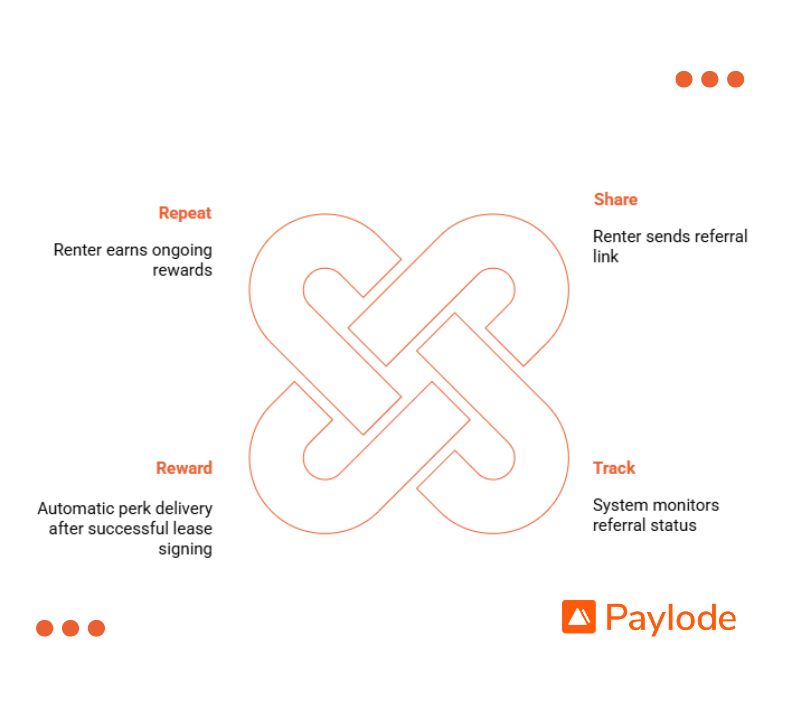
Residents begin by sharing a personalized referral link with friends, family members, co-workers, or anyone searching for a new home. These links can be copied and shared instantly via text message, email, WhatsApp, or social media. Because referrals are digital, residents no longer need paper forms or complicated sign-up steps—making the process frictionless and accessible.
3.2 Transparent referral tracking
One of the biggest frustrations with traditional programs was uncertainty. Modern platforms solve this by allowing residents to track referral progress in real time. They can see when their referral:
- Clicks the link
- Schedules a tour
- Applies
- Signs the lease
- Moves in
This transparency increases trust and encourages residents to refer more people, since they always know where things stand.
3.3 Automated reward delivery
The moment a referred renter completes the required milestone (typically lease signing or move-in), rewards are automatically delivered. No chasing, no paperwork, no waiting weeks for approval. Automation ensures that incentives arrive instantly, creating excitement and reinforcing the value of participating.
Automation removes the administrative burden from on-site teams and guarantees consistency across all properties.
3.4 Merchant-funded referral perks
Instead of giving away rent credits, costly discounts, or gift cards, many modern programs use merchant-funded perks as the core reward model. Through solutions like Perks, residents receive instant savings on dining, shopping, wellness, home goods, entertainment, and more—at absolutely no cost to the operator.
This “pointless reward system” is popular because:
- Residents get real, usable value immediately
- Operators eliminate budget constraints
- Rewards can scale across entire portfolios
- Perks feel more personalized and relevant than one-time concessions
This is a major upgrade from traditional referral programs.
3.5 How automation enhances the referral experience
Automation is the engine behind modern referral programs. Platforms such as Paylode Boost elevate referral workflows by:
- Sending reminder messages to residents to share their link
- Delivering referral progress notifications
- Sending appreciation messages when a referral completes a step
- Triggering perks instantly when a referral converts
- Automating multi-step referral journeys for ongoing engagement
This ensures referral communication is timely, personalized, and consistent—leading to higher participation and better results across communities.
3.6 A smoother experience for both residents and operators
Modern rent referral reward programs eliminate guesswork, delays, and manual steps. Residents enjoy a clean, motivating experience where rewards are delivered instantly and transparently. Operators benefit from:
- Lower acquisition costs
- Higher-quality leads
- Reduced staff workload
- Stronger community trust
- Scalable performance across portfolios
This modernized approach makes referrals one of the most effective and effortless growth channels for multifamily operators today.
4. Benefits of rent referral reward programs for renters
Modern rent referrals for rewards programs aren’t just beneficial for property operators—they offer significant advantages to renters as well. These benefits motivate residents to participate, deepen their connection to the community, and create positive experiences that ultimately support retention.
4.1 Instant savings through merchant-funded perks
Instead of waiting for point accumulation or delayed gift cards, modern referral programs deliver instant rewards. When renters successfully refer someone who signs a lease, they immediately receive merchant-funded perks they can use on dining, shopping, wellness, travel, home essentials, and more.
Because these perks are powered by solutions like Perks, they cost renters nothing and feel meaningful. This instant value creates excitement and encourages continued participation.
4.2 A transparent and trustworthy reward experience
A major frustration with old referral systems was the uncertainty around whether the referral was approved or when the reward would arrive. Modern programs eliminate this issue by offering real-time visibility into referral progress.
Renters can track every step—when their friend clicks the link, schedules a tour, applies, and moves in. This transparency builds trust and increases confidence in the reward process.
4.3 More ways to engage with their community
Referral programs encourage residents to participate more actively in the life of the community. When renters invite friends or peers to live onsite, they naturally contribute to stronger social ties, better communication, and an improved sense of belonging.
This engagement benefits not only the referring resident but the entire community ecosystem.
4.4 Emotional value through appreciation and recognition
Residents want to feel valued. Referral rewards provide a clear signal that the community appreciates their contribution. Automated appreciation messages and personalized thank-you rewards—delivered through tools like Boost—enhance this emotional connection.
Feeling recognized increases overall satisfaction and loyalty.
4.5 A stronger sense of belonging and community stability
When renters refer people they know—friends, colleagues, or family—the community becomes more socially cohesive. Not only does this improve daily living, but it also increases a resident’s emotional attachment to the property.
A community built on trusted relationships naturally experiences higher satisfaction and longer retention rates.
5. Benefits for operators using rent referral reward programs
While referral programs create meaningful value for residents, they are equally transformative for operators. Modern rent referrals for rewards systems help communities achieve higher occupancy, lower acquisition costs, and stronger long-term retention—all while reducing operational effort. Below are the most impactful benefits operators experience when implementing modern referral programs.
5.1 Lower acquisition costs and faster leasing cycles
Traditional leasing requires marketing spend, listing fees, tours, and extensive follow-up. Referrals shorten this cycle dramatically. Referred leads convert faster because they come with built-in trust. Operators spend less time and money attracting new residents, significantly reducing cost-per-lease.
5.2 Higher quality resident leads
Leads referred by current residents often align better with community culture, expectations, and lifestyle. They’re more likely to become satisfied, long-term residents. This reduces friction, improves building atmosphere, and strengthens community cohesion.
5.3 Stronger resident satisfaction and retention
Referral programs send a powerful message to existing residents:
“You matter, and your contribution is valued.”
When residents receive rewards quickly, see transparent tracking, and feel appreciated for helping the community grow, their loyalty increases. Happy residents are more likely to renew, leave positive reviews, and continue referring additional renters.
This aligns with Paylode’s approach to increasing retention by reinforcing loyalty drivers throughout the resident lifecycle.
5.4 Predictable and stable occupancy
Referrals create a steady pipeline of high-quality leads. Instead of relying solely on fluctuating market demand, operators benefit from organic resident-driven leasing. This creates more predictable occupancy levels and reduces vacancy loss.
A healthy referral ecosystem supports long-term growth and operational stability.
5.5 Automated verification and reward delivery reduces workload
Manual referral processes can drain staff time. Modern referral systems automate:
- Referral tracking
- Verification
- Reward distribution
- Communication
- Appreciation messages
Tools like Boost streamline referral workflows so onsite teams spend less time managing referrals and more time providing excellent service.
5.6 Portfolio-wide scalability
Operators with multiple properties benefit enormously from automated, standardized referral systems. Instead of running different programs at each location, they can deploy one consistent referral model across the entire portfolio.
The Paylode Platform centralizes engagement, incentives, and tracking—making it easy to scale referral rewards without increasing workload.
6. How to design an effective rent referral program
Building a successful rent referrals for rewards program requires more than offering an incentive—it requires a clear structure, simple workflows, and automation that makes participation easy for residents and management teams alike. Below is a practical, step-by-step framework operators can use to design a high-performing referral program that boosts both acquisition and retention.
6.1 Define the referral reward structure
Start by choosing rewards that feel meaningful to residents. Instead of costly rent credits or gift cards, modern operators prefer merchant-funded perk rewards that deliver instant, everyday value.
Examples include:
- Dining and grocery perks
- Wellness and fitness perks
- Home and lifestyle perks
Merchant-funded perks through solutions like Paylode Perks allow operators to offer high-value rewards consistently without budget impact.
6.2 Simplify how renters share referrals
Make the sharing process effortless. The more accessible the referral system is, the more residents will participate. Key elements include:
- Shareable referral links
- One-click sharing via text, email, and social platforms
- Mobile-friendly referral dashboards
- Clear instructions communicated through the resident portal or engagement app
Ease of sharing directly impacts the number of successful referrals.
6.3 Automate tracking and reward delivery
Automation eliminates manual verification, prevents delays, and builds trust. A modern referral program should automatically:
- Track referral link clicks
- Update residents on referral progress
- Verify eligibility at lease signing
- Deliver rewards instantly
Tools like Boost streamline these workflows, ensuring every referral event triggers the correct incentive.
6.4 Promote the program across resident touchpoints
Even the best referral programs fail if residents don’t know about them. Promote your program across:
- Move-in materials
- Onboarding sequences
- Email newsletters
- Community announcements
- Event reminders
- App notifications
- Physical signage in common areas
Consistent visibility leads to higher participation.
6.5 Add appreciation layers for active referrers
Recognizing top referrers creates momentum and enhances loyalty. Consider adding appreciation elements such as:
- Thank-you perk bundles
- Personalized messages
- Exclusive community recognition
- Quarterly appreciation raffles for active participants
These gestures make referrers feel valued and encourage continued participation.
6.6 Measure performance with analytics dashboards
A strong referral program is data-driven. Analytics help operators track:
- Referral volume
- Conversion rates
- Reward usage
- Resident participation trends
- Acquisition cost savings
- Best-performing communities or segments
Advanced platforms like the Paylode Platform provide real-time data that helps operators optimize referral workflows and benchmark success.
7. Example: How Paylode enables referral rewards at scale
Modern referral programs work best when they are automated, cost-efficient, and seamlessly integrated into the resident experience. Paylode makes this possible by combining merchant-funded perks, behavior-based automation, and scalable workflows—giving operators a turnkey system that drives referrals without adding operational load. Below are real examples of how Paylode strengthens rent referrals for rewards programs across multifamily portfolios.
7.1 Using Perks to deliver instant referral incentives
Traditional referral incentives like gift cards or concessions are costly and slow. Paylode replaces these outdated models with instant, merchant-funded rewards delivered through Perks.
With Perks, operators can:
- Reward residents instantly when a referral moves in
- Offer a wide variety of lifestyle perks residents actually value
- Provide year-round rewards without impacting NOI
- Scale incentives across portfolios without increasing budgets
Residents love Perks because the rewards feel immediate, practical, and easy to claim—leading to higher participation and repeat referrals.
7.2 Using Boost to automate communication and reward delivery
Automation is essential for making referral programs simple and effective. Paylode Boost triggers the right messages and rewards at the right moments.
Boost allows operators to:
- Send automated referral reminders
- Notify residents when referrals progress through each stage
- Deliver perks instantly after referral conversion
- Send appreciation messages for participation
- Run multi-step referral journeys to increase engagement
This reduces onsite team workload while ensuring consistent, high-quality execution.
7.3 Portfolio-wide scalability for multi-property operators
Large operators often struggle to manage referral programs across multiple sites. Paylode solves this by offering a centralized platform that standardizes referral workflows across all communities.
The Paylode Platform makes it possible to:
- Launch a unified referral program across 5, 50, or 500+ communities
- Maintain consistent incentives and communication
- Analyze portfolio-wide performance through centralized dashboards
- Adjust strategies based on data insights
- Offer the same high-quality resident experience everywhere
Paylode empowers operators to turn referrals into a reliable source of occupancy growth—without adding complexity to operations.
Conclusion
Rent referral reward programs have become one of the most reliable, cost-effective, and resident-friendly strategies for driving both acquisition and retention in multifamily communities. When designed well, these programs transform residents into enthusiastic advocates who help bring in high-quality renters—while receiving meaningful rewards that strengthen their loyalty.
Modern rent referrals for rewards programs work because they align value for both sides: residents enjoy instant, merchant-funded perks, and operators benefit from lower acquisition costs, faster leasing cycles, and higher-retention communities. This creates a cycle of trust, satisfaction, and long-term engagement.
Automation further elevates referral performance. With tools like Paylode Boost, referrals flow smoothly through reminders, tracking, verification, and reward delivery—eliminating the manual workload that once slowed programs down. The combination of automation and instant-value perks allows operators to build referral ecosystems that grow organically and scale effortlessly across entire portfolios.
By incorporating Perks, Boost, and a strong communication strategy into your referral model, operators can turn their referral program into a powerful engine for sustained occupancy and resident loyalty. Modern referral programs do more than reward behavior—they build stronger, more connected communities where residents feel valued, appreciated, and excited to advocate for their home.
FAQs
1. What are rent referral reward programs?
Rent referral reward programs allow residents to refer friends or family to their community in exchange for rewards. Modern programs offer instant, merchant-funded perks rather than slow or expensive traditional incentives.
2. How do renters benefit from participating in referral programs?
Renters receive immediate rewards, transparent tracking, and appreciation for helping the community grow. The rewards are typically useful perks they can redeem instantly, increasing satisfaction and loyalty.
3. Are merchant-funded referral rewards better than gift cards or rent credits?
Yes. Merchant-funded perks cost operators nothing and offer immediate value. They are easier to scale, more engaging for residents, and far more sustainable for long-term referral programs.
4. How does automation improve referral program success?
Automation handles tracking, reminders, verification, and reward delivery. Tools like Boost ensure every resident receives timely updates and incentives without requiring manual staff involvement.
5. Do rent referrals help with resident retention?
Absolutely. When residents refer people they know, they feel more connected and invested in the community. Referral rewards further reinforce loyalty, making residents more likely to renew.
6. What makes a referral program easy for residents to use?
Simple sharing options, clear instructions, real-time tracking, and instant rewards create a frictionless experience that encourages participation and repeat referrals.