Lease renewals are one of the most cost-effective growth drivers for property managers. Keeping an existing resident avoids marketing costs, leasing fees, and unit downtime. It also creates steadier cash flow across the portfolio.
Resident churn remains a common challenge. Many move-outs happen due to low engagement or a lack of perceived value. When renewal efforts start too late, teams rely on discounts, which protect occupancy but reduce long-term returns.
Loyalty programs offer a more sustainable path to retention. They keep residents engaged throughout the lease, not just at renewal time. When supported by a Loyalty Management Platform, loyalty becomes a structured and repeatable strategy.
Modern solutions like the Paylode platform help property managers move from reactive renewals to proactive engagement. By centralizing rewards and communication, operators can reinforce value early and often. This keeps residents connected well before renewal decisions are made.
Understanding today’s resident renewal mindset
Today’s residents evaluate more than rent and floor plans. They pay attention to how easy it is to live in a community. Convenience, recognition, and ongoing value strongly influence whether they choose to stay.
Many residents decide whether to renew long before the lease ends. If they feel disconnected or overlooked during the lease term, renewal incentives alone rarely change their decision. This is why engagement must happen consistently, not just at renewal time.
For property managers operating in residential real estate, this shift changes how retention strategies should be designed. Renewals are no longer a single event. They are the outcome of everyday experiences delivered across the lease lifecycle.
Loyalty programs align with this mindset. They reward positive behavior, reinforce value, and create small moments of appreciation. Over time, these moments shape how residents perceive the property and influence their willingness to renew.
What a loyalty program means in residential real estate
In residential real estate, loyalty is not about points or promotions. It is about creating ongoing value that residents notice during everyday living. A strong loyalty program supports the resident experience from move-in through renewal.
Unlike traditional incentives, loyalty programs operate continuously. They reward behaviors such as on-time rent payments, digital engagement, and long-term residency. This consistent reinforcement helps residents feel recognized, not just retained.
A well-designed loyalty program also removes friction for property teams. Instead of managing rewards manually, operators can centralize engagement efforts and deliver consistent value across properties. This is where structured resident perks play a key role in keeping engagement simple and repeatable.
Loyalty programs vs traditional lease renewal tactics
Most lease renewal efforts are reactive. Property teams often wait until the lease is close to ending before engaging residents. Discounts or concessions are then used to prevent move-outs, which protects occupancy but reduces revenue.
These tactics focus on price, not experience. They do little to build long-term connections or improve how residents feel about staying.
How loyalty programs change the renewal approach
Loyalty programs focus on ongoing engagement. Residents receive consistent recognition throughout the lease, not just at renewal time. This steady value shapes renewal decisions earlier and more positively.
Instead of reacting to churn, property managers build loyalty over time. Rewards and perks reinforce why residents should stay, not just how much they will save.
Retention without relying on discounts
Discounts lower revenue and reset expectations. Loyalty programs protect margins by offering everyday value instead of price cuts. When residents feel appreciated, they are less likely to compare alternatives.
This approach helps property managers increase retention through engagement rather than negotiation.
Making renewal outcomes more predictable
Loyalty programs generate useful engagement data. Property teams can identify which residents are active and which need attention. This allows renewal strategies to be proactive, measurable, and easier to scale.
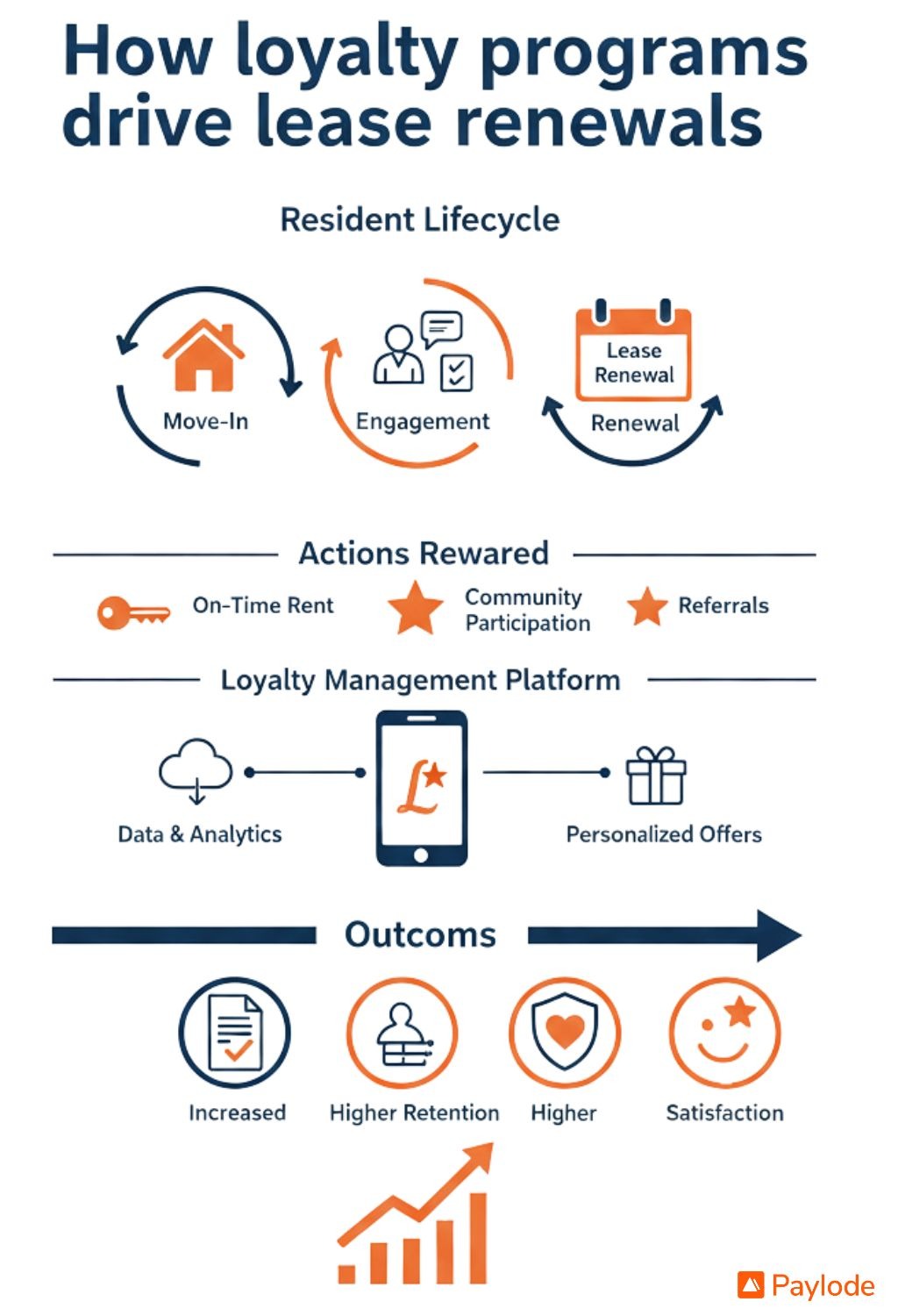
Actions that should be rewarded to drive renewals
Rewarding on-time rent payments
On-time rent payments are one of the strongest indicators of resident reliability. Rewarding this behavior reinforces good habits and builds positive momentum throughout the lease. It also positions loyalty as a benefit tied to everyday actions.
Loyalty incentives can encourage residents to adopt autopay. This reduces late payments and manual follow-ups for property teams. Over time, rewards tied to automatic payments support smoother operations and stronger renewal intent.
Encouraging digital engagement
Digital engagement often signals how connected a resident feels to the property. Actions such as app logins, profile completion, and communication opt-ins show participation beyond rent alone.
Rewarding these actions keeps residents informed and involved. It also helps property managers maintain consistent communication throughout the lease.
Recognizing early renewal behavior
Residents who renew early show clear loyalty. Acknowledging early commitments with small rewards reinforces positive decisions. It also reduces uncertainty for property teams during renewal periods.
Early recognition shifts renewals from reactive conversations to planned outcomes. This creates confidence for both residents and operators.
Designing rewards that residents actually value
Residents respond best to rewards they can use often. Small, everyday perks feel more relevant than large, one-time incentives. They create regular moments of appreciation instead of a single transaction.
These frequent touchpoints help loyalty feel personal. Over time, they reinforce the idea that staying has ongoing value, not just a renewal benefit.
Making rewards easy to access and redeem
Even the best rewards lose impact if they are hard to find or use. Residents expect simple access and quick redemption. When rewards feel effortless, participation increases.
Centralizing rewards in a single perk center helps remove friction. It gives residents one place to explore and redeem offers without confusion.
Balancing national and local perks
A strong reward mix supports daily routines. National perks provide familiarity, while local offers add relevance. Together, they strengthen how residents perceive the overall living experience.
This balance helps loyalty programs feel thoughtful and useful. It also supports consistent engagement across different properties and resident groups.
Personalizing loyalty programs at scale
Residents are more likely to stay when rewards feel relevant. Generic incentives often get ignored, even if they are valuable. Personalization makes loyalty feel intentional rather than promotional.
When residents see rewards aligned with their habits, trust builds over time. This emotional connection plays a quiet but important role in renewal decisions.
Segmenting residents without added complexity
Personalization does not require manual effort. Residents can be grouped based on simple behaviors, such as payment habits, engagement level, or lease stage. This allows property teams to deliver the right rewards at the right time.
For example, digitally active residents may respond better to incentives tied to online actions. Encouraging behaviors like opting into digital communication or choosing to switch to paperless preferences supports both engagement and efficiency.
Scaling personalization across properties
Managing personalization across multiple communities can feel challenging. A centralized system ensures consistent rules while allowing flexibility by property or resident type. This keeps experiences aligned without creating extra work.
When personalization is automated, loyalty programs scale naturally. Property managers gain stronger engagement without increasing operational effort.
Timing loyalty engagement across the lease lifecycle
Starting engagement at move-in
The first few weeks set the tone for the entire lease. Introducing loyalty early helps residents understand the value they receive beyond the unit. It also encourages participation before habits are formed.
Early rewards create positive momentum. Residents who engage from the start are more likely to stay engaged throughout the lease.
Maintaining value during the mid-lease period
Mid-lease is often the quietest phase. Without engagement, residents can feel disconnected. Loyalty programs keep communication active during this period.
Simple rewards tied to everyday actions help maintain visibility and relevance. This consistent engagement supports long-term retention strategies.
Strengthening renewal intent before lease end
Renewal decisions often form months in advance. Loyalty engagement during this phase reinforces reasons to stay. It shifts conversations away from price and toward value.
By linking rewards to retention goals, property managers can measurably increase retention.
Scaling loyalty programs across multiple properties
As portfolios grow, managing loyalty manually becomes difficult. Inconsistent reward delivery and uneven engagement often appear across properties. This can weaken the resident experience and reduce program impact.
Property managers also face limited visibility. Without centralized tracking, it is hard to understand what is working and where improvements are needed.
Why centralized systems matter
A centralized approach ensures loyalty programs remain consistent across all communities. Rules, rewards, and engagement strategies can be applied uniformly while still allowing flexibility by property.
This structure is especially important for operators managing diverse real estate portfolios. Centralized systems help maintain quality without increasing operational effort.
Creating consistency without losing flexibility
Scalable loyalty programs allow for local adjustments. Properties can tailor rewards while keeping core engagement standards intact. This balance supports both brand consistency and local relevance.
When loyalty programs scale smoothly, renewal outcomes become more predictable. Property teams gain confidence in retention strategies across the entire portfolio.
Measuring loyalty program success beyond renewals
Lease renewals are important, but they are not the only indicator of success. Engagement metrics reveal how residents interact with the loyalty program during the lease. These signals help property managers understand whether loyalty is influencing behavior early.
Key indicators include reward participation, redemption frequency, and repeat engagement. High participation often points to stronger renewal intent over time.
Connecting loyalty to long-term value
Loyalty programs also impact revenue beyond occupancy. Engaged residents are more likely to stay longer, adopt digital behaviors, and reduce operational friction. These outcomes directly support efforts to raise customer lifetime value.
Tracking loyalty performance alongside financial outcomes helps teams see the full picture. It shifts loyalty from a “nice to have” to a measurable business driver.
Using insights to improve performance
Data from loyalty programs highlights what works and what does not. Property managers can identify which rewards drive engagement and which actions deserve more focus. This allows programs to evolve without starting over.
When success is measured consistently, loyalty programs become easier to justify, optimize, and scale across the portfolio.
Common mistakes to avoid
Launching loyalty only at renewal time
One of the most common mistakes is treating loyalty as a last-minute tactic. When programs appear only at renewal, residents see them as incentives, not value. This limits impact and weakens trust.
Loyalty works best when it runs throughout the lease. Ongoing engagement builds familiarity and strengthens renewal intent long before decisions are made.
Overcomplicating rewards
Complex reward structures reduce participation. When residents do not understand how to earn or use rewards, they disengage. Simplicity encourages consistent use.
Clear actions and easy rewards make loyalty approachable. The goal is daily relevance, not confusion.
Managing rewards manually
Manual reward tracking creates delays and errors. It also increases workload for on-site teams. Over time, this leads to inconsistent delivery and lower resident satisfaction.
Automation removes friction. It ensures rewards are delivered on time and without added effort.
Ignoring engagement data
Running a loyalty program without tracking engagement limits improvement. Data shows which actions residents value and which rewards drive participation.
When engagement data is ignored, loyalty becomes static. Using insights allows programs to evolve and remain effective across different properties.
Conclusion: turning loyalty into long-term occupancy
Lease renewals are no longer driven by price alone. Residents stay when they feel recognized, engaged, and valued throughout the lease. Loyalty programs help property managers deliver that value consistently, not just at renewal time.
When loyalty is supported by a Loyalty Management Platform, it becomes easier to scale, measure, and optimize. Property teams gain visibility into engagement, reduce reliance on discounts, and build stronger resident relationships. Over time, this leads to higher renewals, lower churn, and more predictable portfolio performance.
For property managers looking to improve retention without increasing operational burden, loyalty offers a clear path forward. The key is moving from reactive renewal tactics to proactive, everyday engagement that residents actually notice.
Ready to build loyalty that drives renewals?Explore how Paylode helps property managers turn engagement into long-term retention. Book a demo to get started.
FAQs
Do loyalty programs really increase renewals?
Yes, when they focus on consistent engagement rather than one-time incentives. Ongoing rewards help residents feel valued throughout the lease. This steady connection influences renewal decisions long before lease end.
When should loyalty programs start?
Loyalty programs should begin at move-in. Early engagement sets expectations and builds habits that continue throughout the lease. Waiting until renewal limits their impact.
Are loyalty programs hard to manage?
Not when automation is in place. A Loyalty Management Platform simplifies reward tracking, delivery, and reporting. This reduces manual work for on-site teams.
Can loyalty work across multiple properties?
Yes, centralized platforms ensure consistency across portfolios. Property managers can apply shared rules while allowing flexibility by location. This makes loyalty scalable and easier to manage.