The resident journey does not begin at renewal—it starts the moment a renter moves in. From setting up payments to understanding community guidelines, the move-in phase shapes how residents feel about their new home. When this early experience feels smooth and welcoming, residents are more likely to stay engaged throughout their lease.
For property managers and owners in the residential real estate space, onboarding is also where operational challenges appear first. Missed steps, low app adoption, and repeated follow-ups create friction for teams managing growing portfolios in the residential real estate industry. Without a structured way to guide residents, early disengagement often leads to weaker renewal outcomes later.
This is where rewards for renter onboarding and renewal play a meaningful role. By encouraging residents to complete key actions early and stay involved over time, rewards help turn onboarding into a guided experience rather than a checklist. When engagement starts strong at move-in, it naturally supports higher satisfaction, stronger relationships, and better long-term retention.
Understanding the renter journey from move-in to renewal
The move-in phase sets expectations
The move-in experience plays a major role in shaping resident trust and confidence. When onboarding feels clear and organized, residents are more likely to feel secure in their decision and confident in the property team. Early steps, such as setting up payments, accessing digital tools, and understanding community guidelines, influence how residents perceive the overall living experience.
Many new residents still face friction during this phase. Too many emails, unclear instructions, difficulty navigating apps, and uncertainty about next steps often create confusion. When these issues appear early, residents may disengage before they fully settle in.
Engagement declines without structured guidance
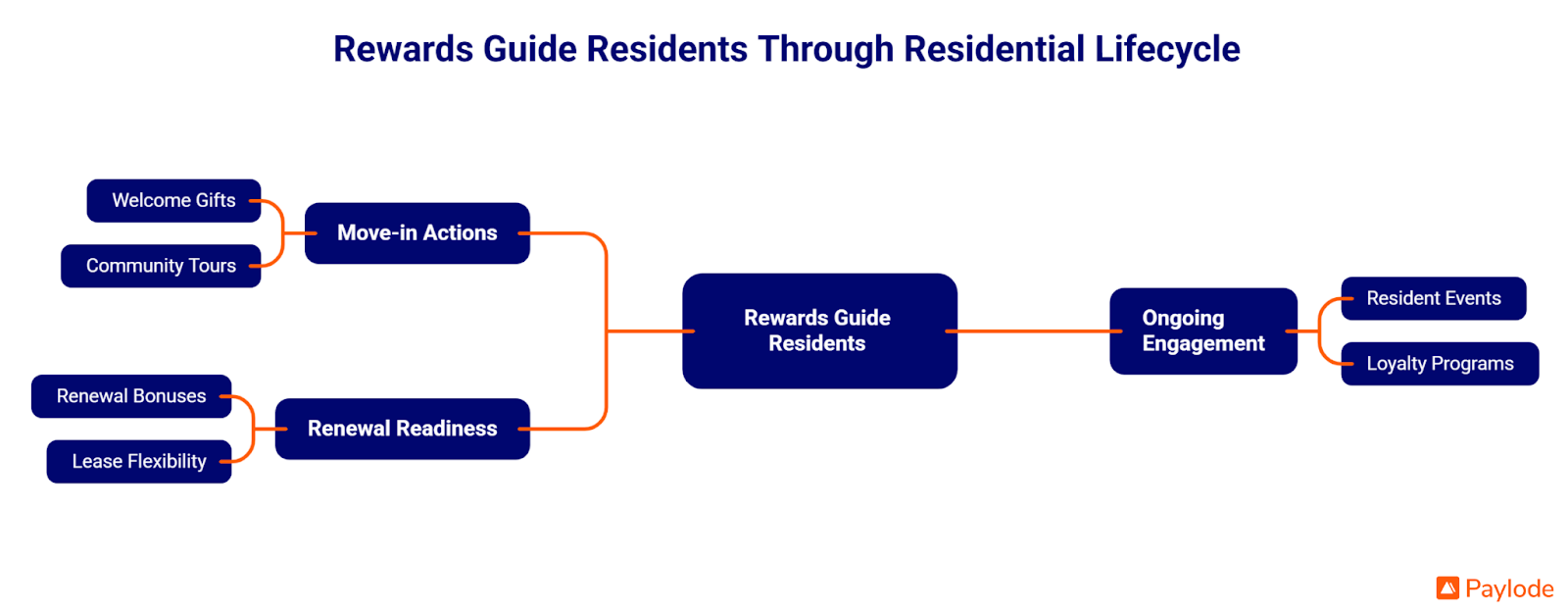
After move-in, engagement often drops when residents are not given clear reasons to stay involved. Without ongoing value, residents stop interacting with portals and miss important updates. This is why many operators use resident perks to encourage consistent interaction and maintain engagement throughout the lease instead of relying only on service-related communication.
When engagement fades, renewal risk increases. Residents who feel disconnected are less likely to renew, even if the property meets their basic needs. Ongoing engagement helps strengthen relationships and supports more predictable renewal outcomes.
Why traditional onboarding methods fall short
Traditional onboarding often relies on long email threads and printed move-in guides. While well-intentioned, this information overload makes it hard for residents to know what matters most. Important steps get buried, and residents delay or skip setup simply because the process feels overwhelming.
To compensate, property teams send manual reminders for unfinished tasks. These follow-ups increase staff workload and take time away from higher-value responsibilities. As portfolios grow, keeping track of who has completed what becomes even harder without a centralized system that gives residents a single place to access what they need, such as a unified experience through perk centers.
The biggest gap, however, is motivation. Traditional onboarding tells residents what to do but gives them little reason to act quickly. Without a sense of progress or value, many residents leave setups incomplete, which leads to lower engagement and creates challenges that resurface again at renewal time.
How rewards support smoother renter onboarding
Turning required steps into guided actions
Rewards help make onboarding feel clear and manageable. Instead of long task lists, residents move through one step at a time. Each action feels purposeful and easy to complete.
This approach works well for app activation, profile completion, and digital acknowledgments. Residents know what to do next and why it matters. Over time, rewards for renters onboarding and renewal help build early engagement habits that last through the lease.
Reducing operational follow-ups
Rewards also reduce the need for repeated reminders. Automated incentives encourage residents to complete setup without staff intervention. This lowers emails, calls, and manual tracking.
For example, linking rewards to autopay setup through workflows like automatic payments helps increase adoption without adding work for property teams. The result is faster onboarding and a smoother experience for everyone involved.
Onboarding actions that should be rewarded first
Activating digital communication
Digital communication is one of the most important onboarding actions to reward. When residents download the app and enable notifications, they stay informed from day one. This reduces missed messages and improves response times.
Early app activation also helps residents feel connected to the community. It sets the foundation for smoother communication throughout the lease.
Choosing paperless communication
Paperless communication makes updates faster and easier to manage. Residents receive notices instantly and are less likely to miss important information. Property teams also spend less time handling printed documents.
Rewarding residents for switching to digital workflows, such as those supported by switching to paperless, encourages faster adoption and creates a more efficient onboarding experience for both residents and staff.
Keeping residents engaged throughout the lease
Small, consistent rewards are more effective than one-time offers. They encourage regular participation instead of short bursts of interest. Residents respond better when value is reinforced over time.
Ongoing rewards help build habits that benefit everyone. Residents stay engaged with apps, payments, and communication. Operators see fewer missed actions and stronger relationships.
This steady engagement also supports long-term value. When residents feel recognized throughout the lease, they are more likely to stay longer and engage more deeply, which directly contributes to outcomes like raising customer LTV without increasing operational effort.
How rewards influence renewal decisions
Renewal decisions are rarely made at the end of the lease. Most residents begin forming their decision months in advance, based on how supported and valued they feel over time. Consistent experiences matter more than last-minute incentives.
Ongoing engagement helps build an emotional connection with the community. When residents feel recognized through everyday interactions, they are more likely to see the property as a place to stay, not just a place to live. This sustained engagement directly supports better renewal outcomes and aligns with strategies focused on increasing retention without relying on discounts or reactive outreach.
Scaling rewards across single and multi-property portfolios
Consistency is crucial when rewards are used across a single property or multiple properties. Residents should have the same experience no matter where they live. This builds trust and avoids confusion as portfolios grow.
For owners and operators, consistency also improves visibility. A shared rewards framework makes it easier to track participation and engagement across locations. Portfolio-level strategies used in the real estate industry rely on this clarity to scale resident engagement without adding operational complexity.
When rewards are managed centrally, teams gain a better understanding of what works. This allows operators to make informed decisions while maintaining a consistent experience across every community.
Measuring success: what operators should track
Tracking the right metrics helps operators understand what is working and where improvements are needed. Clear data also supports better decision-making across teams and properties.
Onboarding completion rates show how effectively residents are guided through early setup. Higher completion indicates fewer friction points and stronger early engagement. Autopay adoption reflects how well residents are embracing digital convenience and consistent payment habits.
Renewal lift connects engagement efforts to long-term outcomes. When these metrics are visible in one place through tools like the Paylode platform, operators gain better insight into resident behavior and can adjust strategies without increasing manual work.
Conclusion: Why rewards belong in every onboarding and renewal strategy
A strong resident journey starts at move-in and continues through renewal. When onboarding is guided, engagement stays consistent, and residents feel supported throughout the lease. This reduces friction for property teams and creates a better experience for residents at every stage.
Rewards for renter onboarding and renewal make this approach scalable. They help residents complete key actions early, stay engaged over time, and feel valued long before renewal conversations begin. For operators, rewards drive better adoption, stronger relationships, and more predictable renewals without adding operational burden.
To support this strategy, many property teams rely on an integrated approach using the Paylode platform, perks, and Boost to guide resident actions and track results in one place. Flexible plans make it easy to scale across portfolios, and teams can see the impact firsthand by choosing to book a demo and explore how rewards can improve onboarding and renewal outcomes.
FAQs about rewards for renters onboarding and renewal
What are the rewards for renters onboarding and renewal?
Rewards for renter onboarding and renewal are simple incentives that guide residents through key actions. They motivate residents to complete setup tasks, stay engaged, and build positive habits throughout the lease.
Do rewards increase operational work?
No. When rewards are automated, they reduce staff effort. Residents complete actions on their own, which lowers reminders, follow-ups, and manual tracking for property teams.
Are rewards expensive to maintain?
Rewards are designed to be cost-controlled and scalable. Operators can set clear limits and focus on actions that deliver real value, making rewards sustainable across properties.
Can rewards work for both new and long-term residents?
Yes. Rewards can