Referrals are becoming one of the most reliable growth channels for residential properties. Renters trust recommendations from people they know more than paid ads. These referrals often convert faster and attract higher-quality prospects.
At the same time, marketing costs keep rising. Paid listings and digital ads require ongoing spending. Many renters also ignore ads due to overexposure. This makes it harder for property managers to achieve consistent results.
Referral programs offer a smarter path forward. They turn satisfied residents into advocates. Each referral brings built-in trust and stronger intent. This helps property teams reduce acquisition costs while improving lead quality.
To scale referral programs, automation is essential. A loyalty management platform provides that foundation. It tracks referrals, manages rewards, and ensures consistency across properties. This allows referral campaigns to grow without adding manual work or operational strain.
What is a real estate rewards platform?
A real estate rewards platform is a digital system that helps property teams run and manage resident rewards in one place. It is designed to support referrals, engagement, and repeat actions. The platform connects rewards directly to resident activity.
At its core, the platform focuses on three things: rewards, tracking, and participation. Residents can refer friends, complete actions, and earn rewards with clear visibility. Property teams can track every referral without manual follow-up. This creates a smooth and reliable experience for both sides.
A real estate rewards platform also increases resident participation. When rewards are simple and easy to earn, more residents take part. Clear rules and timely rewards build trust and long-term engagement.
How it differs from traditional referral programs
Traditional referral programs are often managed manually. Teams rely on emails, spreadsheets, or verbal confirmation. This leads to missed referrals and delayed rewards.
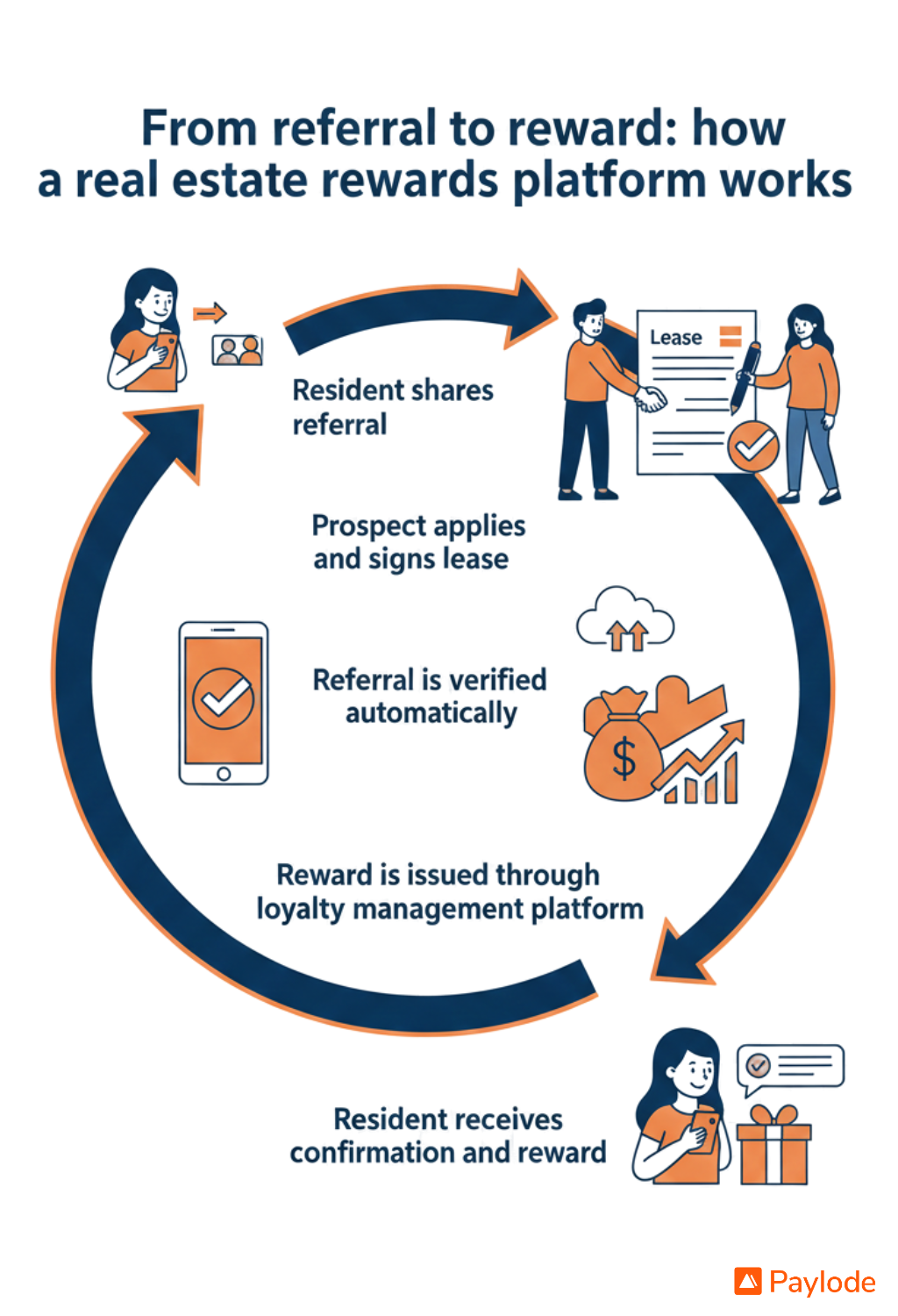
A rewards platform automates the entire process. Every referral is tracked in real time. Property teams can see what is working and what is not. Residents always know the status of their rewards.
Traditional programs usually offer one-time incentives. Engagement often stops after the reward is issued. A modern platform supports ongoing participation. Residents can earn rewards for referrals and other actions over time.
This shift from manual tracking to a loyalty management platform helps referral programs scale. It reduces effort for property teams and creates a better experience for residents.
Why referral campaigns work better in residential real estate
Referrals are built on trust
Referrals start with trust. Residents trust people who already live in the community. These recommendations feel more personal than ads. This trust removes doubt early in the renter’s journey.
Referrals also shorten decision cycles. Prospects come in with clear expectations. They already understand the property, location, and lifestyle. This leads to faster leasing decisions.
Lower cost, higher intent leads.
Referral leads cost less than paid leads. There is no ongoing ad spend. Property teams reduce marketing waste and improve efficiency.
Referral leads also show higher intent. They are more likely to tour and apply. This shifts the focus from volume to quality. Fewer leads deliver better results.
Stronger sense of community
Referrals attract like-minded residents. People tend to recommend places that fit their lifestyle. This helps maintain community alignment.
A stronger community improves the resident experience. New residents feel welcomed faster. Over time, this leads to better engagement, higher satisfaction, and longer stays.
The role of a loyalty management platform in referral campaigns
Centralizing referral rewards in one system
A loyalty management platform brings all referral activity into one place. Property teams can track referrals across multiple properties. This removes the need for spreadsheets and manual follow-ups.
Centralization improves accuracy and speed. Every referral is recorded automatically. Teams spend less time checking details and more time improving performance.
Making referrals easy for residents
Ease drives participation. Residents can share referrals using simple links or quick actions. There are no complex steps to complete.
Clear reward visibility also matters. Residents can see what they will earn and when. This transparency builds confidence and increases participation.
Ensuring consistency across properties
Consistency is critical for growing portfolios. A centralized platform applies the same rules and rewards everywhere. Residents receive the same experience, no matter the property.
This is especially important for multi-property portfolios. Consistent referral programs protect the brand and support scalable growth without added complexity.
How referral rewards influence resident behavior
Clarity drives action. When referral rewards are easy to understand, residents are more likely to participate. Clear rules remove hesitation and confusion.
Transparency also builds trust. Residents know what they will earn and when they will receive it. This confidence increases referral activity over time.
Types of rewards that motivate referrals
The most effective rewards feel practical and relevant. Rent credits are highly valued because they reduce monthly expenses. They offer immediate, real-world value.
Local perks also motivate referrals. These rewards support nearby businesses and fit naturally into daily life. Digital gift options add flexibility and convenience. Residents can use them quickly and easily.
Timing matters more than reward size
Speed is critical. Immediate recognition reinforces positive behavior. A quick confirmation shows residents their referral was noticed.
Faster reward fulfillment keeps momentum high. Delayed rewards reduce motivation. Timely delivery strengthens trust and encourages repeat referrals.
Designing a referral program that actually scales
Step 1: Define referral actions clearly
A scalable referral program starts with clarity. Property teams must define what counts as a valid referral. This includes when a referral is recorded and when it qualifies for a reward.
Clear rules reduce confusion for residents and staff. They also prevent disputes later. Simple definitions make the program easier to promote and manage.
Step 2: Choose rewards that residents value
Rewards should feel useful, not decorative. Residents respond best to rewards that support everyday needs. Practical rewards drive more referrals than novelty items.
Consistency also matters. Using the same reward structure helps residents understand the program quickly. Familiar rewards lead to repeat participation.
Step 3: Automate tracking and rewards
Manual systems do not scale. Automation removes delays and human error. Every referral is tracked from start to finish.
A loyalty management platform supports this process. It records activity, triggers rewards, and keeps residents informed. This reduces workload for on-site teams and supports growth across properties.
How a loyalty management platform supports multi-property teams
Managing referrals across locations
Multi-property teams need visibility across every community. A centralized system allows referrals to be tracked by property and portfolio. This makes it easier to compare performance and spot trends.
Leaders can see which properties generate the most referrals. They can also identify where support or adjustments are needed. This improves decision-making without adding complexity.
Reducing operational overhead
Manual referral tracking increases workload for on-site teams. It also raises the risk of errors and delays. Automation removes these issues.
A loyalty management platform handles tracking and reward delivery automatically. This frees teams to focus on leasing and resident experience. Less manual work leads to better efficiency.
Maintaining brand consistency
Consistency protects the brand. Residents should experience the same referral program across all properties. This includes rewards, rules, and communication.
A centralized platform ensures uniform execution. It delivers the same experience everywhere, even as portfolios grow. This consistency supports trust and long-term scalability.
Connecting referral rewards to the full resident lifecycle
From move-in to renewal
Referral rewards should not stop after move-in. Residents can refer friends at any stage of their lease. This makes referrals a continuous growth channel.
When referral programs support the full lifecycle, engagement stays high. Residents feel involved beyond the initial lease period. This helps build long-term relationships.
Referrals are not one-time actions
One-time referrals limit impact. Ongoing referral opportunities encourage repeat participation. Each successful referral reinforces positive behavior.
Consistent rewards keep residents motivated. Over time, referrals become a habit rather than a single action.
Linking referral programs with resident perks
Referral rewards work best when connected to broader resident benefits. This creates a unified experience for residents. Rewards feel more meaningful when they support everyday life.
By tying referrals into resident perks programs, property teams strengthen engagement across touchpoints. Platforms like Paylode support this approach through integrated resident benefits and rewards systems, as outlined in its resident perks use case. This connection helps referral programs feel like part of the community, not a standalone promotion.
Using referral campaigns to improve retention
Engaged residents are more likely to renew their leases. When residents participate in referral programs, they feel more connected to the property. Participation creates emotional investment over time.
Recognition also plays a key role. Acknowledging referrals shows residents their actions matter. This recognition builds loyalty and strengthens trust in the brand.
Referral rewards as a retention tool
Referral rewards do more than drive new leases. They support long-term retention. Residents who refer friends are more likely to renew because they feel valued and involved.
Referral rewards also reinforce positive associations with the property. Each reward reinforces a good experience. Over time, this strengthens satisfaction and reduces turnover. Many property teams use referral-based engagement strategies as part of broader retention efforts, as outlined in Paylode’s increase retention use case.
Measuring referral campaign success
Key metrics property managers should track
Tracking the right metrics keeps referral campaigns effective. The number of referrals shows resident participation levels. It highlights how visible and appealing the program is.
Conversion rate measures referral quality. It shows how many referred prospects turn into signed leases. A higher rate signals strong trust and fit.
Cost per lease is also critical. Referral campaigns often cost less than paid marketing. Tracking this metric helps compare performance and justify investment.
Using insights to optimize campaigns
Data should guide improvements. If referrals slow down, rewards may need adjustment. Small changes can increase participation.
Messaging also matters. Clear reminders and simple explanations improve results. Performance data helps identify top-referring communities. These insights allow property teams to replicate success across other locations.
Common referral program challenges and how platforms solve them
Low participation rates
Low participation often comes from unclear rules. Residents may not understand how referrals work or what qualifies. This creates hesitation and limits engagement.
A platform solves this with visibility and reminders. Clear rules are shown upfront. Ongoing reminders keep the program top of mind. This increases participation without added effort.
Tracking errors
Manual tracking creates gaps. Spreadsheets and emails are easy to miss or misread. This leads to lost referrals and reporting issues.
Platforms provide accuracy through automation. Every referral is recorded in real time. Property teams get reliable data without manual checks.
Delayed rewards
Delayed rewards frustrate residents. When rewards take too long, trust drops. Motivation fades quickly.
Automation ensures timely delivery. Rewards are triggered as soon as conditions are met. Fast fulfillment improves satisfaction and encourages repeat referrals.
Conclusion: Why referral rewards are a long-term growth strategy
Referral rewards outperform traditional marketing because they are built on trust. Prospects trust recommendations from people they know more than ads. This leads to higher-quality leads and faster leasing decisions.
Automation and consistency make referral programs sustainable. A centralized platform removes manual work and reduces errors. Consistent rewards and rules create a reliable experience for residents across properties.
Referral rewards also support both acquisition and retention. They bring in new residents while keeping existing ones engaged. Over time, this strengthens community ties and increases long-term value.
If you want to scale referral campaigns without added complexity, explore how Paylode helps property teams manage rewards, referrals, and engagement in one place. Learn more about the platform.
FAQs: real estate referral rewards platforms
Do referral rewards really work in residential properties?
Yes. Referral rewards work because they rely on resident trust. Referred prospects convert faster and show higher intent than leads from paid ads. This makes referrals a reliable and cost-effective growth channel.
What rewards work best for renters?
Practical rewards perform best. Rent credits, local perks, and digital gift options fit into everyday life. These rewards feel useful and motivate repeat participation.
Can referral programs work across multiple properties?
Yes. Centralized systems allow property teams to manage referrals across locations. This ensures consistent rules, tracking, and rewards for every community.
Is it hard to manage referral campaigns?
No. With the right loyalty management platform, tracking and rewards are automated. This reduces manual work and makes referral campaigns easy to scale.