
Not all insurance products perform the same when it comes to customer engagement.
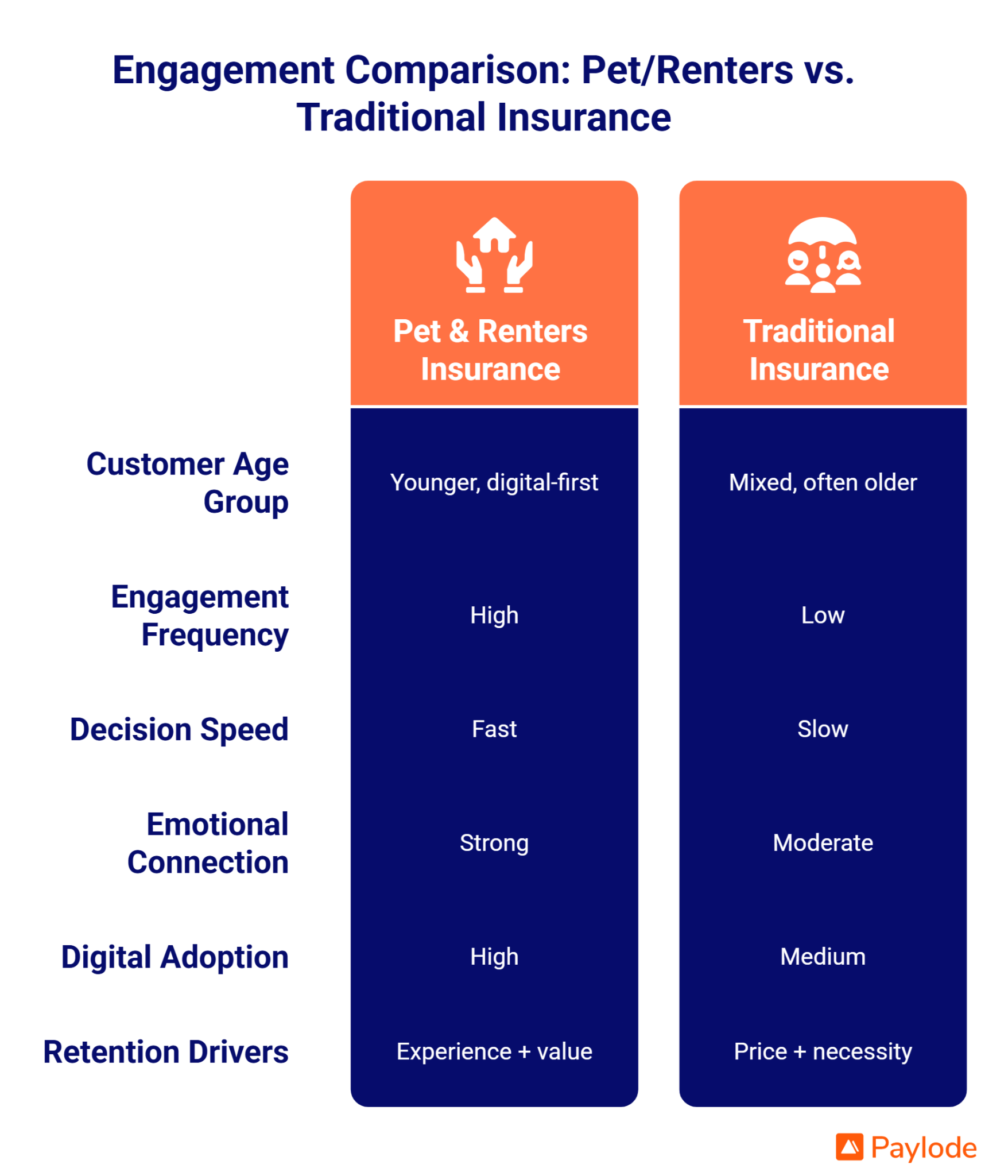
Pet and renters insurance consistently show higher interaction, stronger customer relationships, and better retention compared to traditional insurance lines like auto or home.
This is not accidental. It is driven by how these products fit into modern customer lifestyles.
Insurance providers looking to grow today are closely studying these segments to understand how they naturally increase insurance retention without relying heavily on discounts.
The difference comes down to three key factors:
- Digital-first customer behavior
- Higher sensitivity to experience
- Faster and more frequent decision-making
These elements create more opportunities for insurers to engage customers beyond just policy purchase and renewal.
What makes pet and renters insurance different
Pet and renters insurance are built around everyday life, not just long-term protection. This makes them more dynamic and easier to engage with.
1.1 More frequent customer touchpoints
Pet owners interact with care services regularly. Renters experience frequent changes like moving, upgrading, or renewing leases.
This creates natural opportunities for engagement.
- Regular pet care activities
- Ongoing lifestyle needs for renters
- More reasons to interact with the insurance provider
Unlike traditional insurance, which may go untouched for months, these segments stay active.
1.2 Lower complexity and faster decisions
Pet and renters insurance products are easier to understand.
- Simpler coverage options
- Faster onboarding
- Less friction in decision-making
Customers can quickly evaluate and choose plans without long research cycles.
This speed increases engagement from the start and reduces drop-offs.
1.3 Emotional and lifestyle connection
These insurance types are closely tied to personal experiences.
- Pets create strong emotional bonds
- Renting reflects lifestyle choices and flexibility
This connection makes customers more engaged and attentive to the value they receive.
When insurance feels relevant to daily life, it becomes easier to retain customers.
Younger, digital-first customer base
A major reason these segments perform better is the type of customers they attract.
2.1 Who are these customers
Pet and renters insurance are largely adopted by younger audiences.
- Millennials
- Gen Z
- Urban, mobile-first users
These customers are comfortable with digital platforms and expect seamless experiences.
2.2 Expectations from insurance providers
This audience expects insurance to work like other digital services they use daily.
- Easy onboarding
- Mobile-friendly experiences
- Quick access to information
They do not tolerate slow or complex processes.
2.3 Why this drives engagement
Digital-first customers interact more frequently with platforms.
- They check apps regularly
- They respond to notifications
- They engage with offers and benefits
This behavior naturally helps insurers' Pet and Renters Increase Insurance Retention through consistent interaction.
Higher sensitivity to customer experience
Customer experience plays a much bigger role in these segments than in traditional insurance.
3.1 Experience matters more than price
Customers are not just comparing premiums. They are evaluating how easy and useful the experience is.
- Simple processes increase satisfaction
- Smooth interactions build trust
- Friction leads to a quick drop-off
3.2 Expectations shaped by other industries
Customers compare insurance experiences with:
- E-commerce platforms
- Subscription services
- Financial apps
If insurance feels slower or harder, they are more likely to switch.
3.3 Impact on retention
Better experience directly leads to better outcomes:
- Higher engagement
- Stronger relationships
- Improved retention
This is one of the key reasons these segments outperform traditional insurance.
Faster decision-making cycles
Another key reason pet and renters insurance perform better is the speed at which customers make decisions.
4.1 Shorter buying journeys
Customers do not spend weeks comparing options.
- Plans are easier to understand
- Pricing is straightforward
- Decisions happen quickly
This reduces friction and increases conversion rates.
4.2 More frequent switching opportunities
Because decisions are faster, customers are also more open to switching providers.
- Lower commitment compared to traditional insurance
- Easier to evaluate alternatives
- Higher expectations for ongoing value
This means retention cannot rely on price alone.
4.3 Opportunity for insurers
This creates a clear opportunity for insurers.
- Engage customers early
- Deliver value consistently
- Reinforce benefits throughout the lifecycle
When done right, this helps Pet and Renters Increase Insurance Retention in a sustainable way.
Why traditional insurance struggles with engagement
Traditional insurance products face structural challenges that limit engagement.
5.1 Infrequent interactions
Customers often interact only once a year.
- At policy purchase
- At renewal
- During claims
This creates long gaps with no engagement.
5.2 Complex products
Traditional policies are harder to understand.
- More coverage details
- Longer decision cycles
- Higher perceived effort
This reduces customer interaction and slows down engagement.
5.3 Reactive engagement model
Most traditional insurance providers engage customers only when needed.
- Claims-driven communication
- Renewal reminders
- Limited proactive value
This approach makes it difficult to build strong relationships.
The role of behavior-based rewards in high-engagement segments
Pet and renters insurance already have strong engagement foundations. Behavior-based rewards amplify this advantage.
6.1 Why rewards work better here
- Customers already interact frequently
- More opportunities to reward behavior
- Easier to create habit-driven engagement
This makes rewards more effective compared to traditional insurance.
6.2 Examples of behaviors to reward
- On-time payments
- Policy renewals
- App or platform engagement
- Add-on purchases
Rewarding these actions reinforces positive behavior and builds long-term loyalty.
Use cases for pet and renters insurance
Behavior-based rewards can be applied in practical ways across these segments.
7.1 Pet insurance
- Reward vet visits and wellness checkups
- Offer pet care perks such as grooming or food
This keeps customers engaged regularly and strengthens emotional connection.
7.2 Renters insurance
Renters respond well to digital-first engagement strategies.
- Encourage digital adoption through switch to paperless
- Reward safe behavior and timely payments
These actions improve both experience and retention.
How insurers can increase engagement and retention
To scale these strategies, insurers need the right tools and systems.
They can:
- Build continuous engagement loops
- Deliver everyday value through rewards
- Personalize experiences across segments
Platforms like the Paylode platform help automate and manage engagement at scale.
Insurers can also offer curated benefits through perks and rewards that align with customer lifestyles.
To further improve interaction, tools like Boost engagement help increase participation across key touchpoints.
KPIs to track engagement success
To measure effectiveness, insurers should track:
- Engagement frequency
- Retention rate
- Renewal conversion
- Customer lifetime value
These metrics provide clear visibility into performance and growth.
Common mistakes to avoid
- Treating all insurance segments the same
- Ignoring digital expectations
- Over-relying on discounts
- Not personalizing customer experience
Avoiding these mistakes ensures better outcomes.
Future of engagement in insurance
The insurance industry is evolving toward more connected and personalized experiences.
- Lifestyle-driven insurance models
- Embedded perks ecosystems
- Personalized engagement at scale
These trends will continue to help insurers Pet and Renters Increase Insurance Retention more effectively.
Conclusion
Pet and renters insurance outperform traditional lines because they align with how modern customers live and interact.
They are digital, fast, and experience-driven—making them naturally more engaging.
Traditional insurance providers can learn from these segments by focusing on continuous engagement, personalization, and value delivery.
Insurance providers that focus on experience and engagement will be best positioned to Pet and Renters Increase Insurance Retention in the years ahead.
FAQs
1. Why do pet and renters insurance have higher engagement?
They are closely tied to everyday life, have simpler products, and attract digital-first customers.
2. How can traditional insurance improve engagement?
By adopting behavior-based rewards and improving digital experiences.
3. Do rewards programs help increase retention?
Yes, they increase engagement and perceived value, leading to better retention.
4. What role does digital experience play in insurance?
It is a major driver of engagement, especially for younger customers.
5. Which insurance segments benefit most from engagement strategies?
Pet, renters, and warranty insurance segments benefit the most.


.jpg)