The real estate market has become more competitive than ever. Property managers are not just competing on rent or location anymore - they are competing on the overall living experience they provide.
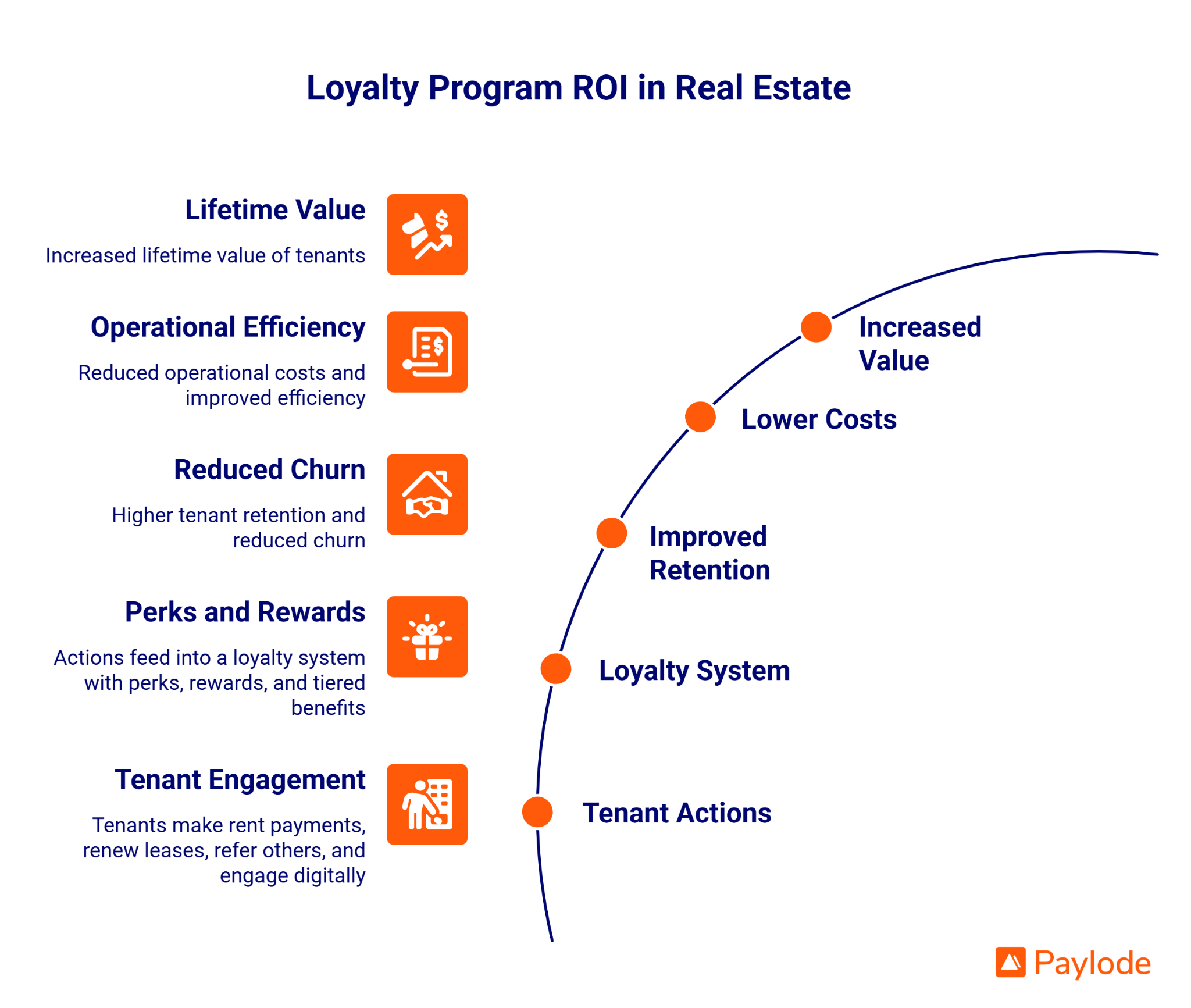
This shift has made profitable loyalty programs a critical strategy. Instead of reducing rent or offering short-term discounts, these programs help property managers increase retention, improve payment behavior, and grow tenant lifetime value without impacting margins.
Why loyalty programs matter in residential real estate
Tenant turnover is one of the highest hidden costs in residential real estate. When a tenant leaves, the cost is not just vacancy - it includes marketing, maintenance, administrative effort, and lost time.
A loyalty program changes the approach from reactive to proactive. Instead of trying to fill empty units, property managers focus on keeping existing tenants satisfied and engaged.
This approach leads to more predictable revenue and stronger tenant relationships over time.
What makes a loyalty program profitable
Not every loyalty program delivers real business value. Some increase engagement but fail to improve financial outcomes.
The most profitable loyalty programs are designed around specific outcomes. They focus on actions that directly impact revenue, such as on-time payments, lease renewals, and referrals. At the same time, they avoid direct rent reductions and instead offer value through experiences and benefits.
These programs are also designed to scale easily across multiple properties without increasing operational complexity.
The most profitable loyalty program models
Different types of loyalty programs exist, but only a few consistently deliver strong financial returns in real estate.
Perks-based loyalty programs
Perks-based programs are among the most effective models because they provide tenants with everyday value without affecting rental pricing. Instead of discounts on rent, tenants receive access to curated offers across categories like food, travel, wellness, and retail.
This model works well because tenants perceive high value, while property managers maintain full control over costs. It also creates a differentiated living experience that goes beyond just the physical property.
Property managers using a perks-driven approach often see higher engagement and retention. For example, implementing a resident perks program improves tenant satisfaction and creates ongoing value.
Behavior-driven reward programs
Behavior-based programs are designed to encourage specific tenant actions that improve operations and cash flow. These programs reward tenants when they complete key actions that benefit both parties.
These actions typically include:
- Paying rent on time
- Choosing digital payment methods
- Engaging with resident platforms
By aligning rewards with operational goals, property managers can influence tenant behavior in a measurable way. A strong example is using automatic payment incentives to streamline rent collection.
Renewal-focused loyalty programs
Retention is where profitability increases significantly. A renewal-focused loyalty program ensures that tenants feel valued before their lease ends, rather than only during renewal negotiations.
By introducing rewards tied to lease milestones, property managers can create positive reinforcement throughout the tenant lifecycle. This reduces the likelihood of tenants exploring other options.
Programs that prioritize retention often deliver the highest return because they directly reduce vacancy and turnover costs. Instead of reacting late, property managers can proactively influence renewals through tenant retention strategies.
Referral-based loyalty programs
Acquiring new tenants through traditional channels can be expensive. Referral programs turn satisfied tenants into advocates who bring in new residents.
When tenants refer friends or family, the quality of new tenants tends to be higher, and the onboarding process becomes smoother. This reduces both acquisition costs and risk.
Referral programs also strengthen community engagement, which further supports long-term retention.
Tiered loyalty programs
Tiered programs introduce levels based on how long tenants stay or how actively they engage. Over time, tenants unlock better rewards and benefits.
This structure creates a sense of progression and encourages tenants to stay longer to access higher-value perks. It also allows property managers to reward long-term tenants without increasing costs for everyone.
Digital engagement programs
Digital engagement programs reward tenants for interacting with online platforms, such as resident portals or mobile apps. These programs help reduce manual processes and improve efficiency.
Encouraging tenants to adopt digital tools also improves communication and reduces paperwork. For example, promoting paperless billing adoption helps reduce paperwork while improving convenience.
Why perks-based programs outperform discounts
Many property managers rely on rent discounts because they are simple to implement. However, discounts reduce revenue immediately and often create long-term expectations.
Perks-based programs, on the other hand, provide value without lowering rent. Tenants feel rewarded, but the property maintains its pricing integrity.
Perks-based programs offer a better alternative by delivering value without lowering rent. Tools like perk management platforms help scale these programs efficiently.
How loyalty programs increase tenant lifetime value
Tenant lifetime value is one of the most important metrics in real estate. Increasing it does not require raising rent - it requires improving retention and engagement.
Loyalty programs contribute to higher lifetime value by encouraging longer stays, improving payment behavior, and reducing acquisition costs. Even small improvements in retention can lead to significant revenue gains over time.
How to implement a profitable loyalty program
Building a successful loyalty program requires a structured approach. It is not just about offering rewards - it is about aligning those rewards with business outcomes.
Start by identifying the tenant behaviors that matter most, such as timely payments and lease renewals. Then, choose reward types that provide value without increasing costs significantly.
Automation plays a key role in scaling the program efficiently. A centralized platform ensures consistent delivery and accurate tracking of results.
Common mistakes to avoid
Many loyalty programs fail because they are not designed with profitability in mind. Some focus too much on engagement without linking it to measurable outcomes.
The most common issues include overusing discounts, lack of clear goals, poor communication, and generic rewards that do not resonate with tenants.
Avoiding these mistakes ensures that the program delivers both engagement and financial returns.
The role of technology in loyalty programs
Technology enables property managers to scale loyalty programs without increasing operational complexity. It allows for automation, personalization, and real-time tracking of performance.
With the right platform, property managers can deliver curated rewards, monitor tenant behavior, and continuously optimize the program for better results.
Solutions like perks platforms simplify implementation while maintaining high engagement levels.
The future of loyalty programs in real estate
The future of real estate is experience-driven. Tenants expect more than just a place to live - they expect convenience, value, and personalization.
Loyalty programs will continue to evolve with a focus on digital integration and everyday benefits. Property managers who invest in these strategies today will be better positioned to retain tenants and grow revenue in the long term.
Conclusion
The most profitable loyalty programs in real estate are those that create value without reducing revenue. They focus on influencing tenant behavior, improving engagement, and building long-term relationships.
By shifting away from discounts and toward perks and rewards, property managers can create a sustainable advantage. These programs not only improve retention but also strengthen the overall tenant experience.
A well-designed loyalty program is not just a retention tool - it is a long-term growth strategy.
FAQs
What are the most profitable loyalty programs for real estate?
Perks-based and behavior-driven programs are the most profitable because they improve retention and engagement without reducing rental income.
How do loyalty programs improve tenant retention?
They create continuous value for tenants, making them more likely to renew leases and stay longer.
Are rent discounts effective as loyalty programs?
Discounts may provide short-term benefits but reduce long-term profitability and should be avoided.
What is the role of perks in loyalty programs?
Perks provide high perceived value at a low cost, making them ideal for scalable loyalty strategies.
How can property managers measure success?
Success can be measured through retention rates, payment behavior, tenant engagement, and lifetime value.