Property managers today are facing a very different rental market than they did a few years ago. Residents expect more value, operating costs continue rising, and retention has become one of the most important drivers of long-term profitability. At the same time, many operators are looking for practical ways to improve revenue without relying only on rent increases or additional fees.
This is why many multifamily operators are focusing on revenue growth for residential real estate through resident engagement strategies that create ongoing value for renters. One of the fastest-growing approaches is the use of resident perks programs.
A resident perks program gives renters access to discounts, savings, lifestyle offers, and local benefits through a digital platform connected to their apartment community. These programs help residents save money in their daily lives while giving property managers new opportunities to improve engagement, strengthen retention, and support additional revenue streams.
Unlike traditional apartment incentives that are often short-term, resident perks programs create continuous value throughout the lease lifecycle. Residents can use offers regularly for dining, travel, entertainment, wellness services, grocery delivery, retail shopping, and local experiences. This ongoing interaction helps communities stay connected with residents beyond rent payments and maintenance requests.
Communities using resident perks programs are increasingly finding that residents view these benefits as part of the overall living experience. Instead of seeing their apartment only as a place to live, renters begin associating the community with convenience, savings, and lifestyle support.
What is a resident perks program in residential real estate?
A resident perks program is a digital rewards and savings platform designed specifically for apartment residents. The platform gives residents access to exclusive discounts and curated offers through a branded experience connected to the property or management company.
Most programs are available through resident portals, apps, email campaigns, or leasing communication systems. Residents can browse offers, redeem savings, and access promotions directly from their phones or computers.
The goal is simple. Property managers provide residents with useful everyday value while strengthening engagement and improving the resident experience.
Modern resident perks programs often include a combination of national brands and local businesses. National offers create broad appeal, while local partnerships help residents feel more connected to the surrounding community.
These programs are becoming more important because renters increasingly expect digital convenience and personalized experiences in every part of daily life. Residents already receive rewards and customized offers from retail brands, travel companies, and subscription services. Multifamily housing is now adopting similar engagement strategies to stay competitive.
Operators within the real estate industry are recognizing that resident expectations now extend beyond physical amenities. Pools, gyms, and coworking spaces still matter, but many renters also value financial savings, convenience, and digital lifestyle experiences.
Why are resident perks becoming important for revenue growth for residential real estate?
Revenue growth for residential real estate is becoming more closely connected to resident retention and engagement. Filling vacant units is expensive, and resident turnover can create significant operational costs. Communities that improve retention often strengthen profitability more effectively than communities focused only on acquiring new residents.
Resident perks programs help support retention because they create additional reasons for renters to stay connected to the community. When residents consistently receive meaningful savings and useful offers, they are more likely to feel positive about where they live.
This emotional connection matters. Renters often compare apartment communities based not only on pricing, but also on overall value and convenience. A resident who regularly saves money through community perks may view the apartment experience more favorably during lease renewal decisions.
Perks programs also support stronger digital engagement. Residents who interact regularly with resident apps, email communication, and rewards platforms are often more connected to the property overall. This ongoing interaction helps create more touchpoints throughout the lease lifecycle.
Another reason resident perks programs are growing is affordability pressure. Many renters are looking for ways to reduce everyday expenses. Discounts on groceries, dining, streaming services, travel, and wellness memberships can create real financial value over time.
For property managers, this creates an opportunity to improve resident satisfaction without significantly increasing operational burden. Instead of adding more physical amenities or expensive upgrades, communities can provide scalable lifestyle benefits that residents actively use.
How can resident perks programs create simple revenue streams?
One of the biggest advantages of resident perks programs is that they support multiple revenue-related outcomes at the same time. These programs can influence renewals, improve engagement, encourage operationally beneficial behaviors, and create partnership opportunities.
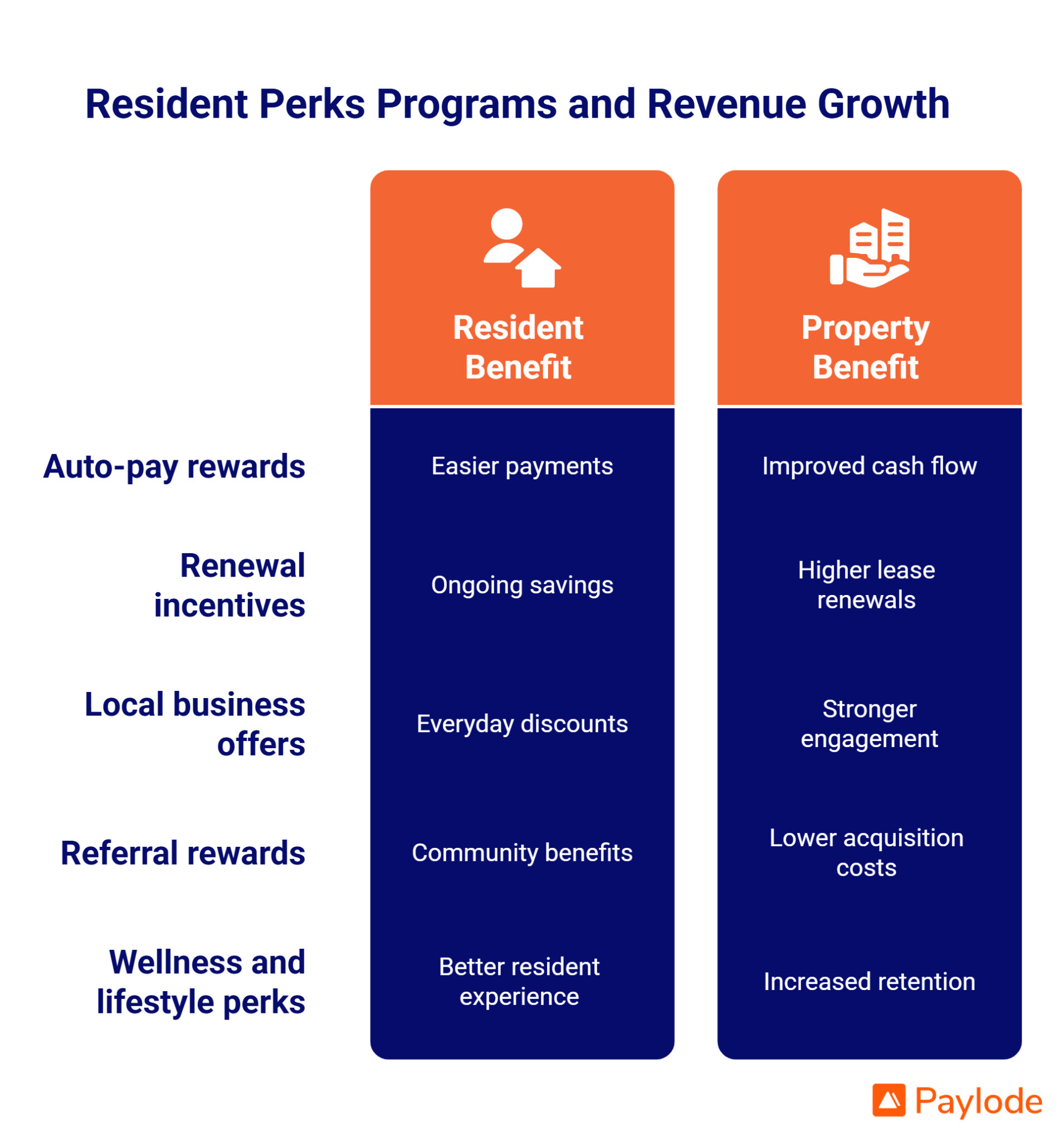
Lease renewals are one of the most important areas impacted by resident perks. Retaining an existing resident is often far less expensive than marketing, leasing, and preparing a vacant unit for a new renter. When residents feel they receive ongoing value, they are more likely to renew leases and remain connected to the property.
Communities also use perks programs to encourage profitable resident behaviors. Residents may receive incentives for enrolling in digital payment systems, choosing paperless communication, referring friends, or participating in community engagement initiatives.
Many operators support these initiatives through programs connected to automatic payments, helping improve payment consistency while rewarding resident participation.
Perks programs can also support administrative efficiency. Encouraging residents to adopt digital communication systems reduces paper-related costs and improves communication speed. Communities promoting switch to paperless initiatives often pair those efforts with resident rewards to increase participation.
Local and national brand partnerships create another opportunity for value creation. Restaurants, fitness studios, retailers, wellness providers, and service businesses often want access to apartment communities because they represent highly engaged local audiences. These partnerships can support sponsored campaigns, referral opportunities, and long-term engagement programs.
Why does resident engagement influence revenue growth for residential real estate?
Resident engagement plays a major role in long-term property performance. Engaged residents are often more satisfied, more likely to renew leases, and more likely to participate positively within the community.
A resident perks program creates ongoing interaction beyond basic operational communication. Instead of hearing from the property only during rent collection or maintenance requests, residents regularly engage with positive experiences connected to savings and rewards.
This consistent engagement strengthens the relationship between residents and the property team. Over time, stronger engagement can improve resident loyalty and reduce the likelihood of turnover.
Engaged residents are also more likely to participate in referrals and community activities. Referral activity can reduce marketing costs and help operators attract residents who are already connected socially to the property community.
Long-term retention also contributes to higher resident lifetime value. Residents who stay longer typically generate more stable revenue while reducing vacancy-related expenses. Communities focused on raise customer LTV strategies are increasingly integrating resident perks into broader retention and engagement programs.
As multifamily competition increases, operators are recognizing that resident satisfaction and financial performance are becoming more closely connected than ever before.
What types of resident perks generate the strongest participation?
Residents engage most consistently with perks that provide practical everyday value. Discounts residents can use frequently are often more effective than highly specialized or infrequently used offers.
Dining discounts remain one of the most popular categories because they fit naturally into daily routines. Grocery delivery savings, streaming subscriptions, retail discounts, travel promotions, and wellness memberships also perform strongly because they connect directly to resident lifestyles.
Local partnerships are especially effective because they create neighborhood relevance. Residents appreciate discovering nearby restaurants, coffee shops, gyms, pet services, and entertainment venues through their apartment community.
This local connection can strengthen both resident engagement and community identity. Residents begin viewing the property as a helpful part of their daily lives rather than simply a housing provider.
Seasonal campaigns also improve participation rates. Holiday promotions, wellness initiatives, summer travel savings, and renewal-focused campaigns create new engagement opportunities throughout the year.
Many operators using increase retention strategies combine perks campaigns with broader resident communication efforts to maintain consistent participation and visibility.
How can property managers launch resident perks programs successfully?
Successful resident perks programs focus heavily on simplicity, visibility, and relevance. Residents are far more likely to participate when the experience feels easy and intuitive.
The platform should be mobile-friendly and accessible across multiple communication channels. Most residents interact with property systems through their phones, so the marketplace experience needs to work seamlessly on mobile devices.
Move-in onboarding is one of the most important opportunities for introducing perks programs. Residents who activate the platform early are often more likely to continue using it long term.
Regular communication also matters. Monthly featured offers, seasonal promotions, and resident success stories help keep engagement active without overwhelming residents with excessive messaging.
Property managers should also focus on keeping offers updated and relevant. Stale or repetitive marketplaces often lose momentum quickly, while regularly refreshed content helps maintain long-term participation.
Communities using centralized engagement tools through perk centers can often manage resident rewards more consistently across multiple properties while maintaining a branded resident experience.
What mistakes should operators avoid with resident perks programs?
One common mistake is poor promotion. Residents cannot engage with a platform they rarely see or hear about. Operators should integrate perks naturally into resident communication rather than treating the marketplace as a separate disconnected feature.
Another issue is offering generic promotions with limited relevance. Residents are more likely to participate when offers match their actual lifestyles and spending habits.
Complicated user experiences also reduce participation. If redemption requires too many steps or the platform feels difficult to navigate, residents may stop engaging entirely.
Consistency is another important factor. Residents should see new value regularly through seasonal campaigns, updated partnerships, and featured savings opportunities.
Simplicity remains one of the most important drivers of long-term engagement. Easy access, mobile-friendly design, and fast offer redemption all contribute to stronger resident participation.
How are leading operators using resident perks for revenue growth for residential real estate?
Leading multifamily operators are increasingly viewing resident perks as part of a larger resident experience strategy rather than a simple promotional tool.
Digital-first leasing and resident communication are changing how communities interact with renters. Residents expect convenience, personalization, and ongoing engagement throughout the entire lease lifecycle.
Perks programs fit naturally into this shift because they provide continuous value that extends beyond the physical apartment itself. Many communities are using resident rewards to support loyalty, strengthen engagement, and differentiate themselves in competitive markets.
Lifestyle-focused engagement is becoming more important across multifamily housing. Residents increasingly value experiences that help improve affordability, convenience, wellness, and daily life.
This trend mirrors loyalty ecosystems already used successfully in industries such as travel, retail, hospitality, and financial services. Multifamily housing is now adapting similar engagement models to strengthen long-term resident relationships.
How can Paylode help property managers create revenue growth for residential real estate?
Paylode helps multifamily operators create resident engagement experiences that support retention, satisfaction, and revenue growth for residential real estate through curated perks and rewards programs.
The platform provides access to national and local offers that help residents save money while strengthening ongoing community engagement. Operators can reward behaviors such as digital payments, referrals, renewals, and communication participation while maintaining a seamless resident experience.
Paylode also helps operators scale resident engagement across multifamily portfolios without creating additional operational complexity.
Property managers looking to improve digital engagement and resident loyalty can explore solutions through Platform.
Communities focused on curated resident savings and engagement experiences can use Perks to provide ongoing lifestyle value for renters.
Operators seeking stronger communication visibility and engagement performance can leverage Boost to support resident interaction across digital channels.
Multifamily teams evaluating scalable engagement programs can review flexible Plans designed for different portfolio sizes and operational needs.
Property managers interested in improving retention and resident engagement strategies can also Book a demo to explore how Paylode supports modern multifamily communities.
Conclusion: Why are resident perks programs becoming important for revenue growth for residential real estate?
Resident expectations are changing quickly, and multifamily operators are adapting by focusing more heavily on engagement, retention, and ongoing resident value.
Resident perks programs help communities create meaningful experiences that extend beyond traditional apartment amenities. Instead of relying only on pricing strategies or physical upgrades, operators can provide practical everyday value that residents actively use throughout the lease lifecycle.
These programs support revenue growth for residential real estate by improving retention, strengthening digital engagement, encouraging operationally beneficial behaviors, and creating stronger emotional connections between residents and their communities.
As competition increases across multifamily housing, communities that invest in resident experience and long-term engagement are likely to build stronger loyalty and more stable long-term revenue performance.
FAQ section
How do resident perks programs support revenue growth for residential real estate?
Resident perks programs improve engagement, strengthen lease renewals, and create additional resident value that supports long-term revenue stability.
What resident perks generate the most engagement?
Dining discounts, grocery savings, travel offers, streaming subscriptions, wellness memberships, and local business promotions usually generate the highest participation.
Can perks programs improve lease renewals?
Yes. Residents who receive ongoing value through perks programs are often more likely to renew leases and remain connected to the community.
How do property managers launch resident perks programs?
Most operators launch resident perks through digital platforms connected to resident apps, portals, onboarding campaigns, and communication systems.
Why are resident perks important for multifamily retention?
Resident perks create ongoing engagement and everyday value that strengthen resident satisfaction, loyalty, and long-term retention.