Property managers are constantly searching for ways to improve the resident experience without adding significant operational complexity. In today's rental market, residents expect more than a place to live. They want convenience, value, and experiences that make everyday life easier and more enjoyable.
This shift is not unique to housing. Consumers have become accustomed to receiving ongoing benefits from the brands they interact with. Membership programs, loyalty initiatives, and subscriber rewards have changed expectations across many industries. People now expect organizations to provide value beyond the primary product or service they purchase.
Residential real estate is experiencing a similar transformation.
Many renters compare communities based not only on floor plans, amenities, and pricing but also on the overall experience they receive during their residency. As a result, property managers are looking for practical ways to create additional value while strengthening resident relationships.
This is where the Simple perks that start for rental housing become increasingly important.
Resident perks programs allow communities to provide ongoing benefits that residents can access throughout their lease term. These benefits can include savings, discounts, experiences, and special offers that help residents get more value from where they live.
The good news for property managers is that launching a resident perks program no longer requires extensive planning, large budgets, or complicated partnerships. Modern solutions enable the rapid introduction of meaningful resident benefits while minimizing the workload on onsite teams.
For operators looking to improve engagement, strengthen retention, and enhance resident satisfaction, a resident perks strategy may be one of the easiest initiatives to implement today.
What is a simple perks start for rental housing and why does it matter?
A resident perks program is designed to provide value beyond the apartment itself.
Instead of focusing only on physical amenities, these programs offer residents access to benefits they can use in their daily lives. The objective is simple: create ongoing value that helps strengthen the relationship between residents and the community.
As resident expectations continue evolving, perks programs are becoming an increasingly important component of resident experience strategies.
What is a resident perks program?
A resident perks program provides residents with access to discounts, savings opportunities, and special offers available because they live in a particular community.
Unlike traditional incentives that are offered only during leasing or renewal periods, resident perks can be accessed throughout the lease term.
This continuous availability creates an experience that extends beyond housing and becomes part of the resident's lifestyle.
Many communities use solutions such as Resident Perks to provide residents with access to a wide range of benefits while minimizing administrative effort for property management teams.
The result is a program that delivers value consistently rather than only at specific moments.
Why are resident perks becoming more important for renters?
Today's renters are influenced by experiences they encounter in many other industries.
They subscribe to services that provide exclusive content, belong to membership programs that offer savings, and participate in rewards programs that recognize their loyalty. These experiences shape expectations.
As a result, renters increasingly appreciate communities that provide value beyond housing itself.
A resident perks program helps address this expectation by creating opportunities for ongoing engagement and meaningful savings throughout the resident lifecycle.
For many operators, resident perks have become a practical way to differentiate their communities while improving resident satisfaction.
How does a simple perks program for rental housing differ from traditional resident rewards?
Traditional rewards programs often required extensive setup, custom partnerships, and significant management resources.
Modern resident perks programs take a different approach.
Instead of building a program from scratch, operators can leverage existing platforms that already provide access to established networks of offers and benefits.
This dramatically reduces implementation time while making the program easier to scale across multiple properties.
For property managers seeking a Simple perks start for rental housing, this shift removes many of the barriers that previously delayed adoption.
Why do many residential operators delay launching a resident perks program?
Despite the benefits, many property managers still postpone implementing resident perks programs.
In many cases, the hesitation is based on outdated assumptions rather than current realities.
What concerns prevent property managers from getting started?
Time is one of the most common concerns.
Property management teams already handle leasing, resident communications, maintenance coordination, vendor management, and daily operations. Any new initiative may initially appear difficult to add to existing responsibilities.
Budget considerations also play a role.
Some operators assume resident perks programs require significant financial investment. Others worry about ongoing administration and resource requirements.
These concerns are understandable, but many no longer reflect how modern resident perks platforms operate.
Why do operators assume perks programs are difficult to manage?
Historically, creating a resident rewards program often involved negotiating partnerships, manually managing offers, and continuously updating available benefits.
These requirements made implementation challenging.
Today, many property managers still associate resident perks with these older approaches.
However, technology has significantly simplified the process. Many modern platforms now provide ready-made solutions that reduce much of the complexity of launching a program.
How have resident perks platforms simplified implementation?
The biggest change is accessibility.
Instead of building an entire rewards ecosystem internally, operators can launch programs that already include established benefit networks and resident-facing experiences.
These platforms allow communities to focus on promoting the program and engaging residents rather than managing every aspect of benefit administration.
As a result, a Simple perks start for rental housing is often far easier than many property managers expect.
What is the easiest way to create a simple perks start for rental housing?
For most operators, the easiest path is leveraging an existing resident perks platform.
Building a custom rewards program may sound appealing, but it often requires significant time, resources, and ongoing management.
Using an established platform eliminates much of that work while providing residents with immediate access to meaningful benefits.
Why is using an existing resident perks platform the fastest approach?
An existing platform already has the infrastructure required to support resident engagement.
Benefits are available immediately, the resident experience is already designed, and implementation timelines are significantly shorter.
This allows property managers to focus on resident adoption rather than program development.
The ability to launch quickly is one of the primary reasons many operators choose this approach.
How can operators avoid creating a program from scratch?
The simplest strategy is to avoid building custom partnerships on an individual basis.
Rather than negotiating offers one at a time, operators can utilize centralized solutions that provide access to a broad collection of resident benefits.
This approach reduces administrative effort while improving consistency across communities.
It also makes scaling easier for operators managing multiple properties.
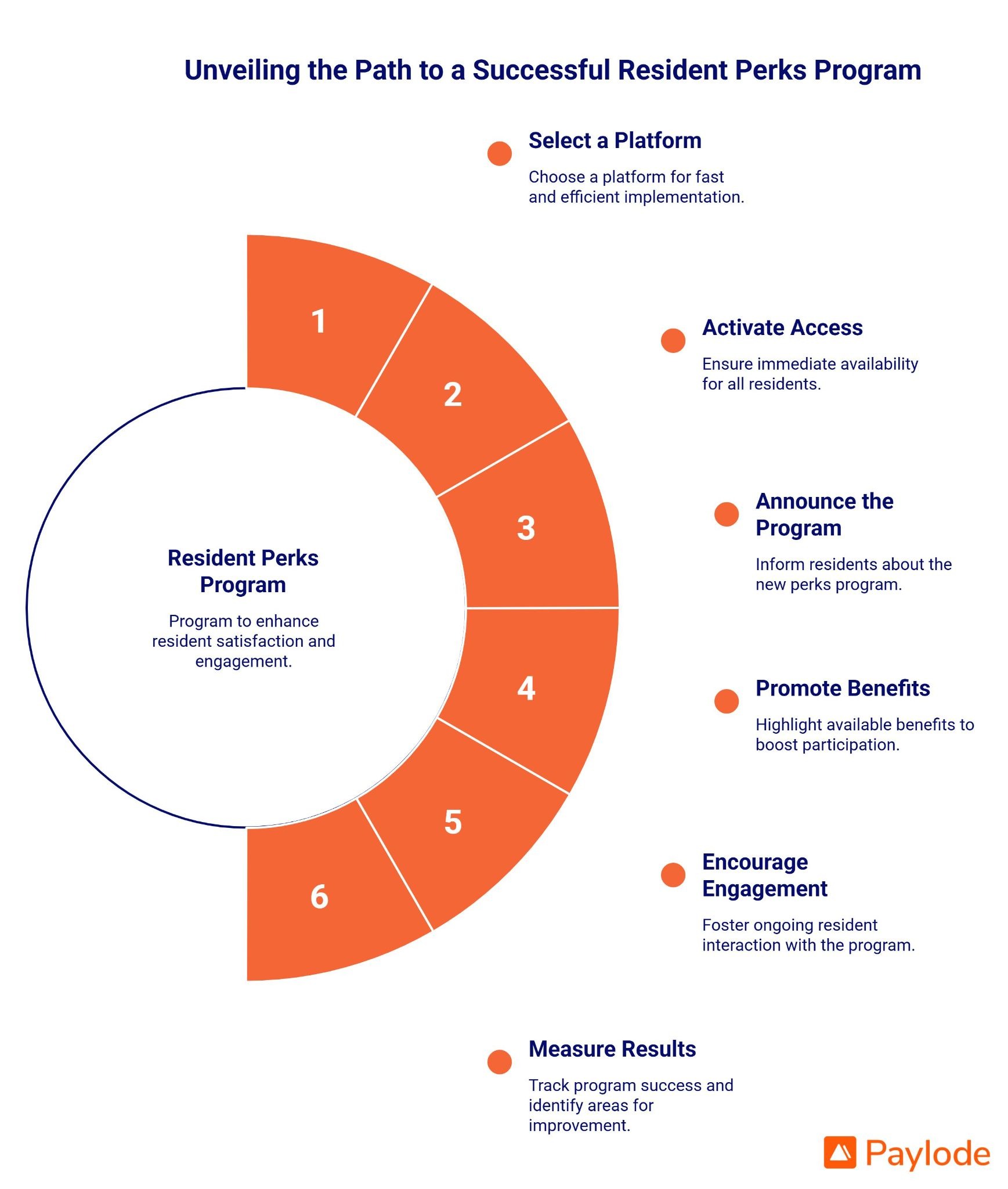
What should property managers prioritize when launching?
Successful launches focus on resident value first.
Residents should clearly understand what benefits are available, how to access them, and why participation is worthwhile.
Communities that communicate benefits effectively often experience stronger engagement and faster adoption rates.
A simple launch supported by clear communication frequently produces better results than an overly complicated rollout strategy.
How can a simple perks start for rental housing improve resident engagement?
Resident engagement is one of the strongest indicators of overall resident satisfaction. When residents actively interact with community initiatives, they are more likely to develop positive perceptions of their living experience.
The challenge for many property managers is maintaining engagement beyond move-in and renewal periods.
Resident perks programs help solve this problem by creating ongoing opportunities for interaction.
Why do residents engage with programs that provide ongoing value?
People naturally engage with benefits they can use regularly.
When residents discover savings opportunities, access valuable offers, or enjoy experiences through a perks program, they have a reason to return repeatedly.
This repeated engagement is important because it creates multiple positive touchpoints throughout the lease term.
Unlike one-time incentives, ongoing perks continue delivering value month after month. Each interaction reinforces the resident's connection to the community and helps create a stronger overall experience.
How do perks create more positive resident interactions?
Many resident communications are operational by nature. Rent reminders, maintenance updates, and policy notices are necessary but do not always foster positive engagement.
Resident perks change the conversation.
Instead of only communicating when action is required, communities can share opportunities that help residents save money or enjoy additional benefits.
These value-driven interactions contribute to stronger resident relationships and create a more balanced communication experience.
Why does engagement matter throughout the lease lifecycle?
Engagement helps strengthen the connection residents feel toward their community.
When residents regularly engage with programs that deliver value, they become more familiar with the benefits of where they live.
Over time, this contributes to greater satisfaction, stronger loyalty, and a more positive overall perception of the community.
For property managers, engagement is not simply about participation. It is about creating experiences that support long-term resident relationships.
What benefits should operators include in a resident perks program?
The effectiveness of any resident perks program depends on the quality and relevance of the available benefits.
Residents are most likely to participate when offers align with their everyday needs and interests.
How do everyday savings create immediate value?
Savings on common purchases often generate the strongest engagement because residents can use them regularly.
Shopping, dining, entertainment, and household purchases are all categories where residents appreciate opportunities to save money.
Because these expenses occur throughout the year, the value remains relevant over time.
This consistency helps encourage repeat engagement while reinforcing the benefits associated with the community.
Why do lifestyle perks drive higher participation?
Lifestyle-focused perks help expand the resident experience beyond practical savings.
Travel opportunities, wellness programs, family attractions, and recreational experiences often create excitement because they contribute to quality of life.
Residents frequently view these benefits as meaningful additions to their living experience.
When communities provide access to both practical savings and lifestyle opportunities, participation rates often improve because the program appeals to a wider range of interests.
How do local offers strengthen community connections?
Local partnerships can make resident perks even more valuable.
Offers from nearby restaurants, retailers, service providers, and entertainment venues encourage residents to explore and engage with their surrounding neighborhood.
These benefits create stronger connections between residents and their local community while supporting local businesses.
For many operators, local partnerships help transform a resident perks program into a broader community engagement initiative.
How can a simple perks program for rental housing support resident retention?
Retention remains one of the most important priorities for residential operators.
While resident decisions are influenced by many factors, communities that consistently provide value often have an advantage when renewal time arrives.
Resident perks contribute to this value by creating positive experiences throughout the lease term.
Why does ongoing value improve resident satisfaction?
Residents evaluate their living experience based on more than the apartment itself.
Service quality, convenience, communication, and perceived value all influence satisfaction levels.
When residents regularly benefit from a perks program, they often feel they are receiving additional value from their community.
These positive experiences accumulate over time and contribute to stronger overall satisfaction.
How do perks influence lease renewal decisions?
Renewal decisions rarely depend on a single factor.
Instead, residents evaluate their overall experience and compare it against available alternatives.
A resident who has consistently received value from a perks program may perceive greater benefits to remaining in the community.
This additional value can help strengthen loyalty and support retention efforts.
Many operators integrate resident rewards into broader strategies designed to increase retention by creating positive experiences long before renewal discussions begin.
How can resident perks increase long-term resident value?
Longer resident relationships create value for both residents and operators.
Residents benefit from familiarity, stability, and continued access to community benefits. Property managers benefit from reduced turnover costs and stronger resident engagement.
A successful perks strategy can also support broader initiatives to raise customer LTV by encouraging long-term participation and stronger resident loyalty.
How can technology make a simple perks start for rental housing easier?
Technology has dramatically simplified resident engagement initiatives.
Today, property managers can implement sophisticated resident benefits programs without adding complexity for on-site teams.
Why is digital access important for residents?
Modern renters expect convenience.
They pay rent online, submit maintenance requests digitally, and access community information through resident portals.
Perks programs should follow the same model.
Digital access allows residents to browse offers, discover benefits, and redeem savings at their convenience.
This accessibility helps increase participation while improving the overall resident experience.
How do centralized platforms simplify administration?
Centralized solutions eliminate much of the administrative work that traditionally accompanied resident rewards programs.
Instead of managing partnerships and offers internally, operators can rely on platforms that already provide a broad collection of resident benefits.
Solutions such as Perk Centers enable property managers to deliver meaningful value to residents while minimizing operational effort.
This scalability is particularly valuable for organizations managing multiple communities.
What features should property managers look for?
The strongest resident perks platforms combine ease of implementation with a compelling resident experience.
Operators should evaluate offer quality, accessibility, reporting capabilities, and overall usability.
Most importantly, the platform should help residents discover value consistently throughout their lease term.
How can resident perks support broader property management goals?
The most effective resident perks programs do more than deliver discounts and savings. They can also help operators support important community initiatives that improve efficiency, communication, and overall resident engagement.
When perks are integrated into broader property management strategies, they become a valuable tool for encouraging participation in programs that benefit both residents and operators.
How can perks encourage automatic payments?
Many property managers continue to promote digital rent payment options because they simplify the resident experience while improving operational efficiency.
Resident perks can help support these initiatives by providing an additional layer of value that encourages participation.
When residents associate enrollment with access to meaningful benefits, they may be more willing to adopt digital payment options. This approach works particularly well when paired with programs focused on Automatic Payments, as both initiatives emphasize convenience and the resident experience.
How can perks support paperless communication?
Property management companies continue moving toward digital communication to improve efficiency and simplify resident interactions.
Statements, notices, and community updates are increasingly delivered electronically.
Resident perks can reinforce these efforts by encouraging residents to participate in digital engagement initiatives. Communities often find that residents are more receptive to new processes when there is clear value associated with participation.
This strategy aligns naturally with efforts to help residents Switch to Paperless and create a more streamlined communication experience.
Why do perks complement resident retention strategies?
A single program or initiative rarely drives retention.
Instead, resident loyalty develops through a series of positive experiences that occur throughout the lease term.
Perks contribute to these experiences by providing ongoing value that residents can access regularly. Each interaction reinforces the resident's connection to the community and strengthens overall satisfaction.
When combined with strong property management practices, perks become a valuable component of a comprehensive resident experience strategy.
Why is a simple perks start for rental housing becoming a competitive advantage?
The rental housing market continues to become more competitive.
In many markets, residents have numerous options that offer similar floor plans, amenities, and pricing. As a result, operators are increasingly focused on finding new ways to differentiate their communities.
A resident perks program offers one of the most accessible opportunities to create additional value without requiring major capital investments.
How are renter expectations changing?
Modern consumers expect value from the organizations they interact with.
Whether they belong to membership clubs, participate in retail loyalty programs, or subscribe to premium services, they have become accustomed to receiving ongoing benefits.
These expectations increasingly influence how renters evaluate housing options.
Residents are no longer comparing apartments solely on square footage and amenities. They are also evaluating convenience, engagement, and overall experience.
Why are communities competing on resident experience?
Many amenities that once differentiated properties have become common throughout the industry.
Fitness centers, coworking spaces, package management systems, and resident lounges are now standard features in many communities.
Because amenities are often similar, experience has become a more important differentiator.
This trend is especially visible across the broader Residential Real Estate sector, where operators are investing in strategies that improve resident satisfaction and strengthen engagement.
How can perks help properties stand out?
Perks create a form of differentiation that extends beyond the physical property.
Residents can use benefits throughout their daily lives, creating ongoing reminders of the value their community provides.
Unlike a single amenity that may be used occasionally, perks create recurring engagement opportunities that help strengthen resident relationships.
For operators looking to enhance resident experience without undertaking costly renovations, perks offer a practical and scalable solution.
What mistakes should operators avoid when launching a resident perks program?
Launching a resident perks program does not need to be complicated. In fact, simplicity is often one of the biggest drivers of success.
However, there are several common mistakes that property managers should avoid.
Why is overcomplicating the program a common mistake?
Some operators assume that more complexity equals more value.
In reality, residents are more likely to participate when the program is easy to understand and easy to access.
Simple experiences often generate stronger engagement because residents can immediately recognize the value available to them.
How can poor communication reduce participation?
Even the strongest perks program will struggle if residents are unaware it exists.
Clear communication is essential during launch and throughout the resident lifecycle.
Residents should understand what benefits are available, how to access them, and why they should participate.
Consistent communication helps maximize awareness and encourages ongoing engagement.
Why should operators focus on resident value first?
The most successful resident perks programs begin with the resident experience.
Benefits should be relevant, useful, and accessible.
When residents consistently find value within the program, engagement naturally follows. Property managers who prioritize residents' needs often achieve higher adoption rates and better long-term outcomes.
What does the future of a simple perks start for rental housing look like?
Resident engagement strategies will continue evolving as technology and resident expectations change.
The future of resident perks will likely focus on even greater personalization and convenience.
Benefits will become increasingly tailored to resident interests, creating more relevant experiences and stronger engagement.
At the same time, technology will continue making resident rewards easier to access and manage.
As more communities adopt resident engagement platforms, perks programs are expected to become a standard component of modern housing experiences rather than an optional enhancement.
This trend is already evident across the broader Real Estate Industry as operators seek innovative ways to improve resident satisfaction and retention.
Why should residential operators start a resident perks program today?
The easiest way to improve the resident experience is often through initiatives that consistently deliver value over time.
A Simple perks start for rental housing allows operators to create meaningful resident benefits without requiring major operational changes or large capital investments.
Resident perks help strengthen engagement, improve satisfaction, support retention efforts, and create differentiation in increasingly competitive markets.
Most importantly, modern platforms make implementation significantly easier than many operators realize.
Communities can launch quickly, deliver immediate value, and create ongoing engagement opportunities throughout the resident lifecycle.
For property managers seeking a practical resident experience strategy, resident perks represent one of the fastest and most effective opportunities available today.
Organizations looking to accelerate their resident engagement efforts can explore solutions available through the Platform, provide residents with valuable Perks, increase participation through Boost, review available Plans, and book a Demo to see how a resident perks strategy can support their communities.
The communities that create value beyond housing are often the ones residents remember, recommend, and choose to remain part of for years to come.