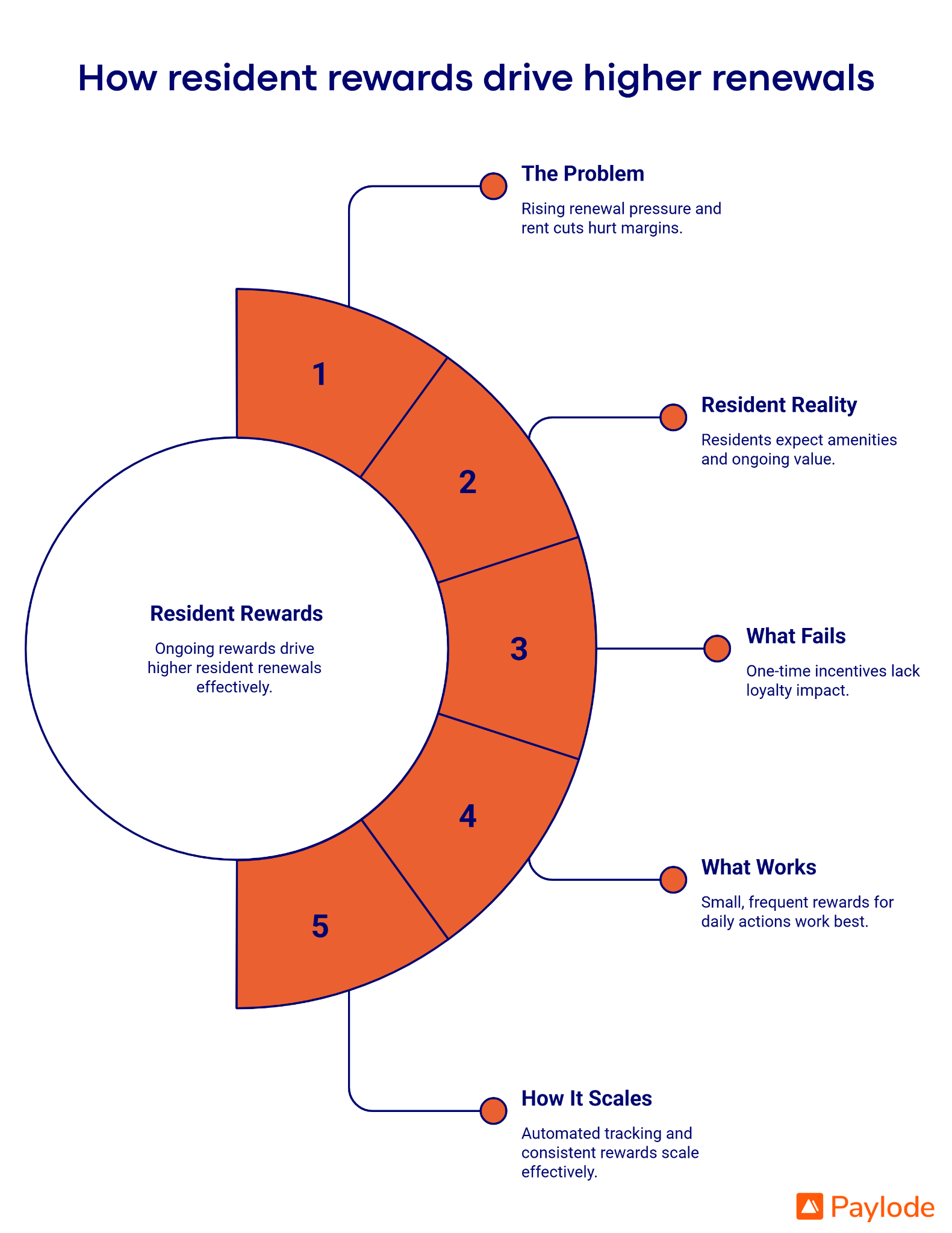
Property teams face increasing pressure to improve renewals. Cutting rent or offering large concessions is no longer sustainable. Rising costs make retention a priority, not an option.
Resident expectations have also changed. Amenities like gyms and parking are now standard. They no longer influence renewal decisions on their own. Residents want ongoing value during their stay, not just benefits at move-in.
This shift is pushing property teams to rethink engagement. One-time renewal gifts do little to build loyalty. They arrive too late and feel transactional. What works better is consistent recognition throughout the lease term.
Resident rewards programs support this approach. They focus on everyday actions, such as on-time payments and digital communication. Small rewards delivered regularly create stronger habits and positive experiences.
To manage these programs at scale, teams rely on a loyalty management platform. It automates tracking, keeps rewards consistent, and shows clear results. For residential real estate operators, resident rewards are now a practical tool for retention, not an added expense.
What are resident rewards programs in multifamily real estate?
Resident rewards programs are structured ways to recognize positive resident behavior. They are designed to encourage everyday actions that support retention and smoother property operations. Unlike traditional incentives, these programs run continuously, not just at renewal time.
The focus is on daily engagement. Residents earn rewards for actions they already take or should take. This makes the experience feel natural and fair. Rewards are tied to behavior, not special events or one-time offers.
Common actions rewarded include:
- On-time rent payments
- Renewing a lease
- Choosing paperless communication
- Participating in community activities
By rewarding these actions, properties reinforce habits that benefit both residents and management teams. Residents feel appreciated. Property teams see better consistency and engagement.
Resident rewards programs are different from discounts or concessions. Discounts reduce revenue upfront and end once applied. Concessions are usually reactive and tied to pressure points like lease expiration. Rewards, on the other hand, are proactive. They deliver value over time without lowering rent.
Modern programs are not managed manually. Spreadsheets and ad hoc tracking lead to errors and uneven experiences. Today, properties use a loyalty management platform to run resident rewards programs efficiently. The platform tracks actions automatically, applies rewards consistently, and provides clear reporting.
For multifamily operators, this approach creates structure without added complexity. Rewards become predictable, measurable, and easy to scale. Instead of one-time incentives, properties build ongoing value that supports long-term retention.
Why traditional incentives fall short for today’s residents
Traditional incentives are often used as a last-minute fix. Gift cards or move-in specials are usually offered close to renewal. By then, many residents have already made up their minds. The incentive feels transactional, not thoughtful.
One-time rewards also lack context. They are not connected to how residents engage with the property over time. A single gift does not reflect months or years of on-time payments or positive behavior. As a result, it fails to create emotional loyalty. Residents may accept the reward but still leave if a better option appears.
Short-term incentives also create inconsistency. Some residents receive benefits while others do not. This can lead to frustration and a sense of unfairness. Over time, it weakens trust rather than building it.
Property teams face added challenges with this approach. Turnover costs continue to rise. Vacancies, marketing, and unit prep all impact margins. At the same time, engagement remains low between move-in and renewal. Many residents interact with the property only when issues arise. Teams also lack visibility into resident behavior. Without clear data, it is hard to know what actions drive retention.
These gaps point to a larger issue. Incentives are reactive, not strategic. They focus on moments instead of relationships. That is why more properties are shifting to ongoing rewards programs. Supported by a loyalty management platform, these programs recognize everyday actions throughout the lease. They create structure, consistency, and measurable results. For today’s residents, ongoing value matters more than one-time offers.
How resident rewards programs create ongoing value
Resident rewards programs work because they focus on consistency. Small rewards tied to daily actions influence behavior over time. Residents begin to associate positive habits with tangible benefits. This makes engagement feel natural, not forced.
The “give a little, often” approach is simple. Instead of saving value for renewal time, properties spread it across the lease. A reward for on-time rent or paperless billing arrives when the action happens. This timing matters. It reinforces behavior and builds trust.
Consistent rewards also shape how residents interact with the property. They encourage regular participation rather than silence between move-in and renewal. Residents feel seen for doing the right things. That feeling builds stronger relationships over time.
For property teams, the benefits are practical. Communication improves because residents are more responsive. Messages about payments, renewals, or community updates get better engagement. This reduces friction and support issues. It also creates a more predictable resident experience.
Renewal intent increases as a result. When residents receive ongoing value, moving feels like a loss. The decision to renew becomes emotional, not just financial. Engagement throughout the lease directly supports long-term retention outcomes. Properties that prioritize this approach often see measurable improvements in retention rates, as outlined in Paylode’s insights on how to increase retention.
Managing this consistently requires structure. A loyalty management platform makes it possible to track actions, apply rewards, and monitor results without manual effort. It ensures rewards are fair, timely, and scalable. Over time, this turns everyday engagement into sustained value for both residents and property owners.
The role of a loyalty management platform in scaling rewards
Many properties start resident rewards programs with manual tools. Spreadsheets are often the first step. This works for a short time. It breaks down as participation grows. Manual tracking leads to missed actions, delayed rewards, and inconsistent experiences. Small errors quickly affect resident trust.
Spreadsheets also create extra work for staff. Teams must track behavior, apply rewards, and resolve disputes by hand. This pulls time away from leasing, service, and resident communication. As portfolios grow, this approach becomes unmanageable.
A loyalty management platform solves these issues by adding structure and automation. In real estate terms, the platform acts as the system of record for resident engagement. It automatically tracks eligible actions such as payments, renewals, and digital adoption. No manual input is required. Rewards are triggered based on predefined rules.
The platform also centralizes resident data. Engagement activity, reward history, and participation levels live in one place. This creates visibility across teams and properties. Managers can see what is working and where adjustments are needed. Decisions are based on data, not guesswork.
Consistency is another key benefit. Rewards are applied the same way across all properties. Residents receive equal treatment regardless of location. This matters for trust and fairness. It also protects brand standards across a portfolio. Platforms like Paylode’s solution make this possible at scale.
Automation significantly reduces staff workload. Teams no longer track actions or issue rewards manually. Reporting is built in. Exceptions are easier to manage. This allows staff to focus on resident experience instead of administration.
Centralized platforms support both single-property and multi-property programs. A single community can run a focused rewards strategy. Large portfolios can apply the same framework across markets. Rules can be adjusted without rebuilding the program. As properties grow, the platform grows with them.
For real estate operators, a loyalty management platform turns rewards into a repeatable system. It makes scaling simple, predictable, and measurable.
Resident actions that should be rewarded first
Not every resident action delivers the same value. Rewarding everything equally can dilute impact and increase costs. High-impact actions should come first. These actions directly support cash flow, efficiency, and retention.
On-time rent payments are the top priority. They improve financial stability and reduce follow-ups. Rewarding timely payments reinforces a behavior that benefits both residents and property teams. Programs that support automatic rent payments create even stronger results by reducing missed or late payments. This is why many properties focus early rewards on automatic payments.
Lease renewals are another key action. Renewals lower turnover costs and protect occupancy. Recognizing renewal decisions shows residents their long-term value. It also makes staying feel appreciated, not expected.
Paperless billing and communication should also be rewarded. Digital adoption lowers operating costs and improves response times. Residents benefit from convenience. Teams benefit from fewer manual processes. Encouraging this shift is easier when residents see clear value, as shown in Paylode’s approach to switching to paperless.
Auto-pay enrollment supports all of the above. It increases payment reliability and reduces reminders. Once enrolled, residents are more likely to stay consistent throughout the lease.
Rewarding small actions builds habits over time. A simple reward delivered at the right moment reinforces behavior. Repeated actions become routine. Over time, these habits lead to higher engagement and stronger renewal intent.
A loyalty management platform helps prioritize and track these actions automatically. It ensures rewards are timely, consistent, and aligned with property goals. By focusing on the right behaviors first, resident rewards programs deliver measurable results without added complexity.
Types of rewards residents actually value
Residents respond better to rewards that support daily needs. Luxury items feel distant and occasional. Practical rewards feel useful and immediate. They integrate into everyday life and reinforce positive behavior.
Common rewards residents value most
The most effective rewards are simple and flexible. High-performing examples include:
- Local discounts at nearby restaurants or services
- Utility savings that help reduce monthly bills
- Digital gift cards that residents can use anytime
- Service-based perks such as cleaning or convenience services
These rewards feel relevant because they lower real costs or save time.
Flexibility increases participation
Residents have different preferences. A single reward option limits engagement. Choice allows residents to select what fits their lifestyle. This increases satisfaction and repeat participation.
Platforms that offer a curated rewards catalog make this easy to manage. Solutions like Paylode’s perks allow properties to deliver flexible rewards without added effort.
A loyalty management platform supports this structure by tracking redemptions and managing options in one place. For property teams, this keeps rewards simple and scalable. For residents, it delivers value that feels personal and consistent.
One program, multiple properties: how portfolios benefit
Managing multiple communities creates complexity
Owners and operators managing multiple communities face unique challenges. Each property may follow different processes. Engagement efforts often vary by site and staff. This leads to inconsistent resident experiences and uneven results. Tracking performance across locations also becomes difficult.
Without a shared system, rewards programs can feel fragmented. Some communities engage residents well. Others fall behind. Over time, this inconsistency weakens brand perception and limits portfolio-wide impact.
Centralized rewards programs create consistency
A centralized rewards program solves this issue. It applies the same rules, actions, and reward structure across properties. Residents receive a consistent experience regardless of location. Property teams follow the same playbook, which simplifies training and execution.
Using a loyalty management platform allows owners to standardize rewards while allowing flexibility at the property level. Programs remain aligned with brand goals while adapting to local needs. This balance supports growth across residential real estate portfolios.
Portfolio-level reporting improves visibility
Visibility is critical at scale. Centralized programs provide portfolio-level reporting in one view. Owners can track participation, engagement, and renewal trends across communities. Underperforming properties are easier to identify. Successful strategies can be replicated quickly.
This level of insight supports smarter decisions. Teams can adjust rewards based on real data, not assumptions. Over time, portfolios benefit from stronger engagement, higher retention, and better operational control. Centralized rewards turn resident engagement into a measurable, scalable strategy.
Measuring success: what property teams should track
Tracking is essential for long-term buy-in. Property teams need clear proof that resident rewards programs deliver value. Without data, rewards can feel subjective or optional. Measured results turn engagement into a strategic investment.
Clear reporting also supports alignment. Owners, operators, and on-site teams can see the same outcomes. This builds confidence and supports continued adoption across properties.
Key metrics to monitor
The most effective programs focus on a small set of clear metrics:
- Renewal rates to measure long-term retention impact
- Participation rates to understand resident engagement
- Cost per retained resident to compare rewards against turnover costs
- Engagement actions completed such as payments, renewals, or digital adoption
These metrics show both behavior and outcomes. Together, they provide a full picture of program performance.
How reporting drives better decisions
Reporting turns data into action. Property teams can identify which rewards perform best. Low participation areas become clear. Programs can be adjusted without guesswork. This leads to better resource allocation and stronger results.
A loyalty management platform simplifies this process. It automatically tracks actions and compiles reports in one place. Teams do not rely on manual updates or disconnected tools. For real estate operators, simple reporting makes rewards measurable, repeatable, and scalable.
Common concerns about resident rewards programs
“Is this expensive?”
Resident rewards programs are designed to control costs. Rewards are tied to actions that already protect revenue, such as renewals and on-time payments. When compared to turnover costs, rewards are often more affordable. A loyalty management platform helps set budgets and keep spending predictable.
“Is this hard to manage?”
Modern programs are simple to run. Automation removes manual tracking and reward distribution. Actions are tracked automatically. Rewards are applied based on clear rules. This reduces staff workload and prevents errors.
“Will residents really care?”
Residents respond to consistent value. Small, practical rewards feel relevant when delivered regularly. Over time, participation increases as habits form. Engagement improves without pressure or reminders.
Why automation matters
Automation ensures programs stay efficient and fair. It keeps rewards consistent across properties. It also provides clear reporting for owners and managers. With a loyalty management platform, resident rewards become easy to manage, cost-controlled, and scalable.
Conclusion: why resident rewards are the gift that keeps giving
One-time incentives create short-term interest. Ongoing rewards create lasting value. When residents are recognized throughout the lease, engagement stays active and meaningful.
Resident rewards programs benefit both sides. Residents receive practical value during daily living. Owners see stronger relationships, higher renewal intent, and lower turnover costs. Small, consistent rewards outperform last-minute offers.
When powered by a loyalty management platform, rewards become a growth strategy. Automation keeps costs controlled and execution simple. Results stay measurable across properties. Take the next step, explore the Paylode platform.
FAQs: resident rewards programs for property managers
Do resident rewards programs really improve renewals?
Yes, when they focus on consistent engagement. Ongoing rewards keep residents involved throughout the lease. This builds emotional connection, not just financial interest. Properties often see higher renewal intent when residents feel recognized regularly.
When should a rewards program start?
A rewards program should start at move-in. Early engagement sets expectations and builds habits. Waiting until renewal is too late. Continuous value from day one creates stronger long-term relationships.
Can rewards work across multiple properties?
Yes, with the right structure. Centralized programs apply the same rules across communities. This ensures consistency while allowing flexibility at the property level. Portfolios benefit from shared standards and clearer oversight.
Are loyalty programs difficult to manage?
Not when automation is in place. Manual tracking creates extra work and errors. A loyalty management platform automates actions, rewards, and reporting. This reduces staff workload and keeps programs running smoothly.
What makes a loyalty management platform different from basic tools?
Basic tools track activity. A loyalty management platform drives behavior. It connects resident actions to rewards automatically. It also provides reporting, budget control, and scalability. This turns rewards into a measurable retention strategy.