The rental housing industry has changed significantly over the last decade. Residents are no longer evaluating a property based only on square footage, location, parking availability, or community amenities. Today, people compare their housing experience to the experiences they receive from the brands they interact with every day.
Whether ordering groceries online, subscribing to entertainment services, or earning rewards through their favorite retailers, consumers have become accustomed to receiving ongoing value beyond the core product they purchase. As a result, these expectations increasingly influence how residents evaluate apartment communities and property management companies.
This shift has created a new reality for property managers. Housing is no longer viewed solely as a place to live. Residents increasingly expect convenience, engagement, and meaningful benefits throughout their lease term. Understanding these changing expectations has become essential for operators seeking to attract and retain residents in a competitive market.
The rise of modern renter expectations is not simply a temporary trend. It reflects a broader change in consumer behavior that is reshaping residential real estate across the United States.
What are modern renter expectations in today's rental market?
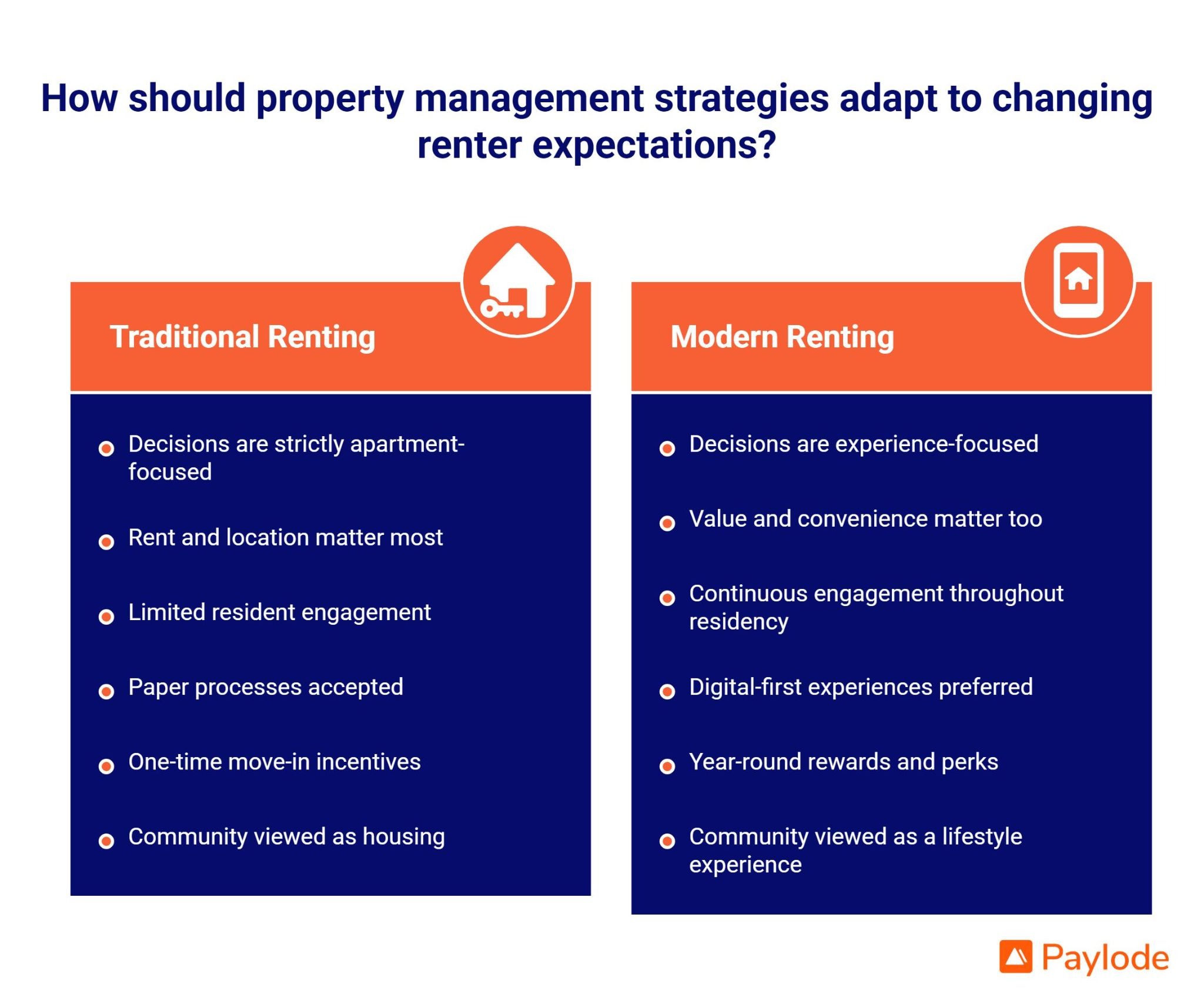
Modern renters approach housing decisions differently than previous generations. While factors such as location and affordability remain important, residents now place greater value on the overall experience a community provides.
Today's renters often compare properties based on how easy it is to interact with management, access information, make payments, receive support, and enjoy additional benefits. These experiences influence perception long before a lease is signed and continue to impact satisfaction throughout residency.
The concept of modern renter expectations revolves around delivering value beyond the apartment itself. Residents increasingly seek communities that make everyday life easier, more rewarding, and more connected to their personal needs.
Why are residents comparing experiences instead of just apartments?
Consumer behavior has evolved. People no longer separate housing experiences from the experiences they receive elsewhere in their lives.
A resident who can receive personalized offers from retailers, earn rewards from travel providers, and manage finances through user-friendly apps naturally expects a similar level of convenience from housing providers. This shift has raised the standard for residential communities.
Property managers are increasingly competing on experience rather than physical assets alone. Communities that provide additional value often create stronger impressions and build more meaningful resident relationships.
How have modern renter expectations changed over the last decade?
Ten years ago, many renters focused primarily on rent price, location, and basic amenities. While these factors remain important, they are no longer enough to stand out.
Today's renters expect ongoing engagement. They value convenience, digital accessibility, personalized communication, and opportunities to save money. These preferences influence leasing decisions and renewal behavior alike.
As expectations continue to evolve, residential operators must think beyond traditional amenities and consider how they can provide consistent value throughout the resident journey.
Why do residents expect more value beyond the apartment itself?
Housing costs represent a significant portion of most household budgets. Because of this, residents increasingly look for opportunities that help maximize the value they receive from where they live.
When evaluating communities, renters often ask a simple question: "What additional value does this property provide beyond the apartment?"
The answer may include convenience services, digital tools, community experiences, or resident benefits that support everyday life. These additions can significantly influence resident satisfaction because they create value that extends beyond the physical living space.
What makes renters look for everyday savings and rewards?
Economic pressures continue to influence consumer behavior. Many residents actively seek ways to reduce expenses and make their budgets go further.
Perks and rewards can help address this need by providing discounts, special offers, and savings opportunities that residents can use regularly. These benefits create practical value that residents notice throughout the year rather than only during move-in.
When benefits align with residents' daily spending habits, they become highly relevant and appreciated.
Why do perks feel like a natural part of the housing experience?
Consumers interact with rewards programs almost everywhere. Airlines offer points. Retailers offer discounts. Restaurants offer loyalty programs.
As these experiences become commonplace, residents naturally begin to expect similar value from housing providers. Perks feel less like an extra feature and more like an extension of the overall resident experience.
This shift helps explain why rewards and benefits have become increasingly important within residential communities.
How are consumer loyalty programs influencing modern renter expectations?
The average consumer participates in multiple rewards programs across different industries. Over time, these experiences shape expectations about value and engagement.
When consumers receive ongoing benefits from other brands, they begin expecting similar treatment from companies they interact with regularly, including housing providers.
This trend has contributed significantly to the rise of modern renter expectations within residential real estate.
Why do residents expect rewards from the brands they interact with?
Rewards programs have become part of everyday life. Consumers have learned to expect benefits in exchange for their loyalty and continued engagement.
As a result, renters increasingly appreciate communities that recognize their residency and provide ongoing value throughout the lease term.
The expectation is not necessarily about receiving large incentives. Instead, residents appreciate benefits that are relevant, useful, and consistently available.
What happens when housing experiences do not match those expectations?
When communities fail to provide meaningful engagement, residents may perceive less overall value from their living experience.
Even if a property offers strong physical amenities, a lack of ongoing resident value can create opportunities for competitors to stand out. This becomes particularly important during renewal periods when residents evaluate whether their current community continues to meet their expectations.
Providing additional value throughout the year helps strengthen resident perception and satisfaction.
Why do perks help properties meet modern renter expectations?
Perks have emerged as an effective way for property managers to address evolving resident preferences. Unlike traditional amenities that may be used occasionally, perks often provide value that residents can access regularly.
This frequent interaction helps reinforce positive experiences throughout the resident lifecycle.
Communities that implement well-designed resident perks programs can provide meaningful benefits while creating stronger connections with residents.
Property managers exploring strategies to enhance resident value can learn more about Resident perks programs through Paylode's resident-focused solutions.
How do resident perks create everyday value?
Perks can provide savings opportunities across categories that residents already use. Whether purchasing household items, dining out, planning travel, or shopping online, residents appreciate benefits that align with existing spending habits.
Because these opportunities are available throughout the year, they create recurring value rather than one-time experiences.
This consistent benefit delivery helps strengthen resident engagement while supporting overall satisfaction.
Why are perks more visible than many traditional amenities?
Many physical amenities provide value but are used infrequently. Residents may visit a fitness center a few times each week or use a clubhouse occasionally.
Perks, however, can become part of everyday life. The ability to access savings regularly creates ongoing reminders of the value a community provides.
These repeated positive interactions can strengthen resident perception over time.
How can resident rewards improve satisfaction and retention?
Resident retention remains a priority for property managers across the country. Retaining existing residents often supports operational efficiency while reducing turnover-related expenses.
Creating positive resident experiences throughout the lease term plays a major role in achieving this goal.
Why do residents remember ongoing benefits?
People tend to remember experiences they encounter repeatedly. When residents regularly access valuable offers or rewards, those interactions contribute to their overall perception of the community.
This creates a continuous cycle of value that reinforces satisfaction over time.
Unlike one-time incentives, ongoing rewards can influence resident sentiment throughout the entire resident lifecycle.
How can rewards support lease renewal conversations?
Renewal decisions are often influenced by perceived value rather than rent alone.
Residents who feel they receive meaningful benefits throughout the year may be more likely to view their housing experience positively. This perception can contribute to stronger renewal discussions and improved long-term resident relationships.
Property managers focused on retention strategies can explore approaches designed to Increase resident retention through enhanced resident engagement.
What role does technology play in delivering modern renter expectations?
Technology has fundamentally changed how consumers interact with businesses. Housing providers are experiencing the same shift.
Residents increasingly expect digital access to services, information, and benefits. Convenience has become a key component of the overall resident experience.
Why do residents expect digital access to perks and rewards?
Most consumers manage many aspects of daily life through mobile devices. Shopping, banking, entertainment, and communication all happen digitally.
Housing experiences are following the same path. Residents appreciate having easy access to benefits without additional effort or complexity.
This preference aligns closely with evolving modern renter expectations and reflects broader consumer trends.
How can property managers deliver benefits without increasing workload?
Technology enables operators to scale resident experiences more efficiently than ever before.
Solutions such as Resident perk centers help centralize benefit delivery, making it easier for residents to discover and access available offers while minimizing administrative effort for property teams.
By simplifying benefit management, operators can provide meaningful resident value without significantly increasing operational complexity.
How are leading residential operators responding to modern renter expectations?
Forward-thinking operators recognize that resident experience has become a competitive differentiator.
Rather than focusing exclusively on physical amenities, many communities are investing in initiatives that deliver ongoing value throughout the resident lifecycle.
These strategies reflect a broader understanding that housing is increasingly viewed as an experience rather than simply a product.
What strategies are successful property managers using today?
Many successful operators focus on creating seamless resident experiences from move-in through renewal.
This includes digital payment experiences, personalized communication, resident engagement initiatives, and value-added benefits that support everyday living.
For example, communities seeking to improve convenience often adopt solutions that support an Automatic payments experience, helping residents simplify routine tasks while improving satisfaction.
Why are perks becoming a competitive advantage?
As more communities offer similar physical amenities, differentiation becomes increasingly difficult.
Perks help create a unique value proposition that extends beyond the apartment itself. Residents often recognize and appreciate benefits that positively impact their daily lives.
This ongoing value can help communities stand out in crowded rental markets while supporting stronger resident relationships.
What should property managers consider when evaluating a resident perks program?
Not all resident benefits programs are created equally. Property managers should evaluate solutions based on resident relevance, ease of implementation, scalability, and long-term value.
The most effective programs align closely with resident interests while requiring minimal operational effort.
How can operators choose the right perks solution?
Successful programs typically offer a wide variety of benefits that appeal to diverse resident populations.
Operators should also consider how easily residents can discover and access available offers. A positive user experience often contributes significantly to program adoption and engagement.
What questions should decision-makers ask before launching?
Property managers should evaluate whether the program supports resident satisfaction goals, retention objectives, and broader business outcomes.
Additionally, they should consider how benefits fit within the overall resident experience strategy and whether they complement existing initiatives such as a Paperless resident experience designed to simplify everyday interactions.
Why will modern renter expectations continue shaping the future of residential housing?
Consumer expectations rarely move backward. Once residents become accustomed to receiving convenience, personalization, and ongoing value, those expectations tend to remain.
The residential real estate industry is experiencing this shift firsthand.
Communities that understand and adapt to modern renter expectations will be better positioned to attract residents, strengthen satisfaction, and improve long-term retention outcomes.
The future of housing will likely involve greater emphasis on resident experience, digital engagement, and ongoing value creation. Perks and rewards represent one practical way to support these evolving expectations while delivering benefits that residents genuinely appreciate.
Conclusion: Why are perks becoming part of modern renter expectations?
Modern renters expect more than a place to live. They increasingly seek experiences that provide convenience, value, and meaningful engagement throughout their residency.
As consumer behavior continues to evolve, property managers have an opportunity to strengthen resident relationships by delivering benefits that matter in everyday life. Perks and rewards help communities provide ongoing value while supporting satisfaction, engagement, and retention goals.
Organizations seeking to enhance resident experiences and support long-term growth can explore the Paylode Platform, discover Paylode Perks, learn about Paylode Boost, review available Pricing Plans, or Book a Demo to see how resident rewards can help create stronger communities and support efforts to Raise customer lifetime value.