Why are resident choice drivers changing in residential real estate?
The way people choose where they live has evolved. Location and price still matter, but they are no longer the only deciding factors.
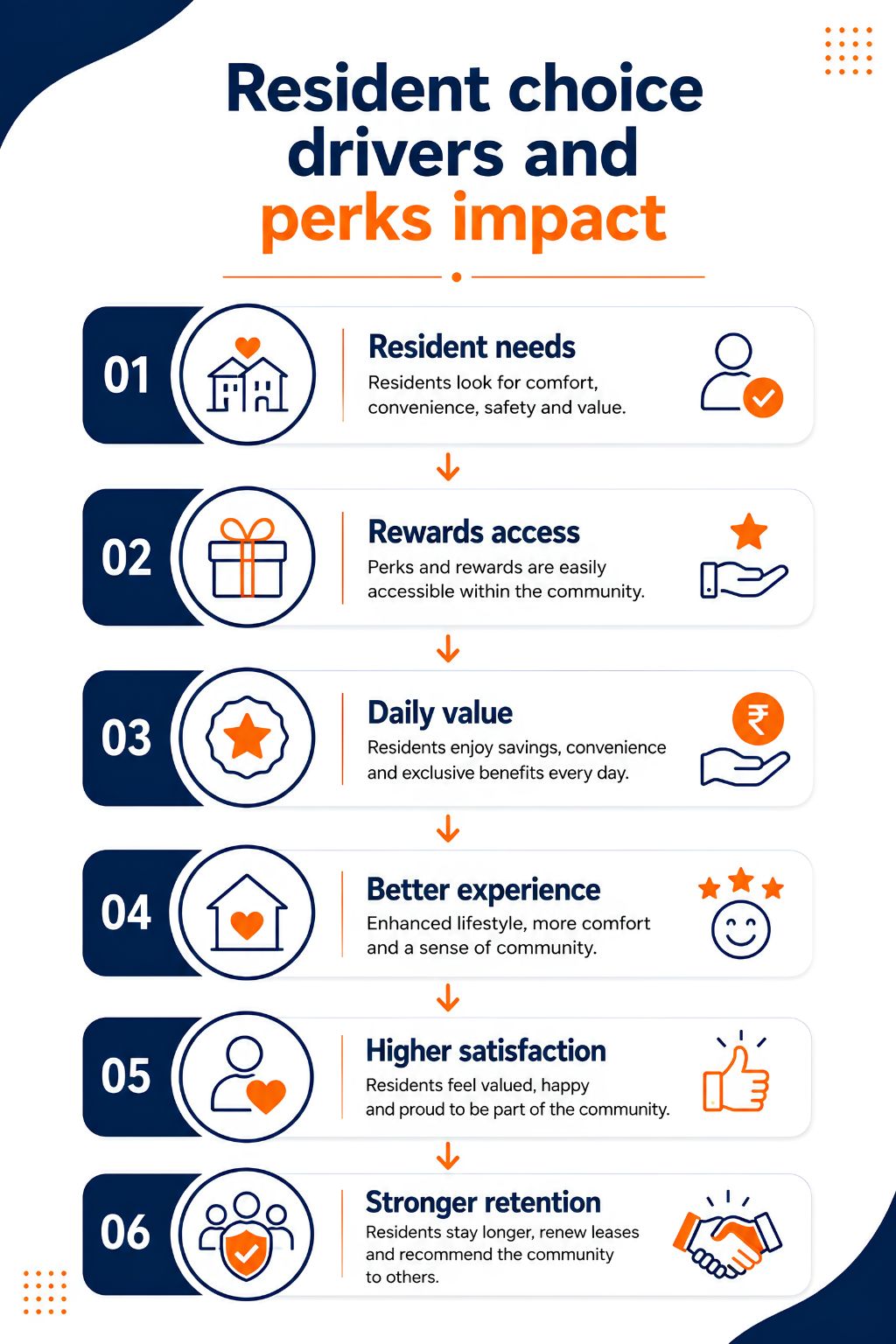
Today, resident choice drivers are shaped by everyday experience. Residents want more than just a place to stay. They want a home that adds value to their daily lives. This is why rewards and benefits are becoming a key part of modern residential communities.
What are the key resident choice drivers today in residential communities?
Resident expectations are driven by practical and emotional needs. These drivers influence leasing decisions and long-term satisfaction.
The most important resident choice drivers include convenience, savings, experience, and a sense of belonging. When a building delivers on these consistently, it becomes more attractive than competitors that only offer standard amenities.
Why do rewards and benefits directly influence resident choice drivers?
Rewards and benefits provide immediate and ongoing value. Unlike traditional amenities that are used occasionally, perks are part of daily life.
This makes them powerful resident choice drivers. They create a steady stream of positive experiences that residents notice regularly. Over time, this consistent value shapes how residents feel about their living environment.
How do rewards improve everyday convenience for residents?
Convenience is one of the strongest resident choice drivers. When daily tasks become easier, residents feel more satisfied.
Rewards can simplify routines by offering quick access to services and solutions. For example, features like automatic payments remove friction from recurring tasks, making everyday living smoother.
This kind of support turns small improvements into meaningful daily benefits.
Why do financial benefits play a major role in resident choice drivers?
Saving money is always important, especially when it is tied to everyday spending.
Rewards that offer discounts or exclusive deals help residents reduce their daily expenses. Over time, these savings add up and increase the perceived value of living in a particular building.
This makes financial benefits one of the most impactful resident choice drivers in modern communities.
How do rewards and benefits strengthen emotional connection with a property?
Residents want to feel valued, not just accommodated. Rewards create that feeling by offering ongoing benefits that show care and attention.
When residents consistently receive value, they develop a stronger emotional connection to their home. This connection is subtle but powerful, influencing how long they stay and how they talk about the property.
How do perks influence long-term retention and leasing decisions?
Retention is not driven by a single moment. It is built through everyday experiences.
Resident choice drivers like convenience, savings, and satisfaction directly impact renewal decisions. By focusing on these, property managers can improve retention outcomes.
Strategies such as increase retention help ensure that residents continue to see value over time.
How do digital perks platforms support modern resident choice drivers?
Delivering rewards at scale requires the right system. Digital platforms make it easy to manage and distribute perks.
With solutions like perk centers available, residents can access benefits in one place. This simplicity improves adoption and ensures that perks become part of daily routines.
As a result, resident choice drivers are consistently supported without adding operational complexity.
What real-life scenarios show why residents prefer perks-driven buildings?
Consider how a typical day unfolds for a resident.
In the morning, they might use a benefit for coffee or groceries. During the day, they enjoy seamless services that save time. In the evening, they access entertainment or wellness offers.
Each interaction reinforces the value of living in that building. Over time, these small moments shape a strong preference for perks-driven communities.
How can property managers align rewards with resident choice drivers?
To maximize impact, rewards must be relevant and easy to use. Residents are more likely to engage when perks fit naturally into their routines.
Property managers should focus on delivering consistent value rather than one-time benefits. When perks are simple and useful, they become part of everyday life.
Why are rewards and benefits becoming a competitive advantage?
The residential market is becoming more experience-driven. Buildings that offer ongoing value stand out.
Resident choice drivers are no longer limited to physical features. They now include digital experiences, convenience, and daily benefits.
By offering rewards, property managers can differentiate their properties and attract modern residents.
Conclusion: How can you use rewards to influence resident choice drivers?
Rewards and benefits are no longer optional. They are essential tools for shaping resident choice drivers and improving overall experience.
If you want to create a stronger, more engaging community, start by exploring solutions like platform, discover curated benefits with perks, and enhance engagement using boost.
FAQs
What are resident choice drivers?
Resident choice drivers are the key factors that influence where people choose to live, including convenience, cost, and overall experience.
Why do perks matter more than amenities?
Perks provide ongoing, everyday value, while amenities are often used occasionally.
Do rewards really impact leasing decisions?
Yes, consistent daily benefits strongly influence both leasing and renewal decisions.
How quickly can perks be implemented?
With the right platform, perks can be launched quickly and scaled easily.