Resident expectations are changing rapidly. Today's renters expect more than quality apartments and attractive amenities. They increasingly look for communities that provide ongoing value, convenience, and meaningful experiences throughout their residency.
This shift has made resident perks programs one of the fastest-growing resident engagement strategies in multifamily housing. Property managers are recognizing that perks can help improve resident satisfaction, strengthen engagement, and support retention without requiring major property upgrades.
However, not all resident perks platforms are created equally.
The platform a residential operator chooses can directly impact resident participation, administrative efficiency, and long-term program success. Selecting the wrong solution can lead to low adoption rates and limited value for residents. Choosing the right platform can create a meaningful competitive advantage.
Understanding the Key features of real estate perks platform solutions is essential for operators looking to maximize resident engagement while minimizing operational effort.
This guide explores the most important features property managers should evaluate before selecting a resident perks platform. It explains how those features contribute to stronger resident experiences and better business outcomes.
What are the key features of real estate perks platform solutions?
Resident perks platforms are designed to help operators provide ongoing benefits to residents without creating significant administrative work.
As resident engagement becomes a larger priority across multifamily housing, more operators are evaluating platforms that can support these goals.
Why has the resident perks platform market grown so quickly?
The growth of resident perks programs is largely driven by changing renter expectations.
Consumers interact daily with brands that offer rewards, memberships, and exclusive benefits. These experiences influence expectations across many industries, including housing.
At the same time, competition among rental communities continues increasing. Operators are searching for ways to differentiate their properties without relying solely on physical amenities.
Resident perks help address both challenges by creating additional value that residents can experience throughout their lease term.
How do perks platforms support resident engagement?
Resident engagement is strongest when communities create regular opportunities for positive interaction.
Perks platforms help accomplish this by providing benefits residents can access repeatedly. Each time a resident discovers a discount, uses a special offer, or takes advantage of a savings opportunity, they experience additional value associated with their community.
These repeated interactions help strengthen relationships between residents and operators.
Why should operators evaluate platforms carefully?
The resident experience varies significantly between platforms.
Some solutions focus primarily on the number of available offers, while others prioritize quality, accessibility, and engagement.
Property managers should evaluate how effectively a platform supports resident participation, simplifies administration, and contributes to long-term community goals.
The most successful programs combine resident value with operational simplicity.
Why is resident value one of the key features of real estate perks platform selection?
Resident value should be the foundation of every perks program.
Without meaningful benefits, even the most advanced platform will struggle to generate engagement.
What types of benefits do residents actually use?
Residents are most likely to engage with benefits that align with their daily lives.
Savings on shopping, dining, entertainment, travel, and everyday purchases consistently drive strong participation because they offer immediate, practical value.
Benefits that are difficult to use or that appeal only to a small audience often lead to lower engagement rates.
This is why many operators prioritize platforms that offer broad access to relevant offers through solutions like Resident Perks.
Why does offer quality matter more than offer quantity?
A platform may advertise thousands of available offers, but quantity alone does not guarantee value.
Residents care more about whether offers are useful and relevant than how many exist.
A smaller collection of high-quality benefits often generates stronger engagement than a large catalog of offers that residents rarely use.
Property managers should focus on evaluating the practical value residents will receive rather than simply comparing offer volume.
How can a perks platform deliver value throughout the resident lifecycle?
The strongest platforms create value from move-in through renewal.
New residents benefit from immediate access to offers and savings. Long-term residents continue finding opportunities that remain relevant over time.
This continuous value helps reinforce positive perceptions of the community throughout the resident journey.
How does platform usability rank among the key features of real estate perks platform solutions?
Even the most valuable benefits will struggle to generate participation if residents cannot access them easily.
Usability is one of the most important factors influencing adoption and engagement.
Why is ease of access important for residents?
Residents expect convenience.
They use mobile apps, online portals, and digital services throughout their daily lives. A resident perks platform should fit naturally into those behaviors.
When residents can quickly discover and redeem benefits, participation increases.
Complicated interfaces or confusing navigation often reduce engagement regardless of the quality of available offers.
How does a simple resident experience improve participation?
Simple experiences reduce friction.
The easier it is for residents to understand the program and access benefits, the more likely they are to participate regularly.
Platforms that prioritize simplicity often see stronger adoption rates because residents can immediately recognize and access available value.
Why should operators evaluate the resident journey before choosing a platform?
Property managers should experience the platform from the resident perspective before making a decision.
The resident journey should feel intuitive from the moment someone logs in.
Every interaction should support engagement rather than create obstacles. Platforms that deliver a smooth experience typically produce stronger long-term participation.
Why are scalability and operational simplicity key features of real estate perks platform success?
Property managers need solutions that fit within existing workflows.
Even a highly valuable program can become difficult to sustain if it requires extensive administrative effort.
How can property managers avoid administrative burden?
Modern perks platforms should automate as much of the process as possible.
Offer management, updates, resident access, and program administration should require minimal manual intervention.
This allows onsite teams to focus on resident relationships rather than managing the platform itself.
Why is scalability important for growing portfolios?
Many operators manage multiple communities.
A platform that works well for a single property should also support portfolio-wide deployment.
Consistency helps create a standardized resident experience while reducing management complexity across locations.
How do modern platforms reduce operational complexity?
Today's solutions provide centralized administration, automated updates, and simplified management tools.
Many operators also benefit from dedicated resident engagement hubs such as Perk Centers, which provide a streamlined experience for both residents and property managers.
The result is a program that remains easy to manage as portfolios grow.
Why should reporting and analytics be key features of real estate perks platform evaluation?
Launching a resident perks program is only the beginning. Property managers also need visibility into how residents are using the program and whether it is creating meaningful engagement.
This is where reporting and analytics become critical.
Without data, operators are left guessing whether residents find value in the program. With the right insights, they can identify opportunities to improve engagement, increase participation, and strengthen overall resident satisfaction.
What resident engagement metrics matter most?
The most valuable metrics are often the simplest.
Property managers should understand how many residents are actively participating, which benefits are generating the highest engagement, and how usage trends evolve over time.
Participation rates, offer redemption activity, and resident adoption trends provide a clear picture of overall program performance.
These metrics help operators determine whether residents are experiencing value and whether additional communication or engagement efforts may be necessary.
How can operators measure program success?
Success should be evaluated through both engagement and resident experience outcomes.
Strong participation often indicates that residents find the program useful. Consistent engagement may also signal that the community is creating value beyond housing itself.
Over time, operators can evaluate whether resident perks contribute to broader goals such as satisfaction, loyalty, and retention.
The ability to track performance helps transform a perks program from a simple amenity into a measurable resident engagement initiative.
Why is visibility important for ongoing optimization?
Resident needs and preferences change over time.
Platforms that provide detailed reporting allow operators to adapt their strategies based on actual resident behavior rather than assumptions.
This data-driven approach helps communities continuously improve resident experiences while maximizing the value of the program.
How do communication tools become key features of real estate perks platform performance?
Even the best resident perks program cannot generate engagement if residents are unaware it exists.
Communication plays a central role in driving participation and helping residents discover available benefits.
Why does resident awareness impact program success?
Residents cannot engage with benefits they do not know about.
One of the most common reasons perks programs underperform is insufficient communication.
Operators should evaluate how effectively a platform helps promote available offers and maintain resident awareness throughout the lease term.
Consistent visibility keeps the program relevant and encourages ongoing participation.
How can integrated communication increase engagement?
Integrated communication tools simplify resident outreach.
Automated reminders, benefit highlights, and engagement campaigns help keep residents informed without creating additional workload for onsite teams.
Many operators strengthen participation by using solutions such as Boost to improve awareness and encourage ongoing engagement with resident benefits.
The easier it is to communicate available value, the more likely residents are to participate regularly.
What communication capabilities should operators evaluate?
Property managers should look for flexibility and simplicity.
The platform should support consistent resident outreach while making it easy to share updates, highlight new benefits, and promote engagement opportunities.
Strong communication tools often contribute significantly to overall program success.
Why are customization options key features of real estate perks platform flexibility?
Every residential community is different.
Resident demographics, market conditions, and property positioning vary widely from one portfolio to another.
As a result, operators should evaluate how well a platform can adapt to their specific needs.
How can branding improve resident adoption?
Residents are more likely to trust and engage with experiences that feel connected to their community.
Branding capabilities allow operators to create a more seamless resident experience by aligning the program with the property's identity.
This familiarity often improves adoption and strengthens the perceived value of the program.
Why do different communities require different approaches?
A luxury high-rise and a suburban garden-style community may serve very different resident populations.
Their needs, preferences, and engagement patterns may vary considerably.
The ability to tailor aspects of the resident experience helps operators create programs that feel relevant to their unique communities.
How much customization should operators expect?
Property managers should look for practical flexibility.
Branding options, communication customization, and program configuration capabilities can help ensure the platform supports both resident expectations and business objectives.
The goal is not endless customization. The goal is creating a resident experience that feels aligned with the community.
How can a perks platform support broader property management goals?
The most effective resident perks platforms extend beyond resident engagement.
They also support operational initiatives that improve efficiency and encourage resident participation in important programs.
How can resident perks encourage automatic payments?
Digital payment adoption remains a priority for many operators because it simplifies processes and improves convenience.
Resident perks can help support these efforts by creating additional motivation for participation.
When residents see clear value associated with enrollment, they are often more receptive to initiatives focused on Automatic Payments.
This creates benefits for both residents and property management teams.
How can perks help increase paperless adoption?
Paperless communication continues to gain importance across residential real estate.
Digital statements, notices, and communications improve efficiency while reducing administrative costs.
Resident benefits can reinforce these efforts by encouraging participation in programs designed to help residents Switch to Paperless.
The combination of convenience and value often leads to stronger adoption.
Why do perks complement retention initiatives?
Retention is built through a series of positive resident experiences.
Perks contribute by creating ongoing value that residents can access throughout their lease term.
Many operators incorporate resident rewards into broader strategies designed to Increase Retention by strengthening resident relationships and increasing overall satisfaction.
Why are resident experience capabilities among the most important key features of real estate perks platform solutions?
Ultimately, resident experience should remain the central focus of every platform evaluation.
The strongest programs create meaningful value that residents recognize and appreciate.
How do perks contribute to resident satisfaction?
Residents appreciate benefits that improve their daily lives.
Whether those benefits provide savings, convenience, or access to unique experiences, they contribute to a more positive perception of the community.
These repeated positive interactions help strengthen resident satisfaction over time.
Why do residents compare experiences rather than amenities alone?
Amenities remain important, but many have become standard across the multifamily industry.
As a result, residents increasingly evaluate the overall experience a community provides.
This trend is visible throughout the broader residential housing market, where operators are investing in resident-focused initiatives that create differentiation beyond physical amenities.
How can perks improve resident lifetime value?
Stronger resident engagement often contributes to longer relationships.
Residents who consistently experience value may be more likely to renew leases, participate in community programs, and recommend the property to others.
This aligns closely with initiatives designed to Raise Customer LTV by creating stronger long-term resident relationships.
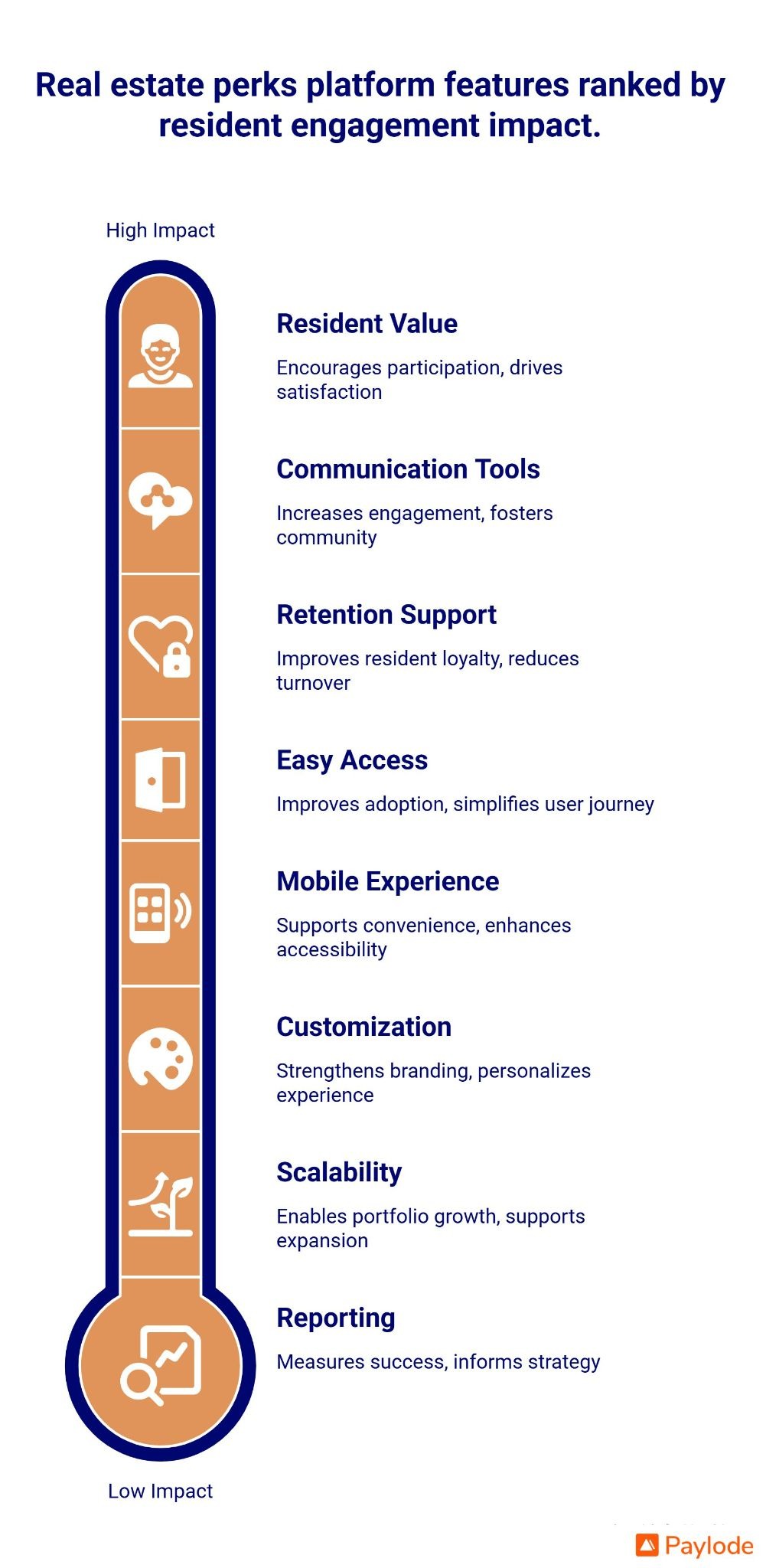
Key takeaway
The best real estate perks platforms combine resident value, ease of use, communication tools, scalability, reporting, and retention support to create stronger resident experiences and better business outcomes.
Image ALT text
Key features of real estate perks platform infographic highlighting resident engagement, reporting, communication, scalability, and retention capabilities.
Why should residential operators invest in the right perks platform today?
Selecting the right resident perks platform is about more than offering discounts. It is about creating a resident experience that delivers ongoing value while supporting broader business goals.
The most effective platforms make it easy for residents to access benefits, simple for property managers to administer programs, and practical for operators to measure success.
As resident expectations continue evolving, communities that invest in resident engagement strategies will be better positioned to strengthen satisfaction, improve retention, and differentiate themselves in increasingly competitive markets.
Leading operators across the Real Estate Industry and broader Residential Real Estate sectors are increasingly recognizing the value of resident benefits as a long-term engagement strategy.
Organizations looking to strengthen resident experiences can explore solutions through the Platform, deliver ongoing value through Perks, review available Plans, and Book a Demo to see how a modern resident perks strategy can support portfolio-wide engagement and retention goals.
The right platform does more than provide benefits. It helps create the kind of resident experience that drives long-term success.
FAQ
What are the key features of a real estate perks platform?
The key features of a real estate perks platform include valuable resident offers, easy access, mobile-friendly experiences, reporting capabilities, communication tools, scalability, customization options, and support for resident engagement and retention goals.
Why should property managers use a resident perks platform?
A resident perks platform helps property managers improve resident satisfaction, strengthen engagement, create additional value beyond housing, and support retention initiatives without requiring major operational changes.
What benefits should a resident perks platform include?
The best resident perks platforms provide discounts on shopping, dining, entertainment, travel, wellness services, and local experiences that residents can use regularly throughout their lease term.
How do resident perks platforms improve resident engagement?
Resident perks platforms create ongoing opportunities for interaction by providing benefits residents can access throughout the year. These recurring touchpoints help strengthen relationships between residents and their communities.
Why is ease of use important when evaluating a perks platform?
Residents are more likely to participate when a platform is easy to access and navigate. A simple resident experience helps increase adoption, engagement, and long-term program usage.
How do perks platforms support resident retention?
Perks platforms deliver ongoing value that helps improve resident satisfaction and strengthen community relationships. These positive experiences can contribute to stronger lease renewal outcomes and long-term resident loyalty.
Can a resident perks platform support automatic payments and paperless initiatives?
Yes. Many operators use resident perks programs to encourage participation in digital engagement initiatives, including automatic payments and paperless communication programs.
What should operators avoid when selecting a perks platform?
Operators should avoid focusing only on price. The most important considerations include resident value, engagement potential, ease of use, scalability, communication tools, and long-term support for resident experience goals.