Tenant churn is one of the most expensive challenges in multifamily operations. Every move-out impacts revenue, increases operational workload, and creates uncertainty in occupancy planning.
At the same time, renewal campaigns often rely on limited levers—emails, reminders, and sometimes pricing adjustments. These tactics work, but they do not always address the core issue: resident motivation.
This is where perks programs come in.
A well-designed perks strategy can directly influence tenant behavior, reduce churn, and create measurable renewal lift through resident perks.
In this blog, we’ll break down how perks programs work as a retention engine and how property managers can use them to strengthen renewal outcomes.
Why tenant churn happens
Before solving churn, it is important to understand why it happens.
Most tenants do not leave because of a single issue. Instead, churn is often the result of a gradual decline in perceived value.
Residents begin to feel that:
- The property is just a place to live
- There is no added value beyond rent
- Competing options offer similar or better experiences
When this happens, renewal becomes a transactional decision rather than an emotional one.
Perks programs help change that dynamic.
What is a perks program in multifamily?
A perks program is a system that provides residents with ongoing benefits that enhance their daily lives.
These benefits can include savings, services, and exclusive offers that are accessible throughout the lease period.
Unlike one-time incentives, perks programs create continuous engagement.
This consistency is what makes them effective in reducing churn.
The connection between perks and renewal behavior
Renewals are not decided at the end of the lease. They are influenced throughout the resident journey.
Every interaction, every experience, and every perceived benefit contributes to the final decision.
Perks programs work by reinforcing positive experiences over time.
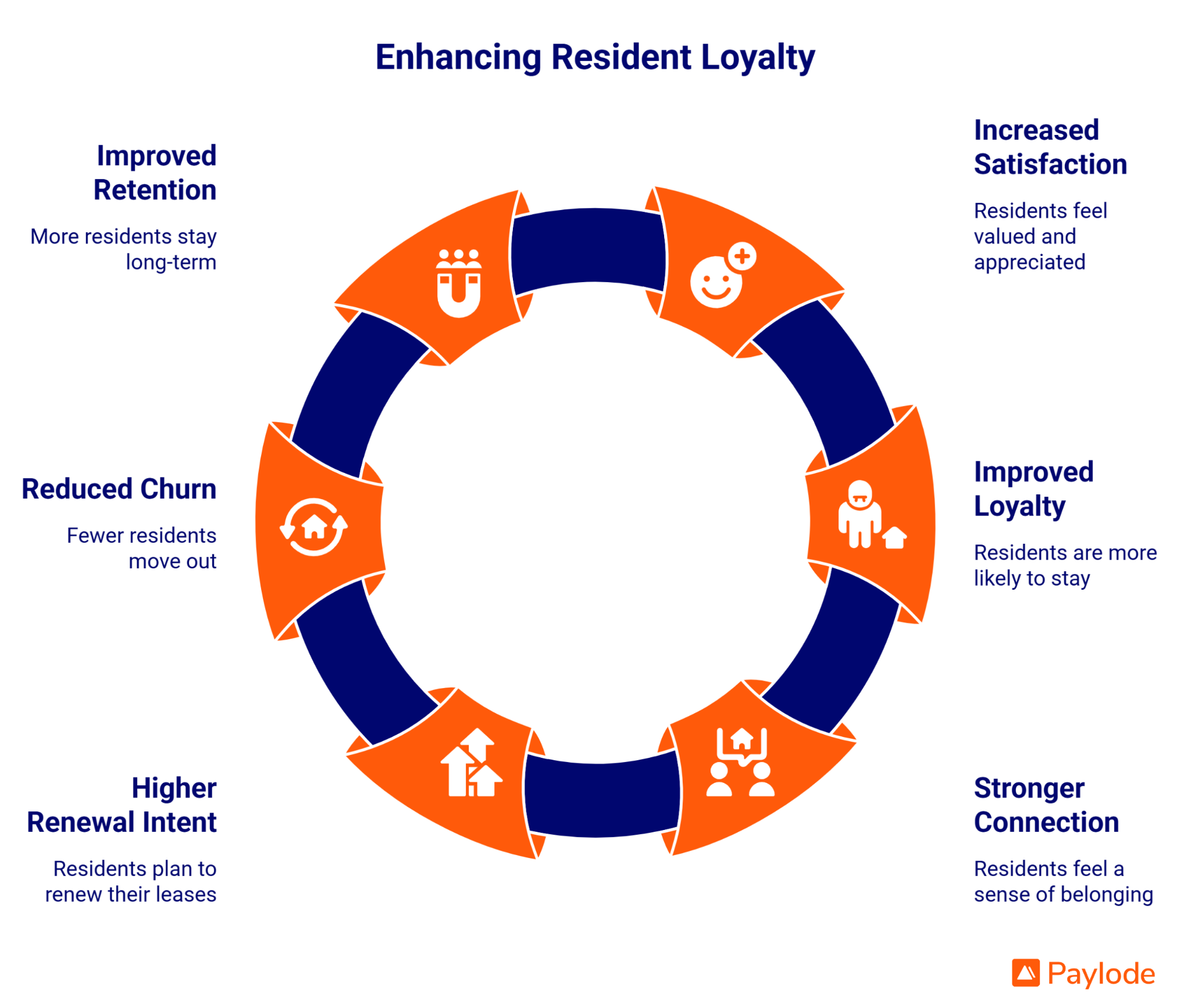
When residents regularly receive value, they are more likely to feel satisfied and stay.
This is how renewal lift through resident perks is achieved—not through a single action, but through consistent engagement.
Moving from reactive to proactive retention
Traditional renewal strategies are reactive.
Property managers reach out close to lease expiration, offer incentives, and hope residents decide to stay.
Perks programs take a proactive approach.
They build loyalty throughout the lease term, so by the time renewal arrives, the decision is already influenced.
Instead of convincing residents to stay, you create reasons for them to stay long before the renewal conversation begins.
How perks programs reduce tenant churn
Creating continuous value
One of the biggest drivers of churn is the lack of ongoing value.
Perks programs address this by providing benefits that residents can use regularly. This shifts the perception of rent from a cost to an experience.
When residents feel they are getting more than just a unit, they are less likely to explore alternatives.
Building emotional connection
Retention is not just about logic. It is also about emotion.
When residents feel recognized and rewarded, they develop a stronger connection with the property.
Perks create small but meaningful moments of appreciation that build this connection over time.
Increasing engagement with the property
Engaged residents are more likely to renew.
Perks programs encourage interaction through ongoing benefits. This keeps residents connected to the property experience instead of feeling disconnected.
Programs like resident perks are designed to create this kind of consistent engagement.
Reducing decision friction at renewal
When renewal time arrives, residents evaluate their options.
If they have been consistently receiving value, the decision becomes easier. There is less need to compare alternatives because the current experience already meets their expectations.
This reduces churn and improves renewal rates.
Supporting renewal campaigns with perks
Perks programs do not replace renewal campaigns. They strengthen them.
Instead of relying only on reminders and offers, you can integrate perks into your renewal strategy.
Reinforcing value during renewal communication
When reaching out to residents for renewal, perks can be positioned as part of the overall value.
Instead of focusing only on rent, the conversation includes ongoing benefits that residents already enjoy.
This makes the offer more compelling without reducing pricing.
Rewarding renewal actions
Perks can also be used as a reward for renewing a lease.
When residents receive a benefit after renewal, it reinforces their decision and increases satisfaction.
This creates a positive feedback loop that supports long-term retention.
Aligning perks with lifecycle moments
Timing plays a key role in renewal campaigns.
Perks can be introduced at key moments, such as:
- Mid-lease engagement
- Pre-renewal phase
- Post-renewal reinforcement
This ensures that residents remain engaged throughout the journey.
The role of behavior in retention
Tenant behavior is one of the most important factors in retention.
Perks programs influence behavior by linking actions with benefits.
For example, residents who engage more with the property experience are more likely to stay. When perks are tied to these interactions, engagement increases naturally.
This behavioral approach makes retention more predictable and measurable.
Integrating perks with operational workflows
To maximize impact, perks programs should be integrated with existing workflows.
This includes:
- Payment systems
- Communication tools
- Renewal processes
For example, encouraging residents to adopt digital payments can improve consistency and reduce operational effort. This works well alongside automatic payment strategies.
When perks are embedded into everyday operations, they become part of the resident experience rather than an add-on.
Measuring the impact of perks on renewals
To understand the effectiveness of a perks program, property managers should track key metrics.
These include:
- Renewal rates
- Resident engagement levels
- Payment consistency
- Average lease duration
Over time, these metrics provide clear insights into how perks influence behavior and outcomes.
Long-term value: beyond immediate renewals
While perks programs improve immediate renewal rates, their impact goes beyond that.
They contribute to long-term value by:
- Increasing resident lifetime value
- Reducing turnover costs
- Strengthening brand perception
Strategies focused on raising customer LTV benefit significantly from consistent engagement driven by perks.
Avoiding common mistakes
To achieve meaningful results, it is important to avoid common pitfalls.
Offering generic perks without relevance can reduce engagement. Inconsistent delivery can weaken the impact. Lack of integration with workflows can limit effectiveness.
The key is to focus on relevance, consistency, and alignment with resident behavior.
The future of renewal strategies
Renewal strategies are evolving.
Instead of relying solely on pricing and communication, property managers are focusing on experience and engagement.
Perks programs play a central role in this shift.
They provide a scalable way to influence behavior, improve satisfaction, and reduce churn.
As competition increases, this approach will become essential.
Getting started with a perks program
The best way to begin is with a focused approach.
Start by identifying key points in the resident journey where engagement can be improved. Introduce perks at these moments and measure the results.
As you see improvements, expand the program across more touchpoints.
Solutions like Paylode platform, Paylode perks, and Paylode Boost can help property managers implement and scale perks programs effectively.
Conclusion: turning retention into a continuous process
Tenant retention is not a one-time effort. It is a continuous process that requires consistent engagement and value delivery.
Perks programs provide a practical and scalable way to achieve this.
By influencing behavior and enhancing the resident experience, they reduce churn and create measurable renewal lift.
If you are looking to strengthen your renewal campaigns and improve long-term performance, this is a strategy worth exploring.
You can review available options on Paylode plans or take the next step by booking a demo.
FAQs
How do perks programs reduce tenant churn?
They provide ongoing value and engagement, which increases satisfaction and reduces the likelihood of residents leaving.
What is renewal lift through resident perks?
It refers to the increase in lease renewals driven by consistent engagement and value provided through perks programs.
Can perks replace traditional renewal incentives?
No, they complement them by building long-term loyalty rather than relying only on short-term offers.
Are perks programs scalable?
Yes, with the right platform, they can be implemented across multiple properties efficiently.
How quickly can results be seen?
Initial engagement improvements can be seen quickly, while renewal impact becomes more visible over time.