Today's renters expect more from their housing experience than ever before. A clean apartment, a responsive maintenance team, and attractive amenities remain important, but they are no longer enough to stand out in a competitive rental market.
Consumer expectations have evolved. People are accustomed to receiving value from the brands they interact with every day. Membership programs, rewards programs, streaming subscriptions, and retail benefits have changed how consumers think about loyalty and ongoing value.
Those expectations are increasingly influencing residential real estate.
Modern renters want more than a place to live. They want a community that enhances their lifestyle, supports their daily needs, and offers benefits that extend beyond the apartment itself.
This shift has sparked a growing conversation around Expected perks for renters and how property managers can meet those expectations without dramatically increasing operating costs.
For residential operators, understanding what residents value most is becoming increasingly important for resident engagement, retention, and overall community success.
The communities that create meaningful experiences beyond traditional amenities are often the ones that generate stronger satisfaction, higher retention, and more positive resident relationships.
In this guide, we explore the perks that modern residents increasingly expect and how property managers can deliver them effectively.
What are the expected perks for renters in today's housing market?
The definition of resident value has expanded significantly over the past decade.
While location and amenities remain important, renters increasingly evaluate communities based on the overall experience they provide. This includes convenience, engagement, savings opportunities, and access to benefits that improve everyday life.
Why are renters expecting more than traditional amenities?
Many amenities that once differentiated apartment communities have become standard.
Fitness centers, package lockers, coworking spaces, resident lounges, and pet-friendly features are now common across many properties. As a result, renters are looking beyond physical amenities when evaluating where to live.
The focus is shifting toward experiences.
Residents increasingly appreciate communities that provide ongoing value rather than relying solely on features that are used only occasionally.
How have membership programs shaped expected perks for renters?
Consumers interact with benefits programs every day.
They receive discounts through retail memberships, enjoy travel rewards, access exclusive subscriber content, and participate in customer loyalty programs.
These experiences have conditioned consumers to expect ongoing benefits from the organizations they engage with.
As those expectations carry into housing, residents increasingly look for communities that provide value beyond the lease agreement itself.
Why are resident perks becoming a competitive necessity?
Resident perks have become a practical way for operators to create differentiation.
Instead of competing exclusively on amenities or rental rates, communities can offer benefits that residents use year-round.
Many operators now offer programs such as Resident Perks to deliver meaningful value and strengthen resident engagement.
These programs help communities remain competitive while improving the overall resident experience.
Why are savings opportunities among the most expected perks for renters?
When residents think about value, savings often come first.
Practical financial benefits remain among the most appreciated resident perks because they provide immediate, measurable value.
How do everyday discounts create immediate value for residents?
Residents appreciate benefits they can use regularly.
Savings on shopping, dining, entertainment, household purchases, and everyday services help residents reduce common expenses without changing their routines.
Because these savings apply to activities residents already participate in, they often generate strong engagement and appreciation.
The value is easy to understand and immediately relevant.
Why do residents appreciate practical benefits?
Practical perks help residents feel that their community is providing tangible value.
Unlike one-time promotions or occasional giveaways, ongoing savings opportunities remain useful throughout the lease term.
This consistency contributes to greater satisfaction because residents continue to experience benefits long after move-in.
How can communities deliver savings without increasing costs?
Modern resident engagement platforms enable operators to offer savings opportunities without creating significant financial or administrative burdens.
Rather than building custom discount programs internally, communities can leverage established benefit networks that already provide a broad range of resident offers.
This allows operators to deliver meaningful value efficiently and at scale.
How do lifestyle experiences rank among expected perks for renters?
Modern residents increasingly prioritize experiences.
Many renters are looking for opportunities that enhance their lifestyle, improve convenience, and support personal interests.
Why do renters value travel and entertainment benefits?
Experiences often create stronger emotional connections than simple discounts.
Travel savings, entertainment offers, and recreational opportunities help residents enjoy activities they may not otherwise prioritize.
These benefits contribute to a more enjoyable living experience while creating positive associations with the community.
How do wellness perks contribute to resident satisfaction?
Health and wellness continue to play an important role in resident expectations.
Benefits related to fitness, wellness services, healthy living, and personal well-being often resonate strongly with residents who prioritize balanced lifestyles.
Communities that support wellness initiatives often foster stronger engagement and improve overall resident satisfaction.
Why are lifestyle perks becoming more important than one-time giveaways?
One-time giveaways generate temporary excitement.
Lifestyle benefits create ongoing value.
Residents can continue enjoying experiences throughout the year, making the perks program a meaningful part of their everyday lives rather than a short-term promotion.
This ongoing relevance often produces stronger long-term engagement.
What digital conveniences are expected perks for renters today?
Digital convenience has become one of the most important aspects of the resident experience.
Modern renters manage much of their daily lives through mobile devices. They shop online, access services digitally, manage finances through apps, and expect immediate access to information when they need it.
These expectations increasingly influence how residents evaluate rental communities.
Why do residents expect seamless digital experiences?
Convenience drives expectations.
Residents want simple, efficient ways to interact with their community without needing to visit an office or make phone calls for routine tasks.
Whether accessing community information, reviewing account details, or discovering available benefits, renters increasingly expect digital experiences that save time and reduce friction.
Communities that provide convenient digital access often lead to higher resident satisfaction because they align with modern consumer behavior.
How do resident portals improve the resident experience?
Resident portals centralize important information and simplify communication.
When residents can easily access community resources, benefits, and updates, they are more likely to engage with available services.
Digital access also creates opportunities to promote resident benefits more effectively, ensuring that residents understand and use the value available to them.
Why are digital resident benefits becoming standard?
Digital experiences are no longer viewed as premium features.
They are increasingly considered part of the baseline resident experience.
As technology adoption continues to grow, residents expect communities to provide benefits that are easy to access, mobile-friendly, and available whenever they are needed.
Property managers who recognize these expectations are often better positioned to deliver stronger resident experiences.
How do community-focused perks become expected perks for renters?
Residents increasingly want to feel connected to the communities where they live.
This extends beyond the apartment itself and includes the surrounding neighborhood, local businesses, and opportunities for community engagement.
Why do residents value local business partnerships?
Local businesses often provide experiences residents use frequently.
Restaurants, coffee shops, fitness studios, entertainment venues, and service providers all contribute to residents' lifestyles.
When communities help residents discover and access these businesses, they create additional value while strengthening neighborhood connections.
Residents appreciate benefits that make it easier to engage with their local area.
How do local perks strengthen resident relationships?
Community-focused benefits create a more personalized experience.
Residents often perceive local offers as more relevant because they connect directly to places and services they may use regularly.
These benefits help communities demonstrate an understanding of resident interests while creating additional opportunities for engagement.
Why do local benefits create stronger differentiation?
Many apartment communities offer similar amenities.
Local partnerships, however, can create unique experiences that are difficult for competitors to replicate.
These partnerships help establish a distinct community identity while providing residents with benefits that feel personalized and relevant.
For operators seeking meaningful differentiation, local engagement can be a powerful strategy.
How do expected perks for renters influence resident retention?
Resident retention is influenced by the overall experience residents receive throughout their lease term.
While pricing, service quality, and property condition remain important, ongoing value also plays a significant role.
Why does ongoing value improve resident satisfaction?
Residents appreciate communities that continue providing benefits after move-in.
Ongoing value reinforces the perception that the community is invested in the resident experience rather than focusing solely on leasing activity.
Each positive interaction contributes to overall satisfaction and strengthens the resident's connection to the community.
How do perks affect lease renewal decisions?
Residents rarely make renewal decisions based on a single factor.
Instead, they evaluate the overall value they derive from living in a community.
Perks contribute to this evaluation by creating additional benefits that residents may not find elsewhere.
Communities that consistently provide value often strengthen resident loyalty and reduce the likelihood that residents will actively seek alternatives.
How can perks contribute to resident lifetime value?
Longer resident relationships create benefits for both residents and operators.
Residents enjoy continued access to community benefits, while operators benefit from stronger engagement and reduced turnover.
Many communities integrate resident perks into broader initiatives designed to Raise Customer LTV by creating more valuable and rewarding resident experiences.
What resident engagement opportunities are now expected perks for renters?
Modern residents increasingly expect ongoing engagement rather than occasional communication.
Communities that create regular opportunities for interaction often build stronger relationships among residents over time.
Why do residents want more frequent engagement?
People want to feel connected to where they live.
Regular engagement helps residents stay informed, discover available benefits, and feel more involved in the community.
Frequent communication also creates opportunities for property managers to reinforce the value residents receive.
How can resident perks create additional touchpoints?
Perks programs naturally create opportunities for ongoing interaction.
Residents may receive updates about new offers, seasonal benefits, or special opportunities throughout the year.
These touchpoints provide positive reasons to engage with community communications rather than interacting only when operational issues arise.
Many operators use solutions such as Boost to increase awareness and encourage greater participation in resident benefit programs.
Why does engagement matter throughout the lease lifecycle?
Engagement helps strengthen resident relationships from move-in through renewal.
Communities that maintain consistent engagement often foster stronger loyalty because residents continue to experience value throughout their residency.
This ongoing connection contributes to both satisfaction and retention.
How can expected perks for renters support broader property goals?
Resident perks do more than improve resident experiences.
They can also support operational initiatives that benefit both residents and property management teams.
How can perks encourage automatic payments?
Digital payment adoption continues to be a priority for many operators.
Resident perks can help support participation by providing additional motivation and value.
Programs that align resident benefits with initiatives focused on Automatic Payments often enhance convenience and encourage resident participation.
How can perks support the adoption of paperless communication?
Many communities are working to reduce paper-based processes and increase digital engagement.
Resident benefits can support these efforts by creating incentives that encourage participation in digital communication programs.
This aligns naturally with initiatives designed to help residents switch to Paperless while improving communication efficiency.
Why do perks complement retention initiatives?
Retention strategies are most effective when they consistently create value.
Resident perks provide ongoing benefits that enhance satisfaction and reinforce positive perceptions of the community.
Many operators incorporate perks into broader efforts designed to Increase Retention through continuous resident engagement and relationship building.
Why are resident experience platforms helping deliver expected perks for renters?
As renter expectations continue evolving, residential operators need efficient ways to deliver value consistently across their communities.
This is where resident experience platforms play an increasingly important role.
Rather than managing multiple resident engagement tools separately, operators can use centralized platforms that bring benefits, communication, and resident engagement together into a single experience.
How do centralized platforms simplify resident access?
Residents are more likely to participate when benefits are easy to find and easy to use.
A centralized resident experience platform provides a single destination where residents can access available offers, discover new opportunities, and engage with community benefits.
This convenience improves participation because residents do not need to navigate multiple systems or search for available perks.
Many operators use solutions such as Perk Centers to create a consistent resident experience while simplifying administration.
Why is scalability important for operators?
Property managers often oversee multiple communities with different resident demographics and engagement goals.
A scalable platform allows operators to deliver a consistent experience across their portfolio without increasing administrative complexity.
This consistency helps strengthen resident satisfaction while making it easier to manage engagement initiatives across multiple locations.
What platform capabilities matter most?
The strongest resident experience platforms combine accessibility, resident value, communication tools, and reporting capabilities.
Property managers should prioritize solutions that make resident participation simple while providing visibility into engagement trends and program performance.
Platforms that support both resident needs and operational goals often deliver the strongest long-term results.
What future expected perks for renters will shape the next generation of communities?
Resident expectations will continue changing as technology evolves and consumer experiences become more personalized.
The perks renters expect today will likely become baseline expectations in the future.
Communities that anticipate these changes will be better positioned to attract and retain residents.
How will personalization influence resident expectations?
Residents increasingly expect experiences tailored to their interests and preferences.
Future perks programs may provide more personalized recommendations, targeted offers, and customized experiences based on resident behavior and preferences.
This personalization can help increase engagement while making benefits feel more relevant and valuable.
Why will digital experiences continue expanding?
Digital convenience has become deeply integrated into daily life.
Residents expect mobile access, instant information, and convenient self-service experiences across nearly every aspect of their lives.
As these expectations continue growing, rental communities will need to provide digital experiences that match the convenience residents receive elsewhere.
How will resident perks become a standard offering?
Resident perks are rapidly moving from optional differentiators to expected components of the resident experience.
As more operators adopt resident engagement strategies, renters will increasingly view ongoing benefits as a normal part of community living.
Communities that embrace this shift early may gain a meaningful advantage in attracting, engaging, and retaining residents.
Key takeaway
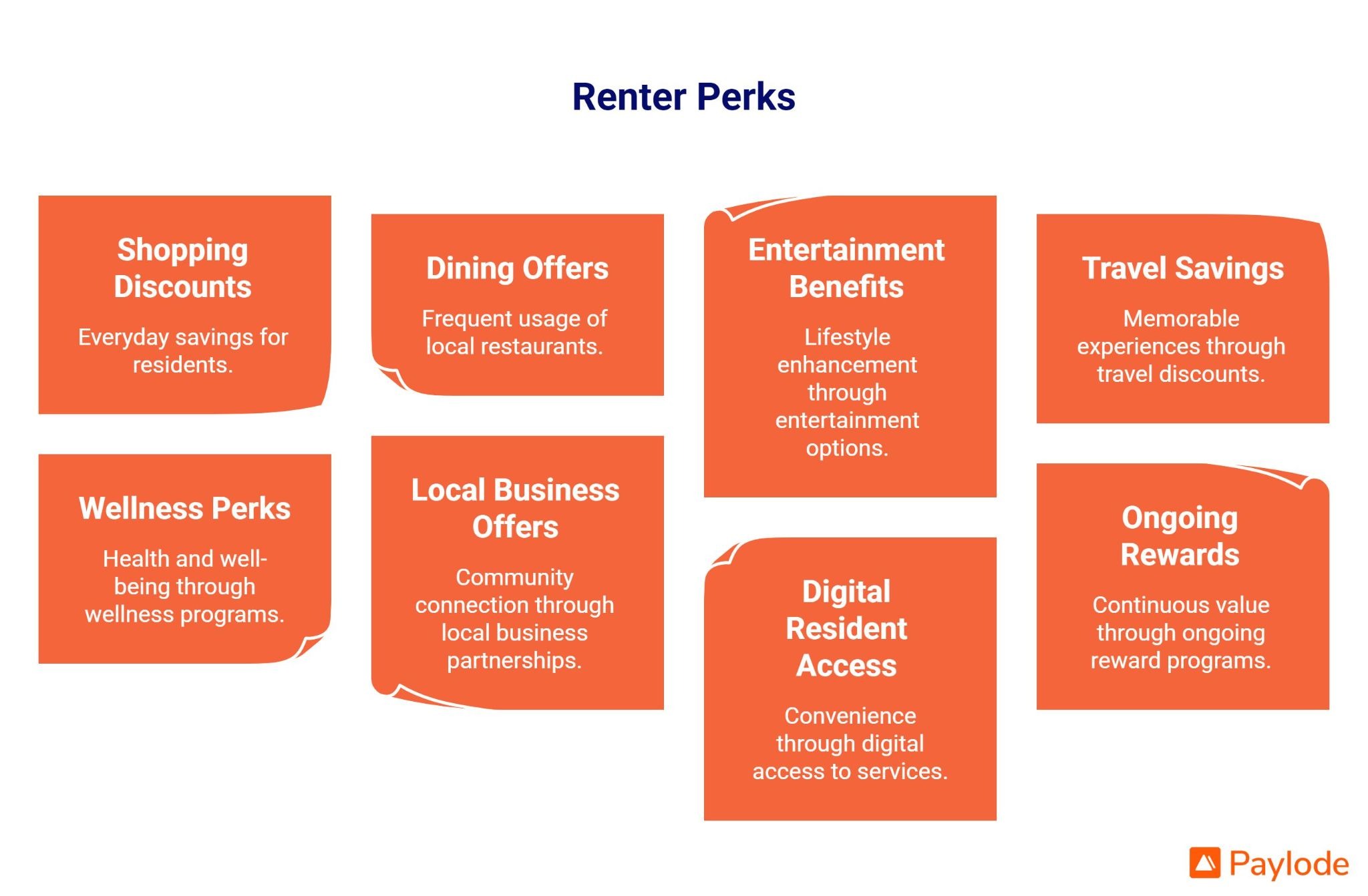
Expected perks for renters now extend beyond traditional amenities and include savings, lifestyle experiences, digital conveniences, local partnerships, and ongoing resident engagement opportunities.
FAQ
What perks do renters expect from modern apartment communities?
Modern renters increasingly expect benefits beyond traditional amenities. Common expectations include resident discounts, lifestyle experiences, wellness benefits, digital conveniences, local business offers, and ongoing resident rewards programs.
Why are resident perks becoming more important?
Resident perks help create value beyond housing. As renters become accustomed to rewards programs and membership benefits in other industries, they increasingly expect similar value from their living experience.
What benefits create the most value for residents?
The most popular resident benefits typically include shopping discounts, dining offers, entertainment savings, travel opportunities, wellness perks, and local business partnerships that provide everyday value.
How do resident perks improve resident satisfaction?
Resident perks create ongoing positive experiences throughout the lease term. Consistent access to valuable benefits helps residents feel appreciated and increases the overall value they associate with their community.
Can perks help increase lease renewals?
Yes. While many factors influence renewal decisions, resident perks contribute to stronger satisfaction, engagement, and perceived value, which can support retention efforts.
Why are digital resident benefits becoming standard?
Residents increasingly expect mobile-friendly, self-service experiences. Digital access makes benefits easier to use and aligns with modern consumer expectations around convenience.
How do local business offers benefit residents?
Local offers help residents save money while encouraging exploration of the surrounding neighborhood. These partnerships also strengthen community connections and create more personalized resident experiences.
How can property managers implement resident perks programs?
Many operators use resident engagement solutions available through the Platform to provide valuable Perks, explore flexible Plans, and Book a Demo to evaluate how a resident perks strategy can support engagement and retention goals.
Conclusion: Why should property managers invest in expected perks for renters today?
The definition of resident value is changing.
Today's renters expect more than quality apartments and attractive amenities. They increasingly seek communities that offer ongoing benefits, digital convenience, lifestyle enhancements, and meaningful engagement opportunities throughout their residency.
Understanding renters' expected perks is no longer optional for property managers seeking to remain competitive. Communities that provide continuous value often create stronger resident relationships, improve satisfaction, and support long-term retention.
Resident perks have become one of the most effective ways to deliver that value.
Whether through everyday savings, lifestyle experiences, digital conveniences, or local partnerships, perks help transform the resident experience from transactional to relationship-driven.
As resident expectations continue evolving, the communities that consistently provide value beyond housing will be best positioned to attract, engage, and retain residents in the years ahead.