Residential real estate operators are under pressure to improve resident satisfaction while also finding new ways to grow revenue beyond rent. Rising operating expenses, slower rent growth in some markets, and higher resident expectations are changing how property managers think about long-term profitability. Today, residents want more than an apartment. They want convenience, savings, and experiences that improve everyday life.
This shift is why many operators are exploring ancillary revenue through perks marketplace programs. A curated perks marketplace allows property managers to offer residents exclusive discounts, lifestyle offers, and savings opportunities through a branded resident experience. These programs help operators create additional value for residents while opening new opportunities for engagement, retention, and revenue growth.
For many multifamily communities, ancillary revenue has traditionally come from parking fees, pet fees, storage, or utility programs. While those revenue streams still matter, they often have limitations. Residents may see added fees as frustrating rather than valuable. A curated perks marketplace changes that experience by offering benefits residents actually want to use regularly.
Modern renters increasingly compare living experiences, not just floor plans or amenities. A community that helps residents save money on groceries, travel, entertainment, wellness services, and local businesses can stand out in a crowded market. That added value can influence leasing decisions, increase renewal rates, and improve overall resident satisfaction.
Another reason ancillary revenue through perks marketplace strategies are growing is the rise of digital resident engagement. Property managers already communicate with residents through portals, mobile apps, email campaigns, and payment systems. Integrating perks into those existing touchpoints creates a simple and accessible experience that encourages ongoing participation.
Many operators are also connecting perks programs with important resident actions. Communities can encourage behaviors like auto-pay enrollment, paperless billing adoption, referrals, and lease renewals by rewarding residents with valuable savings and offers. This creates a stronger relationship between resident engagement and operational performance.
For example, communities using resident perks programs can provide residents with ongoing everyday value while building a more connected resident experience. Instead of relying only on physical amenities, operators can extend value into residents’ daily lives both inside and outside the property.
The growing focus on resident retention is also driving interest in perks marketplaces. Retaining existing residents is often far more cost-effective than acquiring new ones. When residents consistently receive meaningful value from where they live, they are more likely to renew leases and remain engaged with the property community.
A curated perks marketplace also creates opportunities for brand partnerships and sponsored offers that can support ancillary revenue goals without increasing financial pressure on residents. Rather than adding more mandatory fees, operators can provide optional benefits that residents view positively.
As competition in residential real estate continues to increase, operators are looking for strategies that support both financial performance and resident loyalty. A well-designed perks marketplace helps accomplish both goals at the same time by turning everyday resident engagement into a long-term value driver.
What is ancillary revenue through a perks marketplace?
Ancillary revenue through perks marketplace programs refers to additional income opportunities created by offering residents access to curated savings, discounts, and lifestyle benefits through a centralized platform. Instead of relying only on rent and standard property fees, residential real estate operators can create new value-driven revenue streams while improving the resident experience.
In simple terms, a curated perks marketplace gives residents access to offers they can use in everyday life. These offers may include dining discounts, streaming subscriptions, grocery delivery savings, fitness memberships, travel deals, pet services, moving assistance, wellness programs, and local business promotions. Residents gain access to meaningful savings, while operators strengthen engagement and create opportunities for long-term revenue growth.
This model has become increasingly attractive because residents are paying closer attention to overall living value, not just apartment pricing. In competitive rental markets, residents often compare communities based on convenience, digital experiences, and lifestyle support. A perks marketplace helps operators deliver value outside the traditional apartment experience.
Unlike older resident rewards programs that focused only on occasional promotions, modern perks marketplaces are designed to create ongoing engagement. Residents can use these benefits throughout the year, making the property experience feel more connected to their everyday routines.
How does a curated perks marketplace work for residential properties?
A curated perks marketplace is typically integrated into the resident experience through a mobile app, resident portal, email campaigns, or community communication platform. Residents can browse available offers, activate discounts, and redeem savings directly through a branded experience connected to their property management company.
The most successful marketplaces focus on simplicity. Residents should be able to access offers easily without complicated sign-ups or difficult redemption processes. When the experience feels seamless, participation rates tend to increase significantly.
For property managers, the operational burden is often low because many perks platforms manage the partnerships, offer updates, and ongoing marketplace maintenance. This allows operators to provide a premium resident benefit without requiring large internal teams or complex administration.
A major advantage of ancillary revenue through perks marketplace programs is flexibility. Operators can tailor offers based on resident demographics, regional interests, or seasonal trends. Communities with younger renters may prioritize streaming, travel, and wellness offers, while family-focused properties may emphasize grocery savings, childcare discounts, or local entertainment options.
Many operators are also expanding perks into broader resident engagement strategies connected to automatic payments. For example, residents who enroll in auto-pay may unlock additional rewards or exclusive savings opportunities. This approach supports both operational efficiency and resident participation at the same time.
Why are perks marketplaces becoming popular in multifamily housing?
The growing popularity of perks marketplaces is closely tied to changing renter expectations. Residents increasingly expect digital convenience and personalized experiences across every aspect of daily life. They already receive customized offers from banks, retailers, travel companies, and streaming services. Multifamily housing is now adapting to those same expectations.
Property managers are also recognizing that amenities alone are no longer enough to create differentiation. Pools, fitness centers, and coworking spaces remain important, but many communities offer similar physical amenities. A curated perks marketplace extends value beyond the property itself and creates year-round engagement opportunities.
Another important factor is affordability pressure. Many renters are actively looking for ways to reduce everyday expenses. Savings on food delivery, transportation, entertainment, shopping, and utilities can create meaningful financial relief for residents. When a property helps residents save money consistently, that value becomes part of the overall living experience.
Communities operating in the real estate sector are increasingly using perks marketplaces as part of broader resident engagement and retention strategies. Operators are discovering that providing everyday value can strengthen resident relationships more effectively than relying only on promotional leasing incentives.
Digital resident behavior is also influencing adoption. Residents now spend more time interacting with property management technology platforms for rent payments, maintenance requests, package tracking, and community updates. Adding perks into those existing touchpoints increases visibility and creates additional reasons for residents to engage regularly with the property’s digital ecosystem.
As the multifamily industry becomes more resident-focused, ancillary revenue through perks marketplace strategies is emerging as a practical way to support both resident satisfaction and financial performance without creating friction for residents.
How can ancillary revenue through perks marketplace programs create new income streams?
Residential real estate operators are increasingly looking for revenue opportunities that strengthen resident relationships instead of creating frustration around additional fees. This is one of the biggest reasons ancillary revenue through perks marketplace programs are gaining momentum across multifamily housing portfolios.
A curated perks marketplace creates opportunities for operators to generate value through engagement, partnerships, and resident participation rather than relying only on traditional property-related charges. When structured correctly, these programs can support both short-term revenue goals and long-term retention strategies.
One of the strongest advantages of a perks marketplace is that residents view it as a benefit instead of an extra expense. That difference changes how residents interact with the property experience. Rather than feeling like they are constantly paying additional fees, residents feel they are receiving ongoing value from where they live.
How do partnerships with brands generate additional revenue?
Many perks marketplaces are powered by partnerships with national brands, local businesses, and service providers that want access to engaged residential communities. These partnerships can create revenue-sharing opportunities while also helping residents save money on products and services they already use regularly.
For example, a local fitness studio may provide discounted memberships to residents in exchange for increased exposure and customer acquisition. National brands may also participate in sponsored campaigns that reward residents with exclusive pricing or limited-time promotions.
This creates a win-win situation for everyone involved. Residents receive meaningful savings, brands gain access to targeted audiences, and property operators strengthen resident engagement while supporting ancillary revenue goals.
Another important benefit is scalability. A perks marketplace can continue generating engagement across multiple communities without requiring operators to build entirely new revenue systems for each property. Once integrated into the resident experience, the marketplace becomes an ongoing value channel that can evolve over time.
Communities using curated marketplaces through perk centers can centralize resident offers while maintaining a branded experience tailored to their portfolio. This consistency helps improve visibility and participation across different resident segments.
What resident actions can increase ancillary revenue?
Many property managers are now connecting perks with behaviors that improve operational efficiency and resident retention. Instead of offering generic incentives, operators can reward actions that support business performance while also benefiting residents.
Some of the most common resident actions connected to perks programs include:
- Auto-pay enrollment
- Paperless billing adoption
- Lease renewals
- Resident referrals
- Community event participation
- Digital portal engagement
When residents are rewarded for these actions, participation rates often improve because the benefits feel immediate and practical. For example, offering additional savings opportunities to residents who choose paperless billing can help operators reduce administrative costs while creating a more environmentally friendly resident experience.
Many operators are also using perks programs to support the switch to paperless initiatives by encouraging digital communication and billing adoption through resident rewards.
Referral activity is another strong contributor to ancillary value. Residents who enjoy the perks experience are often more likely to recommend the community to friends or family. This can help reduce marketing acquisition costs while improving occupancy stability.
Lease renewal campaigns also become more effective when residents already associate the property with ongoing everyday value. Instead of focusing only on pricing during renewal discussions, operators can reinforce the broader lifestyle benefits residents receive through the community.
Why does higher resident engagement improve long-term revenue?
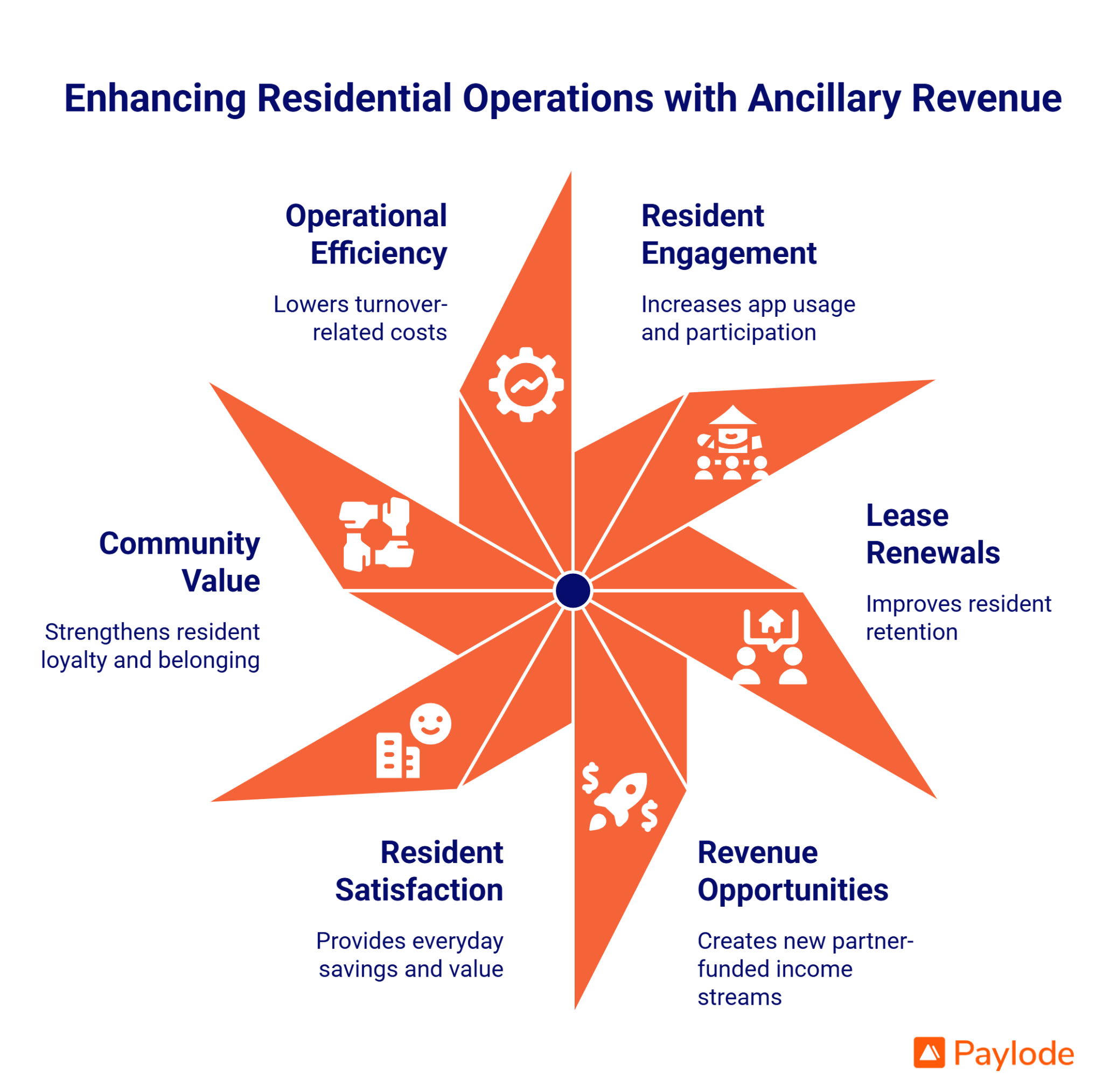
Resident engagement has become one of the most important drivers of long-term property performance. Communities with engaged residents often experience stronger renewal rates, higher satisfaction scores, and lower turnover-related expenses.
A curated perks marketplace supports engagement by giving residents recurring reasons to interact with the property’s digital ecosystem. Instead of only logging into resident portals for rent payments or maintenance requests, residents return regularly to explore savings opportunities and new offers.
That consistent interaction strengthens the relationship between residents and property operators. Over time, this helps create a stronger sense of loyalty and connection to the community.
Higher engagement can also support broader financial goals tied to resident lifetime value. Residents who stay longer, participate more frequently, and interact positively with the property experience often contribute more value over time than residents who disengage early in the leasing cycle.
Many multifamily operators are now aligning perks strategies with broader efforts to raise customer LTV. By improving retention and increasing resident satisfaction, perks marketplaces can help operators protect revenue stability while reducing the operational costs associated with resident turnover.
As resident expectations continue evolving, ancillary revenue through perks marketplace programs is becoming less about simple discounts and more about building a complete resident value experience that supports long-term growth.
What types of perks help property managers increase resident participation?
The success of ancillary revenue through perks marketplace programs often depends on how relevant and useful the offers feel to residents. Property managers who focus on everyday value tend to see stronger engagement because residents are more likely to use benefits that fit naturally into their routines.
A curated perks marketplace works best when residents feel the savings are practical, accessible, and consistently valuable throughout the year. The goal is not simply to provide random discounts. The goal is to create an experience that improves everyday living while strengthening the relationship between residents and the property.
Communities that understand resident lifestyles can create significantly higher participation rates because the offers feel personalized rather than generic.
Which everyday savings offers drive the most engagement?
Residents tend to engage most with perks that reduce recurring expenses or improve convenience. In many apartment communities, renters are actively managing rising costs related to food, entertainment, transportation, subscriptions, and wellness services. Offers that support these areas often generate the highest usage rates.
Dining discounts remain one of the most consistently popular categories because residents can use them frequently. Grocery delivery savings, streaming subscriptions, retail promotions, and fitness memberships also perform well because they connect directly to daily habits.
Travel-related offers can create strong seasonal engagement, especially during holidays and summer travel periods. Residents often appreciate perks that help reduce expenses during high-spending times of the year.
Technology-related savings are also becoming more important. Mobile plans, internet discounts, and smart home offers can create additional value for renters who rely heavily on digital services in their daily lives.
Property managers are increasingly integrating perks into broader resident experience strategies within the residential real estate industry to create stronger long-term engagement rather than focusing only on short-term promotional campaigns.
The most effective marketplaces usually include a mix of national offers and local experiences. National brands provide familiarity and scale, while local partnerships create stronger community relevance.
Why do local perks perform well in apartment communities?
Local perks often create a stronger emotional connection because residents see direct value within their own neighborhoods. Discounts from nearby restaurants, coffee shops, fitness studios, pet care providers, and entertainment venues can make residents feel more connected to the local community.
For property managers, local partnerships can also strengthen relationships with nearby businesses and create additional marketing opportunities. Residents may discover businesses they had not previously visited, while local merchants gain access to highly targeted audiences living close to their locations.
This type of community-based engagement can make apartment living feel more personalized. Residents are not simply renting space. They are becoming part of a connected local experience supported by the property operator.
Local offers are especially effective in urban and mixed-use developments where residents frequently interact with nearby businesses. However, suburban communities also benefit from partnerships focused on family services, fitness, dining, home services, and wellness.
When residents consistently use local perks, they begin associating those positive experiences with the property itself. Over time, this strengthens loyalty and improves the overall resident experience.
How can seasonal perks campaigns improve marketplace usage?
Seasonal campaigns help keep perks marketplaces fresh and relevant throughout the year. One of the biggest reasons resident engagement declines in some programs is that the offers remain static for too long. Seasonal campaigns create new reasons for residents to return regularly and explore updated benefits.
During the summer moving season, operators can promote moving-related discounts, travel savings, outdoor entertainment offers, and relocation services. Around the holidays, residents often engage heavily with retail promotions, gift shopping discounts, and seasonal dining offers.
Back-to-school campaigns can focus on families, students, and technology savings, while wellness-focused campaigns tend to perform well at the start of the new year when many residents are focused on health and fitness goals.
Seasonal engagement strategies can also support broader operational objectives. For example, operators may align rewards campaigns with lease renewal periods, resident appreciation events, or digital engagement initiatives.
Communities using increased retention strategies alongside perks campaigns often see stronger resident participation because the experience feels more active and continuously updated rather than passive.
Consistent communication is also important. Residents are far more likely to use perks when offers are highlighted through email, resident apps, social channels, and community messaging throughout the year.
As renter expectations continue evolving, property managers who create highly relevant and consistently refreshed perks experiences are more likely to maintain strong engagement and maximize the long-term value of ancillary revenue through perks marketplace programs.
How can property managers launch ancillary revenue through perks marketplace programs successfully?
Launching ancillary revenue through perks marketplace programs successfully requires more than simply offering discounts to residents. The most effective programs are designed around resident convenience, strong communication, and long-term engagement. Property managers who approach perks as part of the overall resident experience often see stronger participation and better operational results.
A successful launch starts with understanding resident needs. Different communities may prioritize different types of offers based on demographics, location, lifestyle preferences, and renter expectations. Operators that align perks with resident behavior are more likely to create ongoing engagement rather than short-term curiosity.
The resident experience also needs to feel simple from the beginning. Residents should immediately understand how to access the marketplace, what benefits are available, and why the program matters to them personally. When the process feels easy and valuable, participation rates typically increase much faster.
What should operators look for in a resident perks platform?
Choosing the right platform plays a major role in the success of ancillary revenue through perks marketplace strategies. Property managers should focus on solutions that are simple to manage internally while also delivering a smooth resident experience.
Easy setup is one of the most important factors. Leasing and operations teams already manage multiple responsibilities every day, so the platform should not create additional administrative complexity. A streamlined onboarding process allows operators to launch programs quickly across multiple communities.
Brand customization is also essential. Residents should feel like the perks marketplace is part of the property experience rather than a disconnected third-party service. Customized branding helps reinforce trust and creates a more cohesive digital experience for residents.
The resident interface should be straightforward and mobile-friendly. If residents struggle to access offers or navigate the platform, engagement levels can drop quickly. Modern renters expect digital experiences to work seamlessly across smartphones, tablets, and desktop devices.
A strong merchant network is another key consideration. The best platforms combine nationally recognized brands with local business partnerships. National offers create broad appeal, while local partnerships add community relevance and help residents discover nearby businesses.
Reporting and engagement tracking are becoming increasingly valuable for property managers. Operators want visibility into how residents interact with the platform, which offers generate the most participation, and how perks influence engagement trends over time.
Communities using platforms connected to platform solutions can often centralize resident engagement efforts while creating a more scalable experience across multiple properties.
Why is integration with resident communication channels important?
Visibility is one of the biggest drivers of marketplace participation. Even highly valuable perks programs can struggle if residents rarely see or interact with the offers. This is why integration with existing resident communication channels is so important.
Most residents already engage with property management systems through mobile apps, resident portals, email updates, payment notifications, and maintenance communication. Integrating perks into those familiar channels increases awareness naturally without requiring residents to learn entirely new systems.
Resident apps are especially important because they create ongoing engagement opportunities. When residents regularly open an app to pay rent, submit maintenance requests, or view announcements, perks can become part of their normal interaction with the property.
Email campaigns also remain highly effective when used strategically. Highlighting featured offers, seasonal savings, or local partnerships can encourage residents to revisit the marketplace regularly. Short, targeted communication often performs better than sending too many promotional messages at once.
SMS messaging can support time-sensitive offers or limited campaigns, particularly when operators want to increase visibility around special promotions or resident events. However, balance is important. Residents should feel informed, not overwhelmed.
Move-in onboarding is another critical opportunity. Introducing the perks marketplace during the resident onboarding process helps establish value immediately. New residents who activate perks early are often more likely to continue engaging with the platform long term.
Many operators also connect perks visibility with broader resident engagement tools such as Boost, which can help improve communication consistency across different resident touchpoints.
How can operators market perks without overwhelming residents?
One of the biggest mistakes property managers make is over-promoting perks in ways that feel repetitive or overly promotional. Successful programs focus on consistent but balanced communication that highlights relevance rather than volume.
Welcome campaigns are often the best starting point. New residents should receive a clear introduction explaining how the marketplace works, what types of savings are available, and how to access the benefits. This helps establish immediate awareness without creating confusion.
Monthly featured offers can help keep engagement active throughout the year. Highlighting a small number of timely and relevant perks often works better than promoting dozens of offers at once. Residents are more likely to engage when communication feels focused and useful.
Seasonal reminders are also effective because they align with changing resident needs. Summer travel promotions, holiday shopping offers, wellness campaigns, and back-to-school savings can all create natural engagement opportunities throughout the year.
Renewal-time messaging can reinforce the full value of living within the community. Instead of focusing only on rent discussions, operators can remind residents about the everyday savings and benefits they already use through the perks marketplace.
Community event promotion creates another opportunity to integrate perks naturally into the resident experience. Local partnerships, event sponsorships, and exclusive resident offers can strengthen community participation while increasing visibility for the marketplace.
Operators using integrated solutions through Perks programs are often able to create more personalized and organized resident engagement experiences that support long-term participation without overwhelming residents with excessive communication.
What challenges can property managers avoid when building a perks marketplace?
While ancillary revenue through perks marketplace programs can create strong resident engagement and long-term value, not every program delivers successful results immediately. Some marketplaces struggle because operators focus only on launching the platform instead of building a resident experience that feels useful, accessible, and consistently relevant.
Property managers who understand the most common challenges early can create stronger adoption rates and better long-term participation. In most cases, the success of a perks marketplace depends less on the number of offers available and more on how residents experience the platform in everyday life.
Residents today are already exposed to constant digital promotions from retailers, subscription services, and mobile apps. If a perks marketplace feels confusing, repetitive, or difficult to use, engagement can decline quickly. The most successful operators focus on making the experience simple, personalized, and easy to access.
Why do some resident perks programs fail to gain traction?
One of the most common reasons resident perks programs struggle is poor promotion. Even strong offers can go unused if residents are unaware the marketplace exists or do not understand how to access it. Launching a platform without ongoing communication often leads to low visibility and weak engagement.
Another common issue is offering generic promotions that do not feel relevant to residents. If the marketplace only includes broad discounts that residents can find elsewhere online, the program may not feel unique or valuable. Residents are more likely to participate when the offers feel connected to their daily routines and lifestyle preferences.
User experience also plays a major role in marketplace adoption. Residents expect digital platforms to work quickly and smoothly across all devices. If the login process is difficult, navigation feels confusing, or redemption steps take too long, participation can decrease significantly.
Limited personalization can also reduce long-term engagement. Residents are more likely to return to a marketplace when they regularly discover offers that align with their interests, spending habits, or local area. Static marketplaces with repetitive offers often struggle to maintain ongoing activity.
Operators working within the resident perks space are increasingly focusing on personalized and continuously refreshed experiences because resident expectations around digital convenience continue to rise.
Another challenge is inconsistent communication timing. Sending too many promotional messages can create fatigue, while sending too few may cause residents to forget the marketplace exists altogether. Balanced communication is critical for maintaining awareness without overwhelming residents.
How can operators maintain long-term resident engagement?
Long-term engagement requires ongoing marketplace optimization rather than a one-time launch strategy. Residents need consistent reasons to revisit the platform throughout the year.
Refreshing offers regularly is one of the most effective ways to maintain interest. Seasonal promotions, limited-time savings, and rotating featured offers can help keep the experience dynamic and encourage repeat visits.
Relevant offer categories also matter significantly. Communities should focus on perks residents are most likely to use frequently, such as dining, wellness, grocery delivery, entertainment, travel, retail savings, and home services. The more practical the benefits feel, the more consistently residents tend to engage.
Local partnerships can further strengthen engagement because they connect the marketplace to the residents’ immediate community. Residents often appreciate discovering nearby restaurants, fitness studios, pet services, and local businesses that provide exclusive savings through the property.
Promoting resident savings success stories can also increase participation. When residents hear how others are using the marketplace to save money or discover valuable local services, the platform feels more authentic and useful. Real examples help reinforce the everyday value of the program.
Many operators are also aligning perks engagement with broader resident loyalty initiatives tied to plans that support scalable engagement across multiple communities and resident segments.
Consistency is especially important. Residents who see new value regularly are far more likely to remain active users over time.
Why is simplicity important for adoption?
Simplicity is one of the biggest drivers of successful marketplace adoption. Residents are far more likely to use a platform that feels intuitive and effortless. Complicated systems create friction, and friction reduces participation.
Modern renters expect digital experiences to work quickly, especially on mobile devices. Most residents access apps, promotions, and services directly from their phones throughout the day. A perks marketplace that performs well on mobile creates a more natural and accessible experience.
Fast redemption processes are equally important. Residents do not want to navigate multiple screens or complete lengthy forms just to activate an offer. Simple activation and redemption methods help increase both first-time usage and repeat engagement.
Low-friction experiences also improve overall resident perception of the property. When the marketplace feels easy and convenient, residents are more likely to associate the program with added value rather than unnecessary complexity.
Accessibility plays an important role as well. Residents should be able to explore offers easily during short moments throughout the day, whether they are commuting, relaxing at home, or managing errands. A marketplace that fits naturally into daily routines is more likely to become part of ongoing resident behavior.
As ancillary revenue through perks marketplace programs continues evolving, operators that prioritize simplicity, relevance, and consistent resident value will be better positioned to create long-term engagement and stronger retention outcomes.
How are leading residential operators using ancillary revenue through perks marketplace strategies today?
Leading residential real estate operators are no longer viewing resident perks as optional marketing extras. Instead, many are integrating ancillary revenue through perks marketplace strategies directly into their resident engagement and retention models.
As renter expectations continue evolving, operators are focusing more heavily on experiences that provide ongoing everyday value rather than relying only on traditional amenities. The modern renter experience now extends beyond the apartment itself and includes digital convenience, financial savings, and personalized engagement.
This shift is changing how operators compete in multifamily housing. Communities that create stronger resident relationships through curated perks programs are often better positioned to improve renewals, increase satisfaction, and strengthen long-term revenue performance.
Many property management companies are also using perks marketplaces to support broader digital transformation efforts. Resident engagement platforms are becoming central hubs for communication, payments, maintenance, events, and rewards. Perks programs fit naturally into this ecosystem because they create recurring reasons for residents to interact with the property digitally.
What trends are shaping the future of resident perks?
One major trend influencing the future of resident perks is digital-first leasing. Renters increasingly search for apartments, sign leases, submit applications, and communicate with property teams online. Because the leasing experience is becoming more digital, operators are expanding digital engagement throughout the full resident lifecycle.
Perks marketplaces help support this transition by extending engagement beyond move-in. Instead of communication happening only around rent payments or maintenance requests, operators can maintain more positive ongoing interaction through savings opportunities and lifestyle benefits.
Resident experience platforms are also becoming more sophisticated. Multifamily operators want centralized systems that combine communication, rewards, payments, events, and resident services into a single experience. This creates greater convenience for residents while improving engagement visibility for property managers.
Lifestyle-focused amenities are another growing trend. Residents increasingly value experiences that improve convenience, wellness, entertainment, and everyday affordability. In many cases, digital lifestyle benefits can create just as much perceived value as physical amenities.
AI-driven personalization is also beginning to shape perks marketplaces. Operators and platform providers are exploring ways to deliver more relevant offers based on resident behavior, preferences, and engagement history. Personalized recommendations can improve participation by helping residents discover offers they are more likely to use.
At the same time, multifamily operators are placing greater emphasis on retention economics. Retaining residents is often significantly less expensive than replacing them. Because of this, many operators are investing more heavily in engagement strategies that support long-term loyalty and satisfaction.
Communities using solutions connected to Boost are increasingly focused on improving engagement visibility and resident participation across digital communication channels to strengthen retention outcomes over time.
Another emerging trend is integrating perks into broader financial wellness strategies for renters. As affordability concerns continue impacting many households, residents are placing a higher value on communities that help reduce everyday living expenses.
Why are perks becoming part of the modern resident experience?
The role of perks in multifamily housing has evolved significantly over the past several years. Traditionally, apartment communities competed aggressively through physical amenities such as pools, fitness centers, clubhouses, and coworking spaces. While those amenities still matter, many communities now offer similar features, making differentiation more difficult.
As a result, operators are shifting toward digital value-added services that improve everyday living beyond the physical property itself. A curated perks marketplace allows residents to save money, access useful services, and engage more consistently with the community experience.
This mirrors loyalty ecosystems already used successfully in industries such as travel, retail, hospitality, and financial services. Consumers have become accustomed to receiving personalized rewards, exclusive offers, and membership benefits in many areas of daily life. Residential real estate is increasingly following the same engagement model.
Residents now expect ongoing value from brands and services they interact with regularly. Apartment communities are becoming part of that expectation. When residents feel they are receiving continuous benefits throughout the lease term, satisfaction and emotional loyalty often increase.
Perks also help create competitive differentiation in crowded rental markets. Two communities may offer similar floor plans and amenities, but the community that provides ongoing savings, personalized experiences, and meaningful resident engagement may stand out more strongly during leasing decisions.
This differentiation becomes especially important in markets where operators are competing aggressively for renewals and long-term occupancy stability. A strong perks marketplace can reinforce the feeling that residents are receiving more value for where they live.
Many multifamily operators are now incorporating perks into broader resident experience strategies through book a demo conversations focused on improving retention, engagement, and ancillary revenue opportunities simultaneously.
As the industry continues evolving, ancillary revenue through perks marketplace programs are becoming less about simple discounts and more about creating a connected resident ecosystem that supports long-term operational growth and resident loyalty.
How can Paylode help residential real estate operators grow ancillary revenue through perks marketplace programs?
Residential real estate operators need engagement strategies that create measurable value for both residents and property teams. As resident expectations continue evolving, operators are looking for solutions that improve retention, support digital engagement, and help generate long-term ancillary revenue opportunities without adding operational complexity.
Paylode helps multifamily operators build curated resident experiences that strengthen loyalty while supporting ancillary revenue through perks marketplace strategies. Instead of offering disconnected promotions or temporary incentives, Paylode allows operators to provide residents with ongoing everyday value through a centralized perks ecosystem.
One of the biggest advantages of Paylode is its focus on resident engagement and retention. Residents are more likely to stay connected to their community when they consistently receive useful savings and lifestyle benefits. Ongoing engagement helps strengthen the overall resident experience while giving operators additional touchpoints throughout the lease lifecycle.
Paylode supports both national and local offers, allowing operators to create a balanced marketplace experience. National brands provide broad resident appeal across multiple communities, while local partnerships help strengthen neighborhood engagement and create a more personalized experience for residents.
This flexibility is especially valuable for multifamily operators managing diverse resident demographics across different markets. Communities can create perks experiences that feel locally relevant while still maintaining consistency across larger portfolios.
Operators can also use Paylode to encourage important resident behaviors tied to operational efficiency and retention goals. Communities may reward residents for actions such as auto-pay enrollment, paperless billing adoption, lease renewals, referrals, or ongoing engagement within resident communication channels.
By connecting rewards to these behaviors, operators can create stronger participation while improving the overall resident experience. Residents receive practical value, while property teams benefit from higher engagement and improved operational performance.
Another important benefit is scalability. Multifamily operators often need solutions that work across multiple properties without requiring extensive manual management. Paylode provides flexibility for portfolios of different sizes, helping operators maintain a consistent resident experience while adapting offers to local market needs.
For operators looking to strengthen their resident engagement strategies, Paylode offers solutions through Platform capabilities designed to support scalable digital experiences across multifamily communities.
Communities focused on curated resident savings and lifestyle engagement can also explore Perks solutions that help deliver ongoing value throughout the resident lifecycle.
Operators seeking stronger communication visibility and engagement performance can use Boost to improve how resident experiences are delivered across digital touchpoints.
For multifamily teams evaluating long-term engagement strategies, Paylode also provides flexible Plans designed to support different portfolio sizes and operational goals.
Property managers interested in exploring how ancillary revenue through perks marketplace programs can support retention, engagement, and resident satisfaction can also Book a demo to see how Paylode supports modern multifamily resident experiences.
Conclusion: Why is ancillary revenue through the perks marketplace becoming a competitive advantage for residential operators?
Residential real estate operators are facing increasing pressure to improve resident satisfaction while maintaining strong financial performance. As renter expectations continue evolving, communities that provide ongoing value beyond the apartment itself are often better positioned to strengthen retention, improve engagement, and create long-term revenue opportunities.
This is why ancillary revenue through perks marketplace programs are becoming a growing competitive advantage across multifamily housing. A curated perks marketplace allows operators to deliver meaningful resident benefits without relying only on rent increases or additional mandatory fees. Instead, communities can create positive resident experiences through savings, convenience, and lifestyle-focused engagement.
The financial benefits extend beyond direct ancillary revenue opportunities. Residents who actively engage with perks programs are often more connected to their community, more satisfied with their living experience, and more likely to renew leases. Higher retention can help reduce turnover-related costs while improving operational stability across the portfolio.
Perks marketplaces also support stronger digital engagement. Residents interact more consistently with resident apps, communication channels, and community platforms when they receive practical everyday value in return. This ongoing interaction creates stronger long-term relationships between residents and property operators.
Another important advantage is operational simplicity. Modern perks platforms allow operators to launch scalable resident engagement programs without adding significant administrative workload. Property managers can provide residents with curated national and local offers while maintaining a streamlined and easy-to-manage experience internally.
As competition continues to increase across residential real estate markets, operators that focus on resident value and engagement are likely to stand out more effectively. Today’s renters are comparing experiences, convenience, and ongoing lifestyle support in addition to pricing and amenities. A well-executed perks marketplace helps communities remain competitive in a changing market.
The future of multifamily housing is increasingly connected to resident experience, digital engagement, and long-term loyalty. Operators that invest in these areas today can create stronger resident relationships while building more sustainable ancillary revenue opportunities over time.
For property managers looking to improve retention, strengthen resident engagement, and grow ancillary revenue through perks marketplace strategies, now is the right time to explore modern resident engagement solutions that create measurable value for both residents and operators.
FAQ section
How does ancillary revenue through the perks marketplace help apartment communities?
Ancillary revenue through perks marketplace programs helps apartment communities create additional value for residents while supporting engagement, retention, and long-term revenue growth. These programs provide residents with savings and lifestyle benefits that improve the overall living experience.
What types of resident perks increase engagement the most?
Everyday savings offers usually generate the highest engagement. Dining discounts, grocery delivery savings, wellness memberships, streaming subscriptions, travel offers, and local business promotions are among the most popular resident perks.
Can a perks marketplace improve lease renewals?
Yes. A curated perks marketplace can improve resident satisfaction and strengthen long-term engagement. Residents who consistently receive valuable benefits are often more likely to renew their leases and remain connected to the community.
How do property managers launch a resident perks marketplace?
Property managers typically launch a perks marketplace through a resident engagement platform that integrates with resident apps, portals, email communication, and digital onboarding processes. Successful programs focus on simple access and ongoing promotion.
Why are resident perks important for multifamily retention strategies?
Resident perks help communities create ongoing value beyond traditional amenities. Consistent savings, convenience, and lifestyle benefits can strengthen resident loyalty, improve satisfaction, and reduce turnover over time.