Residential property teams are managing more than buildings today. They are managing experiences. Residents expect the same ease, clarity, and value they get from the brands they interact with every day.
This shift has changed how rental communities compete. Location and amenities still matter, but they are no longer enough on their own. Residents now notice how smoothly a community communicates, how supported they feel after move-in, and whether the value continues beyond signing the lease.
This is where white-label perks for rental communities are becoming essential. Instead of offering scattered discounts or third-party programs, property operators are choosing perks systems that feel fully branded and owned by the community itself.
A white-label perks system allows operators to deliver everyday benefits under their own name. Residents see the property brand, not a vendor logo. The experience feels intentional, trusted, and part of the community—not an add-on.
For property managers and owners, this approach does more than improve resident satisfaction. It reduces daily questions, supports retention, and strengthens the property’s brand across the entire renter journey.
In the sections ahead, we’ll break down what a white-label perks system is, why branded experiences matter, and how rental communities use them to create long-term value for both residents and onsite teams—with support from platforms like Paylode.
What is a white-label perks system in residential real estate?
A white-label perks system is a resident benefits platform that looks and feels like it belongs to the rental community itself. Residents access perks through a branded experience that carries the property’s name, style, and messaging—not a third-party provider.
From the resident’s point of view, the perks feel like part of living in the community. There is no confusion about who is offering the benefit. Everything is presented as a service from the property they live in.
For property managers and owners, this means the perks system works quietly in the background while reinforcing the community brand every time residents log in or use an offer.
How white-label perks work in simple terms
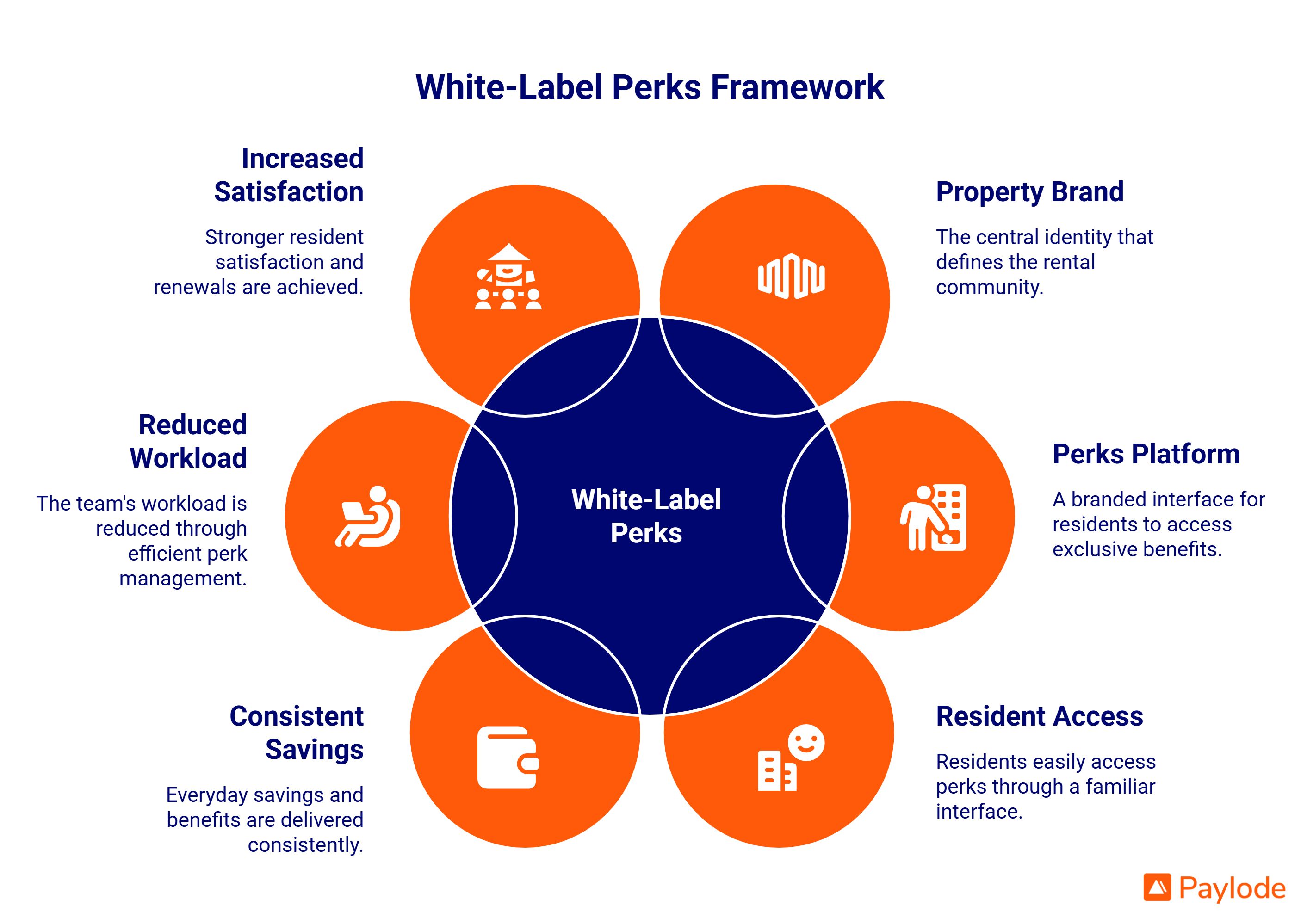
A white-label perks system brings everyday savings and benefits into one place and connects them to the property brand. Instead of sharing links, flyers, or emails from different vendors, teams offer one consistent experience.
In most rental communities, this includes:
- Every day, discounts residents actually use
- A single, easy place to find all perks
- Branding that matches the property’s look and voice
This approach helps white-label perks for rental communities feel intentional and organized, rather than scattered or promotional.
Why “white-label” matters to residents
Residents rarely care who powers a system behind the scenes. What they care about is trust and ease. When perks appear under the community’s brand, residents are more likely to:
- Explore the benefits
- Use them regularly
- Associate the value with where they live
This builds familiarity over time. Each positive interaction reinforces the idea that the property is actively supporting the resident’s lifestyle, not just collecting rent.
Why it matters to property teams
For on-site teams, a white-label perks system simplifies daily work. Instead of answering repeated questions about benefits or explaining multiple offers, teams can point residents to one branded destination.
This creates:
- Fewer interruptions during the day
- Clearer communication with residents
- A stronger connection between perks and the property brand
Most importantly, it allows teams to offer real value without adding more tasks to their workload.
Why does branding matter more than ever for rental communities?
Branding in residential real estate is no longer limited to logos and signage. Today, branding shows up in every interaction a resident has with the property, from onboarding emails to service updates and everyday benefits.
Residents want clarity. When experiences feel disconnected or come from multiple sources, trust erodes. A consistent, branded experience helps residents feel confident that the property is organized, responsive, and invested in their comfort.
This is one of the key reasons why white-label perks for rental communities are gaining attention. They allow properties to extend their brand into daily resident life without creating confusion or extra effort for teams.
Consistency builds trust throughout the renter journey
Residents interact with their property at many moments:
- During move-in
- When asking questions or requesting help
- While deciding whether to renew
When perks, communications, and services all look and feel like they come from the same place, residents are more likely to trust the property. A white-label perks system supports this consistency by keeping the experience familiar at every step.
Branded experiences feel more personal
When residents see their community’s name attached to perks, the benefits feel intentional. Instead of feeling like ads or promotions, perks feel like a service provided by the property.
This personal connection matters. Residents are more likely to explore and use perks when they feel designed specifically for them and their community.
Branding supports long-term retention
Branding is not just about first impressions. It plays a role in how residents remember their experience over time. Small, positive interactions add up.
A branded perks experience helps reinforce:
- Ongoing value beyond rent
- A sense of care from the property
- A reason to stay, not just a reason to move in
For property managers and owners, this means branding becomes a practical retention tool, not just a marketing effort.
Where white-label perks fit into the renter journey
White-label perks are most effective when they support residents at every stage of their journey, not just after move-in. When introduced early and reinforced consistently, they become part of how residents experience the community, not a separate program.
This is why white-label perks for rental communities work best when they are woven into leasing, daily living, and renewal moments.
Before move-in: setting expectations early
The renter journey starts long before keys are handed over. During leasing and onboarding, prospects are forming opinions about what living in the community will feel like day to day.
Introducing perks during this stage helps set the right expectations. Instead of focusing only on floor plans or amenities, property teams can highlight ongoing benefits that residents will enjoy after move-in.
This reinforces value beyond square footage. Perks become part of the community promise—showing that the property is designed to support residents not just at move-in, but throughout their stay.
When perks are positioned early, residents begin their lease already aware of the added value they’ll receive.
During residency: everyday value that feels personal
Once residents move in, perks shift from a promise to a lived experience. Residents use them regularly for everyday savings and simple conveniences that fit naturally into their routines.
Ease and visibility are key here. A white-label perks system makes benefits easy to find and simple to use, without residents needing to ask questions or search through emails.
This also reduces the workload for on-site teams. When perks are clearly accessible, residents ask fewer questions and submit fewer repetitive requests. Teams spend less time explaining benefits and more time supporting meaningful interactions.
Over time, these small, positive moments build trust and familiarity with the property brand.
At renewal time: reinforcing reasons to stay
When renewal decisions approach, residents often focus on price. This is where white-label perks play an important role by reminding residents of the ongoing value they receive beyond rent.
Perks help shift the conversation from cost alone to overall experience. Residents remember the everyday benefits they’ve used and the consistent support they’ve felt throughout their lease.
This creates an emotional connection that pure pricing discussions cannot replace. By reinforcing value at renewal time, perks contribute directly to stronger retention outcomes and higher lifetime value, as explained in Paylode’s approach to raising customer LTV.
For property managers and owners, this means perks are not just engagement tools—they are long-term retention drivers built into the renter journey itself.
Why operators prefer white-label perks over third-party offers
Property operators are increasingly selective about the tools they introduce into the resident experience. While third-party perks programs may offer discounts, they often create fragmented experiences that dilute the property brand and add friction for both residents and teams.
White-label perks solve this by giving operators full ownership of how benefits are delivered and perceived.
Control over the resident experience
With a white-label perks system, operators decide how perks are presented to residents. The look, tone, and messaging align with the property’s identity, making the experience feel intentional and familiar.
Branding remains consistent across every touchpoint. Residents see the community name and visual style they already trust, rather than competing logos or mixed messaging from outside providers. This consistency reinforces confidence and keeps the focus on the property—not the platform behind it.
For white-label perks for rental communities, this level of control ensures perks support the brand instead of distracting from it.
Less daily work for on-site teams
Third-party perks often lead to more questions, not fewer. Residents ask where offers come from, how they work, and who to contact for help. Over time, these questions add to the daily workload.
A white-label perks system reduces this friction. Residents self-serve through a branded experience that clearly explains available benefits. This leads to fewer repetitive questions about perks and less time spent clarifying details.
As a result, onsite teams can focus on higher-value work, such as leasing support and resident relationships. This shift aligns with how resident perks platforms are designed to simplify engagement and reduce operational strain.
For property managers and owners, this means perks enhance the resident experience without adding pressure to already busy teams.
How white-label perks reduce operational strain
Residential property teams manage a steady flow of questions, updates, and requests every day. Many of these tasks are repetitive and time-consuming, even though they do not require personal attention. White-label perks help reduce this strain by simplifying how benefits are delivered and explained.
For white-label perks for rental communities, the value is not only in resident engagement but also in operational efficiency.
Centralizing resident benefits in one place
In many communities, resident benefits are shared through multiple channels. Emails explain discounts. Flyers promote offers. FAQs repeat the same answers. Over time, this creates confusion for residents and extra work for teams.
A white-label perks system brings all benefits into one place. Residents know exactly where to go to find what is available, without searching through messages or asking staff for clarification.
This centralization replaces:
- Repeated emails about perks
- Printed flyers that quickly become outdated
- Manual explanations during office visits or calls
When residents can find answers on their own, follow-up questions decrease. Teams spend less time repeating information and more time focusing on tasks that require human judgment and care.
Supporting automation without losing the human touch
Automation often raises concerns about losing personal connection. White-label perks work differently. They automate access to benefits while keeping the experience warm and familiar through branding.
Because the perks system reflects the property’s identity, residents do not experience it as a cold or generic tool. Instead, it feels like a helpful service provided by their community.
White-label perks can also connect smoothly with existing resident systems, such as portals residents already use. This creates a seamless experience rather than another separate platform to learn.
By using a single, branded platform to manage perks, operators reduce operational noise while maintaining trust and approachability. This balance is a key reason many property teams turn to platforms designed to support both automation and resident experience, such as Paylode’s platform.
For property managers and owners, this means fewer interruptions, clearer communication, and a more manageable day-to-day workload without sacrificing the quality of the resident experience.
The role of white-label perks in resident retention
Retention is built over time, not at renewal. Residents decide whether to stay based on how living in the community feels day to day. White-label perks support retention by delivering steady value that residents experience regularly, not just during special moments.
For white-label perks for rental communities, this consistent presence plays a meaningful role in long-term satisfaction.
Why everyday value matters more than big one-time rewards
One-time incentives can create short-term excitement, but their impact fades quickly. Residents are far more likely to notice and remember benefits they use often, such as everyday savings and practical perks that fit into their routine.
Consistent value reinforces satisfaction in subtle but powerful ways. Each time a resident uses a perk, it becomes a reminder that the community is providing ongoing support, not just a move-in bonus.
Over time, these small moments add up. Residents begin to associate their positive daily experiences with the place they live, which influences how they feel about staying long-term.
Turning benefits into brand loyalty
When perks are delivered through a white-label experience, the value is clearly tied to the property brand. Residents do not see benefits as coming from an outside source. Instead, they view them as part of what the community offers.
This connection strengthens emotional attachment. Residents feel recognized and supported, which goes beyond simple convenience. The property becomes more than a place to live—it becomes a brand they trust.
This emotional loyalty supports stronger retention outcomes by reducing reliance on price-only decisions and reinforcing the overall living experience. Paylode outlines this connection between resident experience and retention.
For property managers and owners, white-label perks become a practical way to improve retention while reinforcing the property’s identity at every stage of the resident relationship.
Common use cases for white-label perks in rental communities
White-label perks are flexible by design. They support different moments in the resident lifecycle while reducing effort for property teams. When implemented thoughtfully, they become part of everyday operations rather than a separate initiative.
For white-label perks for rental communities, the most effective use cases focus on consistency, ease, and relevance.
Move-in welcome benefits
The move-in period sets the tone for the entire resident relationship. White-label perks can be introduced as part of a welcome experience that feels thoughtful and organized.
Instead of one-time gifts that are quickly forgotten, perks offer ongoing value from day one. Residents immediately see that their community provides benefits beyond the lease agreement, helping them feel confident in their decision.
Ongoing lifestyle savings
Everyday perks are one of the most common and effective use cases. Residents use them regularly for daily needs and services, which keeps the value visible throughout the lease term.
Because these perks are accessed through a branded experience, residents associate the savings with the property—not an outside provider. This strengthens the perceived value of living in the community.
Simplifying resident communication
White-label perks also serve as a reliable place to direct residents when questions come up about benefits. Instead of answering the same questions repeatedly, teams can point residents to one consistent experience.
This reduces confusion and creates clearer communication without adding steps for residents or staff.
Supporting engagement without added workload
Engagement efforts often fail when they require ongoing manual effort. White-label perks support engagement quietly in the background.
Residents engage on their own time, while property teams benefit from reduced interruptions and fewer repetitive requests. This makes perks sustainable, even for lean onsite teams.
Reinforcing the community brand every day
Perhaps the most important use case is brand reinforcement. Every interaction with the perks system reminds residents of the community's name and identity.
Over time, these repeated touchpoints help turn everyday benefits into a recognizable part of the living experience, supporting satisfaction and long-term retention.
How Paylode supports white-label perks for rental communities
White-label perks work best when they are built specifically for residential real estate. Property teams need a solution that fits into their daily operations without adding complexity or extra work.
Paylode supports white-label perks for rental communities by focusing on branding, ease of use, and real-world property team needs.
Designed for residential real estate teams
Residential property teams manage leasing, renewals, resident communication, and operations—all at the same time. A perks system must support these realities, not compete with them.
Paylode is designed to align with how rental communities operate. The platform supports branded resident experiences while keeping management simple for onsite teams and portfolio operators.
This allows perks to feel like a natural extension of the community, not a separate program that requires constant oversight.
Branding that stays consistent and familiar
With Paylode, perks are presented under the property’s brand. Residents see familiar colors, names, and messaging, which builds trust and recognition over time.
This consistency helps residents connect the value they receive directly to where they live. The experience feels owned by the community, not powered by an outside provider.
Simple for residents, manageable for teams
Residents access perks through a clear, easy-to-use experience. They do not need instructions, explanations, or staff support to get started.
For property teams, this means fewer questions, fewer follow-ups, and less time spent explaining benefits. Perks deliver value quietly in the background while teams focus on leasing and resident relationships.
Paylode’s perks solution is built to support this balance between resident engagement and operational efficiency.
For property managers and owners, this approach ensures perks strengthen the resident experience without increasing daily workload.
What to look for when choosing a white-label perks system
Not all perks systems are built for residential real estate. Choosing the right white-label solution requires looking beyond the list of discounts and focusing on how the system supports both residents and property teams over time.
For white-label perks for rental communities, the right platform should feel easy, consistent, and reliable from day one.
Strong branding control
A true white-label perks system allows operators to fully align the experience with their property brand. This includes how perks are presented, how the platform looks, and how residents interact with it.
Branding should feel natural, not layered on. When residents recognize the experience as part of their community, trust and engagement increase.
Easy for residents to use
Residents are more likely to engage with perks when access is simple and clear. A good system does not require instructions or repeated reminders.
Look for a platform that:
- Is easy to find
- Is simple to navigate
- Works smoothly without added steps
When residents can self-serve, usage increases and questions decrease.
Low effort for property teams
Property teams already manage full schedules. A white-label perks system should reduce work, not create more of it.
The right solution minimizes setup time, limits ongoing maintenance, and does not require teams to explain or manage benefits daily. This keeps perks sustainable even with limited staff.
Consistent value throughout the lease
Perks should not feel like a short-term promotion. Instead, they should deliver steady value that residents can rely on throughout their stay.
A strong white-label system supports long-term engagement by offering benefits that remain relevant month after month, reinforcing satisfaction and retention.
Proven support and reliability
Finally, look for a provider with experience in residential real estate. A reliable platform should be stable, responsive, and designed to grow with your portfolio.
This ensures that perks continue to support your brand and residents as your communities evolve.
Conclusion: branded experiences create lasting value
Resident expectations have changed, and rental communities need smarter ways to deliver value without adding work for onsite teams. This is why white-label perks for rental communities are becoming essential. They help properties offer everyday benefits through a branded experience residents recognize and trust.
For residents, perks create consistent value throughout the lease. For property teams, they reduce repetitive questions and support engagement without extra effort. Most importantly, branding turns perks into a long-term retention strategy, not a short-term promotion.
If you’re ready to offer a branded perks experience that supports both residents and operations, explore how Paylode’s platform is designed for residential real estate teams.
FAQs
What does "white-label" mean in residential real estate?
In residential real estate, “white-label” means the perks system is branded as part of the property. Residents see the community’s name and identity, not a third-party provider. The experience feels like a service offered directly by where they live.
This makes white-label perks for rental communities feel intentional and trustworthy, rather than promotional or external.
Are white-label perks expensive to manage?
White-label perks are designed to reduce work, not add to it. Modern platforms centralize benefits in one place, which cuts down on emails, printed materials, and repeated explanations.
Because residents can find and use perks on their own, property teams spend less time managing questions or updates. This keeps the effort ongoing and costs low.
Do residents actually use perks systems?
Yes, when perks are easy to access and relevant to everyday life, residents use them regularly. Adoption increases when perks are visible, simple, and clearly tied to the community brand.
Everyday savings are more likely to be used than one-time offers, which keeps the value consistent throughout the lease.
Can perks help with renewals?
Perks support renewals by reinforcing daily value. Residents remember the benefits they often use and associate those positive experiences with the property.
Over time, this builds satisfaction and emotional connection, which plays an important role in renewal decisions beyond price alone.