Property managers are under more pressure than ever to keep apartment communities occupied while protecting revenue. In many markets, offering rent concessions has become a common way to attract new residents. While discounts may generate short-term interest, they often reduce rental income, create expectations for future concessions, and make it harder to maintain pricing over time.
A smarter approach is emerging across the residential real estate industry. Instead of reducing rent, many operators are creating more value through gift cards, exclusive resident benefits, and loyalty-based incentives. A well-designed Rent discount loyalty program helps prospects feel rewarded without permanently lowering rental rates. Residents receive meaningful benefits that improve their living experience, while property managers maintain stronger financial performance.
Unlike traditional concessions, perks continue creating value long after move-in. Whether through shopping savings, dining rewards, entertainment offers, travel discounts, or welcome gift cards, these incentives improve the overall resident experience while supporting leasing goals. They also help communities stand out in competitive markets where prospective residents compare more than just monthly rent.
For property managers, this strategy creates an opportunity to improve leasing velocity without sacrificing long-term revenue. Rather than competing solely on price, communities compete on overall value, convenience, and resident satisfaction.
This guide explains why more multifamily operators are moving beyond traditional concessions, how a Rent discount loyalty program works, and why gift cards and resident perks can help increase occupancy while protecting net operating income.
What challenges do rent discounts create for property managers?
Offering rent discounts often feels like the fastest solution when occupancy begins to slow. A reduced monthly payment can encourage prospective residents to sign a lease quickly, especially in competitive markets. However, these discounts usually create challenges that extend far beyond the initial lease agreement.
Every recurring discount lowers the revenue generated from each apartment home. While filling a vacancy is important, reducing rental income month after month affects the property's financial performance. Across hundreds of units, even modest concessions can significantly reduce annual revenue.
Another challenge is that discounts become difficult to remove. Residents who receive concessions during move-in frequently expect similar offers at renewal. Instead of viewing the discount as a one-time incentive, they begin to see it as part of the property's pricing strategy. This expectation can complicate lease renewals and reduce pricing flexibility.
Property managers also face increasing competition when neighboring communities introduce larger concessions. This creates a cycle in which properties continue to lower prices simply to remain competitive. Eventually, everyone earns less, while residents experience similar living conditions.
Instead of focusing exclusively on pricing, successful operators increasingly compete through resident value. Experiences, convenience, exclusive savings, and personalized rewards often influence leasing decisions just as much as monthly rent.
This is why many residential operators are exploring alternatives that improve perceived value without reducing recurring income.
What is a rent discount loyalty program?
A Rent discount loyalty program replaces ongoing rent concessions with meaningful rewards that residents genuinely appreciate. Instead of permanently lowering rent, property managers provide valuable incentives throughout the resident journey.
These incentives may include digital gift cards, shopping discounts, restaurant offers, travel savings, wellness benefits, entertainment rewards, or exclusive local experiences. Because the rewards are flexible, operators can tailor them to different leasing campaigns, resident milestones, or renewal opportunities.
Unlike rent discounts, loyalty rewards create excitement. Receiving a welcome gift card after signing a lease feels like earning something special rather than simply paying less. This positive emotional response helps residents remember the experience and strengthens their connection with the community.
Another advantage is flexibility. Operators can change promotions throughout the year based on occupancy goals, seasonal campaigns, or resident engagement initiatives. Unlike discounted rent, rewards do not permanently affect lease pricing.
Many multifamily communities are also integrating loyalty programs into broader residential real estate strategies that prioritize long-term resident satisfaction over short-term price competition. When residents consistently receive valuable experiences throughout their lease, they are more likely to remain engaged with the community.
Why do gift cards create more value than rent discounts?
Although rent discounts reduce monthly costs, residents rarely remember them after the lease begins. Gift cards, however, create memorable experiences that strengthen positive emotions during important milestones.
Consider a new resident moving into an apartment. Receiving a welcome gift card for groceries, home essentials, or dining immediately makes the move easier. That experience creates a positive first impression that extends beyond the apartment itself.
Behavioral research consistently shows that people place greater emotional value on receiving unexpected rewards than on paying slightly less for a recurring expense. A gift feels personal. A discount simply reduces a bill.
Gift cards also allow residents to choose how they use their reward. Some may purchase furniture, while others may enjoy dinner with family or buy household essentials. This flexibility increases perceived value because residents control the experience.
For property managers, gift cards are also easier to manage than ongoing rent concessions. Promotions can be adjusted throughout the year without changing lease pricing or creating long-term financial commitments.
Communities that incorporate resident perks into their leasing strategy often discover that prospective residents appreciate receiving immediate value while maintaining confidence in the property's overall quality. Rather than wondering why rent is discounted, prospects see a community investing in their experience.
How can perks maintain leasing velocity without lowering rent?
Leasing velocity depends on more than pricing. Today's apartment shoppers evaluate an entire living experience before making a decision. Location, amenities, customer service, technology, convenience, and community benefits all influence whether someone signs a lease.
Perks help create differentiation without reducing rental income. When prospects compare two similar communities with comparable pricing, additional value can become the deciding factor. Exclusive discounts, welcome rewards, and ongoing resident benefits demonstrate that a property continues delivering value long after move-in.
This strategy also supports stronger marketing campaigns. Instead of advertising reduced rent, leasing teams can promote experiences that improve everyday life. These offers feel more unique and less transactional than temporary pricing incentives.
Many operators combine perks with services such as automatic payments, creating a smoother resident experience while encouraging convenient digital engagement. Rather than focusing conversations on discounts, leasing professionals can highlight benefits that residents continue enjoying throughout their lease.
A successful Rent discount loyalty program shifts the conversation from price to value. Instead of asking, "How much cheaper is this apartment?" prospective residents begin asking, "What additional benefits will I receive by living here?"
That change in perspective helps communities remain competitive while preserving rental pricing and supporting healthier long-term financial performance.
What types of perks do prospective residents value the most?
Modern renters are looking for more than a place to live. They want a community that supports their daily lifestyle and provides ongoing value beyond the apartment itself. This shift in expectations allows property managers to stand out without relying on lower rental prices. Instead of competing with concessions, communities can offer benefits that residents use year-round.
A Rent discount loyalty program becomes far more effective when the rewards align with what residents genuinely appreciate. While a one-time rent reduction is quickly forgotten, ongoing perks continue delivering value every month. These benefits also reinforce the property's commitment to enhancing the resident experience rather than simply lowering costs.
How do lifestyle perks improve apartment value?
Lifestyle rewards help residents save money on purchases they already make. Grocery savings, restaurant offers, retail discounts, travel deals, fitness memberships, entertainment subscriptions, and home services all contribute to a more enjoyable living experience. These everyday benefits create value that extends well beyond the lease agreement.
When prospective residents compare apartment communities, they increasingly consider the complete package. A community that provides exclusive savings and meaningful rewards often feels like a better investment than one that only advertises temporary discounts. This approach shifts attention from price alone to the overall quality of living.
Property managers also benefit because lifestyle perks are flexible. Promotions can be updated throughout the year to reflect seasonal campaigns, resident preferences, or leasing goals without affecting rental rates.
Why do local partnerships strengthen resident engagement?
Communities that partner with nearby restaurants, coffee shops, fitness studios, entertainment venues, and service providers create additional reasons for residents to enjoy living in the neighborhood. These partnerships encourage residents to explore local businesses while strengthening the property's connection to the surrounding community.
For residents, these exclusive offers provide convenience and savings. Local businesses generate new customers. For property managers, they enhance the overall resident experience without requiring expensive capital improvements.
Many operators incorporate these experiences through dedicated perk centers, making it easy for residents to discover and redeem available offers in one convenient location. This centralized approach increases participation while reducing administrative work for onsite teams.
How do seasonal promotions create excitement throughout the year?
Resident engagement should not end after move-in. Seasonal campaigns keep communities active and encourage ongoing participation.
Holiday shopping rewards, summer travel incentives, back-to-school offers, wellness campaigns, and exclusive event promotions all give residents new reasons to interact with community programs. These limited-time rewards also create urgency, encouraging residents to engage before offers expire.
Unlike permanent rent concessions, seasonal promotions can be adjusted based on occupancy needs, renewal campaigns, or marketing objectives. Property managers retain complete flexibility while continuously refreshing the resident experience.
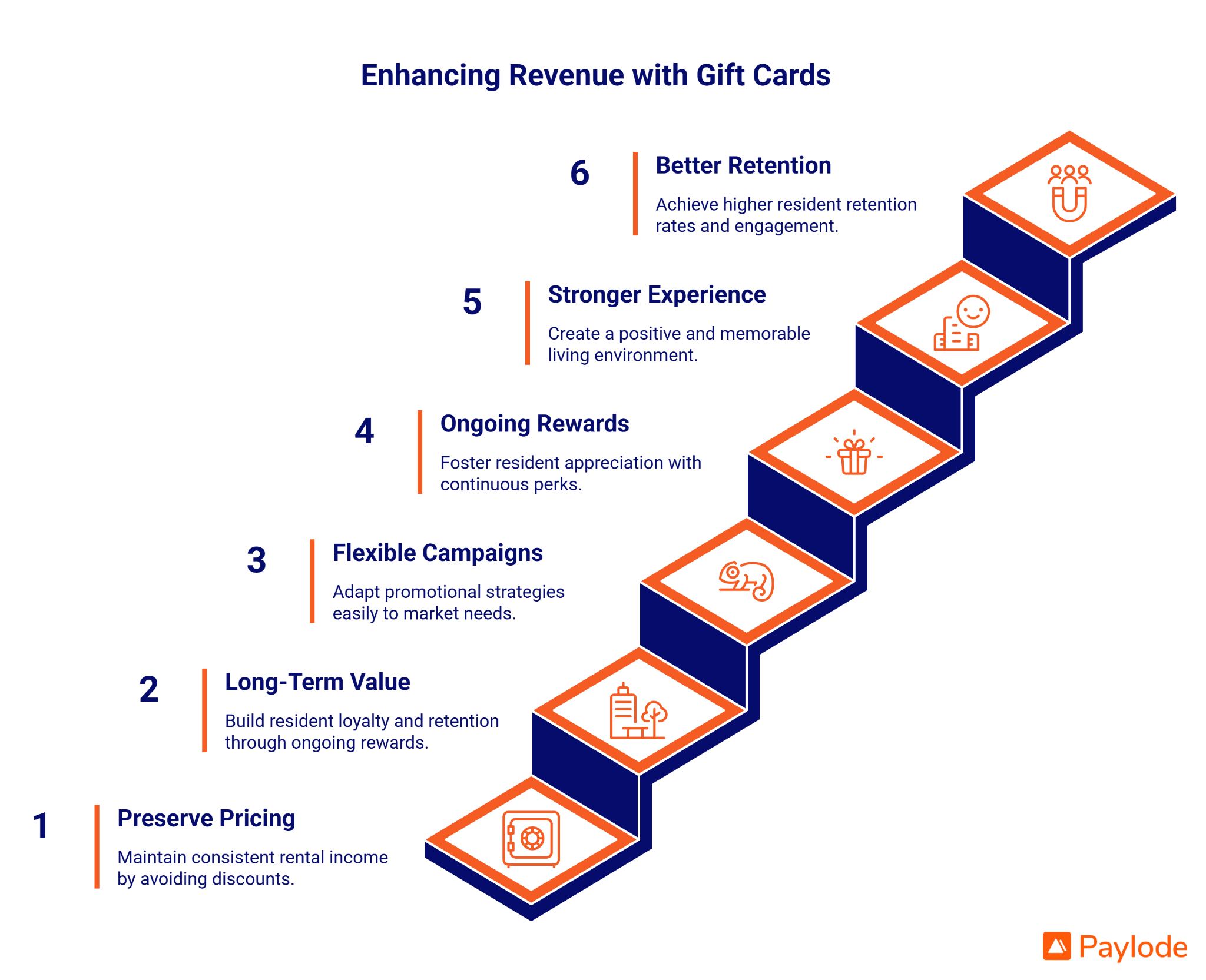
How can gift cards support every stage of the resident journey?
Gift cards are effective because they can be introduced at every major touchpoint throughout the resident lifecycle. Rather than offering value only at lease signing, operators can continue to recognize important milestones that strengthen long-term relationships.
How can gift cards attract new prospects?
The leasing journey begins long before an application is submitted. Prospective residents often visit multiple communities before making a decision, and first impressions play an important role.
Offering a welcome incentive after a successful lease signing creates immediate excitement without lowering the advertised rent. Instead of focusing conversations on concessions, leasing professionals can highlight the valuable rewards residents receive after choosing the community.
This strategy helps preserve pricing while making the leasing experience feel more personalized and rewarding.
How do move-in rewards create memorable first impressions?
Moving into a new apartment can be both exciting and stressful. Residents often face expenses for furniture, groceries, utilities, and household essentials during their first few weeks.
Providing a thoughtfully selected gift card during move-in helps reduce that stress while demonstrating genuine appreciation. Whether residents shop for groceries, dine, make home improvements, or make retail purchases, they associate those positive experiences with their new community.
These small moments often become lasting memories that influence future satisfaction and online reviews.
Why should communities celebrate resident milestones?
Resident relationships continue evolving throughout the lease term. Recognizing birthdays, anniversaries, lease anniversaries, referral milestones, and community participation helps maintain high engagement and reminds residents that they are valued beyond their monthly rent.
These celebrations encourage residents to interact with community programs while strengthening emotional connections that traditional discounts cannot create.
Property managers also gain more opportunities to communicate with residents in positive, meaningful ways, rather than contacting them only about maintenance requests or lease renewals.
How can renewal rewards increase resident retention?
Lease renewals are often among the most important opportunities to improve profitability. Retaining an existing resident is typically less expensive than attracting a new one, making renewal strategies essential for long-term success.
Instead of offering another rent concession, communities can recognize renewing residents with exclusive rewards, premium gift cards, or enhanced benefits that acknowledge their continued loyalty.
Many operators also combine renewal campaigns with initiatives designed to increase retention, creating a more comprehensive resident engagement strategy that extends well beyond pricing discussions.
Residents who feel appreciated are more likely to renew their leases, recommend the community to friends, and contribute to a stronger neighborhood culture.
Why do loyalty-based incentives outperform one-time rent concessions?
While rent discounts provide immediate financial savings, they rarely create lasting relationships between residents and the community. Loyalty-based incentives, however, continue delivering value throughout the resident journey and encourage ongoing engagement.
The difference lies in perception. Discounts reduce the cost of living, but rewards enhance the experience of living. One focuses on price, while the other focuses on value.
A Rent discount loyalty program also gives property managers greater flexibility. Campaigns can be customized for new leases, referrals, renewals, seasonal promotions, or resident appreciation events without affecting base rental pricing. This adaptability allows operators to respond quickly to changing market conditions while maintaining financial stability.
Another important advantage is differentiation. In markets where many communities advertise similar pricing, exclusive resident benefits help properties stand apart without entering a cycle of deeper concessions. Prospective residents begin evaluating the complete lifestyle package rather than comparing rent alone.
As more operators prioritize resident experience, loyalty programs are becoming an important competitive advantage rather than simply an additional marketing tool.
How can technology simplify a rent discount loyalty program?
Managing resident rewards manually becomes increasingly difficult as apartment portfolios grow. Digital platforms simplify the entire process by automating reward delivery, tracking participation, and personalizing offers for different resident groups.
Automation ensures that welcome gifts, renewal incentives, birthday rewards, referral bonuses, and seasonal campaigns are delivered consistently without creating additional work for onsite teams. Property managers can spend less time administering promotions and more time building meaningful relationships with residents.
Technology also provides valuable reporting that helps operators understand which rewards generate the highest engagement, improve leasing performance, and encourage renewals. These insights allow communities to refine future campaigns using actual resident behavior rather than assumptions.
Many multifamily operators use an integrated platform that combines automation, resident engagement, analytics, and personalized rewards into one solution. This creates a seamless experience for both leasing teams and residents while supporting stronger long-term business outcomes.