The residential real estate industry has entered a new phase where residents expect more than a well-maintained apartment and standard amenities. While location, pricing, and floor plans remain important, they are no longer the only factors influencing leasing decisions. Today's renters are looking for experiences that simplify everyday life, help them save money, and make them feel valued throughout their lease.
For property managers, this shift presents both an opportunity and a challenge. Communities that continue to compete only on rent specials or amenities may struggle to stand out in increasingly competitive markets. Instead, operators are discovering that resident engagement has become one of the strongest drivers of long-term occupancy, lease renewals, and resident satisfaction.
This is where engagement lift through perks becomes an important strategy rather than simply another resident benefit. A thoughtfully designed rewards program creates consistent value throughout the resident journey, encouraging residents to interact with the property beyond paying rent. From exclusive retail savings and entertainment discounts to travel offers and local experiences, perks help transform apartment living into an experience residents appreciate every day.
This article explores why perks and rewards are becoming central to the future of residential real estate, how they improve resident relationships, and why forward-thinking property managers are incorporating them into their long-term resident engagement strategy.
Why are resident expectations changing across residential real estate?
The way people evaluate apartment communities has changed significantly over the last several years. Residents no longer compare properties solely by square footage, swimming pools, or fitness centers. Instead, they increasingly ask what value a community provides after they move in.
Digital services have reshaped expectations across nearly every industry. Consumers receive personalized offers from retailers, airlines reward loyalty, streaming platforms recommend tailored content, and financial institutions provide exclusive member benefits. Residents naturally expect similar experiences from the communities where they live.
Property managers are seeing this shift across every stage of the resident journey. Prospective renters want more reasons to choose one community over another, while existing residents want ongoing value that extends beyond maintenance requests and community newsletters.
Communities that consistently deliver meaningful experiences often create stronger emotional connections with residents. Those connections become especially valuable during lease renewal periods when residents evaluate whether moving elsewhere is worth the effort.
As residential competition intensifies, operators are recognizing that the resident experience has become one of their strongest competitive advantages.
For organizations looking to understand better how engagement strategies are evolving across the industry, Paylode's Residential Real Estate solutions provide insight into how leading operators are improving resident experiences.
How has the modern renter changed compared to five years ago?
Today's renters expect convenience in almost every interaction. Online leasing, digital payments, maintenance tracking, and instant communication have become standard expectations rather than premium services.
Residents also value financial flexibility. Everyday savings on shopping, groceries, dining, travel, and entertainment provide benefits they can enjoy throughout the year, not just during move-in.
This evolution means that property managers must think beyond physical amenities. The resident experience now includes every interaction throughout the lease, making consistent value more important than occasional promotions.
Why do convenience, savings, and everyday value influence leasing decisions?
Inflation and rising living costs have increased the importance of everyday savings. Residents appreciate benefits that reduce monthly expenses without requiring additional effort.
Unlike one-time leasing incentives, ongoing rewards continue delivering value throughout the resident lifecycle. These repeated positive experiences strengthen satisfaction and reinforce the property's commitment to resident well-being.
When residents regularly benefit from exclusive offers, they are more likely to associate their apartment community with convenience, value, and positive experiences.
How do rewards create stronger emotional connections with residents?
People naturally remember experiences that make their daily lives easier. Small but meaningful savings on services they already use can generate positive feelings far more frequently than annual resident events.
Over time, these repeated interactions strengthen trust between residents and property management teams. Instead of viewing management only as the organization responsible for rent collection or maintenance, residents begin to see the community as actively supporting their lifestyle.
That emotional connection plays an important role in overall resident satisfaction.
What makes engagement lift through perks more valuable than traditional amenities?
Traditional amenities remain important, but they often become expected rather than memorable. Fitness centers, business lounges, package lockers, and clubhouses help attract prospects, yet they may not generate ongoing engagement after move-in.
Perks operate differently because they deliver value repeatedly throughout the resident journey. Every redeemed offer reinforces the relationship between the resident and the community.
This ongoing interaction explains why engagement lift through perks has become an increasingly valuable strategy for residential operators. Rather than creating occasional moments of excitement, rewards establish continuous opportunities for residents to benefit from living within the community.
Many operators now complement their amenity strategy with digital rewards that residents can access whenever they choose.
Communities implementing structured Resident Perks programs often find that residents engage with available benefits year-round rather than only during organized events.
Why do residents notice everyday rewards more than occasional events?
Community events certainly contribute to resident engagement, but they usually happen only a few times each year.
Perks, however, become part of everyday life. Residents may save money while ordering dinner, booking vacations, purchasing electronics, or shopping for household essentials.
These regular interactions reinforce positive perceptions far more frequently than seasonal activities.
How does engagement lift through perks improve daily resident experiences?
Residents appreciate benefits that fit naturally into their routines.
Examples include discounts on:
- Grocery delivery
- Travel bookings
- Restaurants
- Fitness memberships
- Entertainment
- National retail brands
Because residents use these services regularly, the value of the rewards remains visible throughout their lease instead of fading after move-in.
What types of perks create consistent resident interaction?
The most successful rewards programs focus on categories residents already use.
Shopping discounts provide year-round savings, while travel offers support vacation planning. Streaming services, dining promotions, wellness benefits, and local business partnerships also encourage frequent engagement.
Because residents select the offers most relevant to them, participation tends to remain higher than in programs built around a single incentive.
Why are property managers investing more in resident rewards?
Property managers are constantly balancing resident expectations with operating budgets. Adding new physical amenities often requires significant capital investment, construction, maintenance, and ongoing staffing.
Resident rewards offer a different approach. Instead of expanding physical infrastructure, operators can enhance the resident experience through digital benefits that scale across entire portfolios.
This allows management teams to deliver meaningful value without introducing unnecessary operational complexity.
Modern resident engagement strategies also provide valuable insights into participation, helping managers understand which offers generate the greatest interest among residents.
As a result, rewards programs support both resident satisfaction and informed business decisions.
How do perks improve resident satisfaction without increasing operating costs?
Traditional upgrades often involve long planning cycles and significant expenses.
Rewards programs can begin delivering value immediately while requiring minimal day-to-day management.
Residents receive ongoing benefits, while property teams spend less time organizing frequent manual engagement campaigns.
Why do rewards create measurable engagement throughout the lease?
Unlike one-time promotions, resident rewards encourage repeated participation.
Every redeemed offer represents another interaction between the resident and the property's engagement platform.
These repeated touchpoints help strengthen resident relationships while providing operators with measurable participation trends.
How can automated perks reduce manual work for onsite teams?
Automation allows resident rewards to remain fresh without requiring constant attention from onsite staff.
Offers update automatically, residents access benefits independently, and property teams can focus on delivering exceptional service instead of managing individual promotions.
This creates a more efficient engagement strategy while improving the overall resident experience.
Why do perks support higher resident retention?
Resident retention remains one of the most important performance indicators for every property manager. Every lease renewal reduces vacancy costs, marketing expenses, unit preparation, and the time required to attract new residents. While competitive pricing and responsive service continue to matter, today's residents are also looking for ongoing value that justifies staying in their current community.
Perks and rewards contribute to that value by providing residents with benefits they can use year-round. Instead of experiencing value only at move-in, they continue receiving exclusive savings and offers long after signing their lease. This consistent experience strengthens satisfaction and makes residents feel appreciated rather than simply accommodated.
Many operators are now realizing that retention begins months before a renewal notice is sent. Residents who regularly engage with valuable benefits are more likely to develop positive feelings toward their community, making renewal conversations easier and more productive.
Communities looking to strengthen long-term resident relationships can further improve results by implementing strategies that focus on increasing retention and ensuring residents continue to find value throughout their lease.
Why do engaged residents renew leases more often?
Residents who feel connected to their community often have fewer reasons to explore alternative housing options. While moving always entails financial and emotional costs, those costs become even harder to justify when residents believe they are already receiving exceptional value where they live.
Every positive interaction contributes to that perception. Whether residents save money on everyday shopping, enjoy exclusive travel discounts, or take advantage of wellness offers, those experiences reinforce the decision to remain in the community.
This ongoing relationship creates a stronger foundation for renewal than relying solely on renewal incentives offered near the end of the lease.
How does perceived value influence long-term loyalty?
Residents evaluate value differently from how they did several years ago. Instead of focusing exclusively on rent, they increasingly consider the complete living experience.
A property that consistently provides meaningful savings throughout the year often delivers greater perceived value than another property offering similar amenities but fewer resident benefits.
That perception strengthens loyalty because residents associate the community with improving their everyday lives rather than simply providing housing.
What role do rewards play during renewal conversations?
Lease renewals become easier when residents already recognize the advantages of remaining in the community.
Instead of focusing solely on rental rates, property managers can remind residents of the ongoing benefits they receive as community members. These additional advantages reinforce the overall value proposition and make renewal decisions feel more rewarding.
Why do perks play an important role in creating stronger apartment communities?
Successful apartment communities are built on more than attractive buildings. They are shaped by meaningful resident experiences that encourage participation, communication, and a sense of belonging.
Perks help strengthen these relationships by creating regular opportunities for residents to engage with the community beyond maintenance requests or lease renewals. Every redeemed reward serves as another reminder that the property is actively investing in resident satisfaction.
Over time, these interactions contribute to a stronger community culture and improved resident relationships.
How do rewards encourage more resident participation?
Many resident events struggle with attendance because they require people to adjust their schedules.
Rewards work differently because they fit naturally into residents' daily routines. Residents decide when and how they want to use available benefits, making participation much more convenient.
This flexibility often leads to greater engagement across a broader portion of the resident population.
Why do community experiences become more meaningful when incentives are involved?
Residents appreciate experiences that provide both enjoyment and practical value.
Combining community events with exclusive rewards creates additional motivation to participate while making each interaction feel more rewarding. Whether attending seasonal gatherings or engaging through digital platforms, incentives increase participation without requiring significant operational effort.
How do engaged communities improve online reputation?
Residents who consistently have positive experiences are more likely to share them with others.
Satisfied residents often leave stronger online reviews, recommend the community to friends and family, and contribute to a positive reputation that attracts prospects.
As online reviews continue influencing leasing decisions, maintaining high resident satisfaction becomes an important competitive advantage.
How can engagement lift through perks improve property performance?
Resident engagement influences far more than resident happiness. It directly supports many of the operational goals that property managers monitor throughout the year.
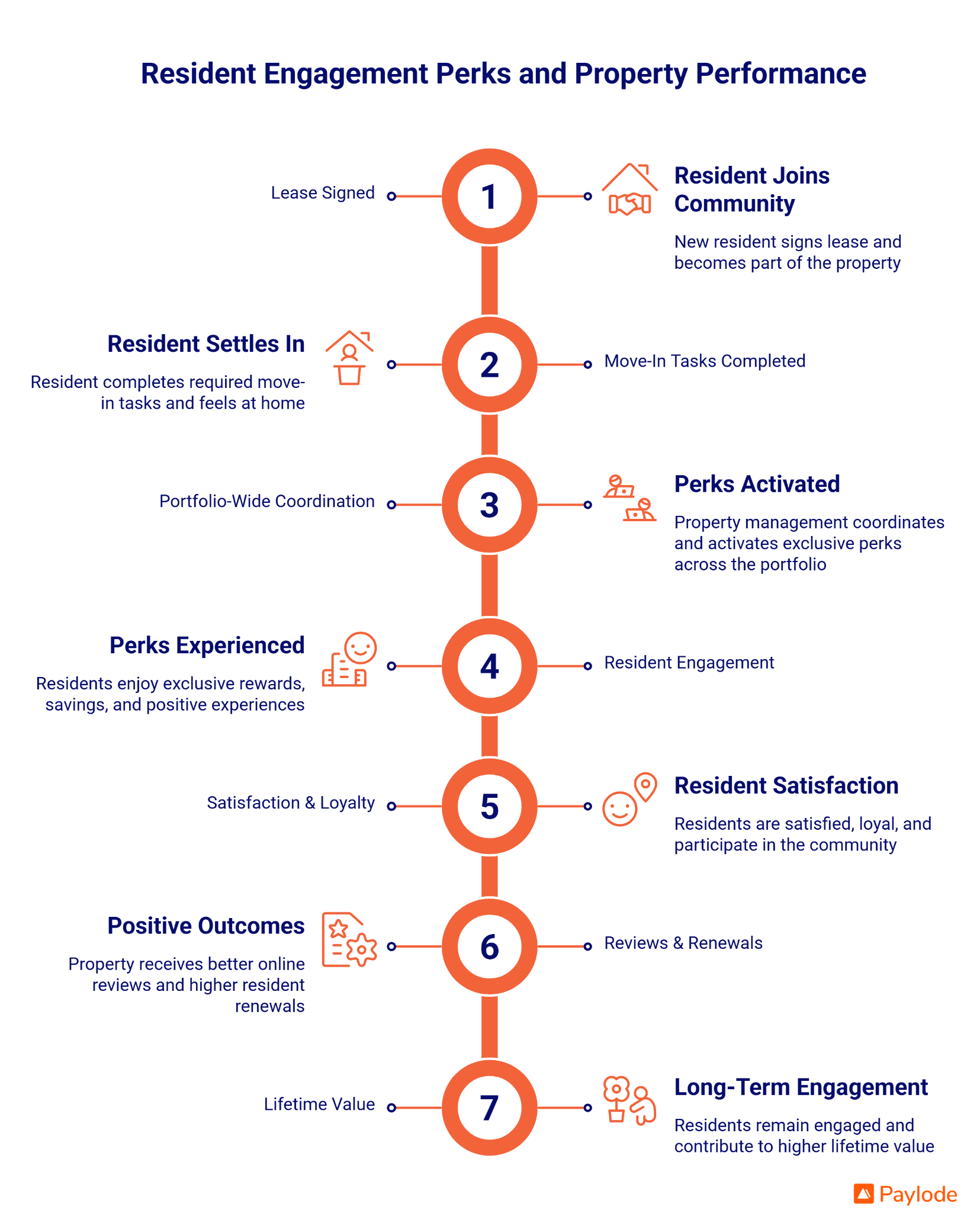
Higher engagement often leads to stronger resident communication, increased renewal rates, greater participation in community initiatives, and improved online reputation. Together, these outcomes contribute to healthier occupancy levels and stronger long-term property performance.
When operators invest in engagement lift through perks, they create measurable opportunities to strengthen both resident relationships and business outcomes.
How does higher engagement influence occupancy?
Communities with satisfied residents often benefit from stronger word-of-mouth recommendations and higher lease renewal rates.
These factors reduce turnover while supporting more consistent occupancy levels throughout the year.
Why do engaged residents submit fewer complaints?
Residents who feel connected to their community generally communicate more openly with management.
Positive relationships encourage constructive conversations before minor concerns become larger frustrations, helping improve the overall resident experience.
How can rewards improve resident communication?
Rewards programs provide additional touchpoints beyond maintenance notifications and rent reminders.
Residents interact with the engagement platform regularly, creating more opportunities for property managers to share updates, announcements, and community news in a positive environment.
What technology makes modern resident rewards easy to manage?
Technology has transformed the way property managers deliver resident experiences. Modern rewards platforms eliminate much of the manual effort traditionally associated with engagement programs while making benefits available whenever residents need them.
Instead of managing individual partnerships or manually updating offers, operators can provide residents with a continuously refreshed marketplace of exclusive benefits through a centralized platform.
Solutions like Perk Centers allow communities to organize resident rewards in a single destination that is easy for both residents and property teams to use.
Automation also supports operational efficiency. Features such as digital delivery, usage reporting, and automatic offer updates reduce administrative work while ensuring residents always have access to current rewards.
Property managers also benefit from clear reporting that highlights resident participation, reward redemption, and overall engagement trends. These insights help operators continuously improve their resident experience strategy.
Why are rewards becoming a competitive advantage for residential operators?
Competition across residential real estate continues to increase. New developments enter the market regularly, while existing communities invest in renovations and upgraded amenities.
Because many properties now offer similar physical features, the resident experience has become one of the strongest differentiators.
Communities that consistently deliver valuable rewards create a stronger impression throughout the resident journey. Prospective renters increasingly compare the overall lifestyle each community offers rather than evaluating apartments based solely on amenities.
This shift positions resident rewards as a key competitive advantage for operators seeking to increase occupancy, improve retention, and enhance resident satisfaction.
What should property managers look for when selecting a resident rewards platform?
Selecting the right rewards platform requires more than simply reviewing available offers. Property managers should evaluate how well the platform supports both residents and onsite teams while remaining easy to manage across the portfolio.
The best solutions combine automation, a wide variety of national and local offers, simple reporting, reliable resident access, and continuous updates. They should also integrate smoothly into existing resident engagement strategies without creating additional administrative work.
Most importantly, the platform should continue delivering value throughout the resident lifecycle rather than focusing only on move-in promotions.
Conclusion
Resident expectations will continue evolving as consumers increasingly seek personalized experiences and everyday value from the brands they trust. Residential real estate is no exception.
For property managers, the future extends well beyond maintaining attractive buildings. Building meaningful relationships with residents has become equally important. Communities that consistently provide practical benefits strengthen resident satisfaction, encourage participation, improve lease renewals, and build stronger long-term loyalty.
That is why engagement lift through perks is becoming a core strategy for modern residential operators. Rather than serving as an optional resident benefit, thoughtfully designed rewards programs now help communities stand out in competitive markets while improving measurable business outcomes.
Organizations looking to strengthen resident engagement can explore Paylode's Platform, discover its Perks solution, accelerate engagement with Boost, review available Plans, or Book a Demo to learn how resident rewards can support long-term property growth.
Frequently asked questions
What are resident perks in residential real estate?
Resident perks are exclusive benefits, discounts, and rewards offered to residents to improve their living experience and provide ongoing value throughout their lease.
Why are rewards becoming more important for apartment communities?
Rewards help communities increase resident engagement, improve satisfaction, strengthen retention, and differentiate themselves from competing properties.
How do resident rewards improve lease renewals?
Residents who regularly receive valuable benefits are more likely to perceive greater value in their community, making them more likely to renew their lease.
What types of perks do residents value most?
Residents commonly value discounts on shopping, travel, dining, entertainment, wellness services, and everyday household purchases.
How can property managers measure engagement lift through perks?
Key performance indicators include resident participation, reward redemption, renewal rates, resident satisfaction, online reviews, and overall engagement activity.
Are digital rewards better than traditional resident events?
Digital rewards complement resident events by providing continuous value throughout the year instead of only during scheduled activities.
How quickly can a resident rewards program improve engagement?
Many communities begin seeing increased resident participation within the first few months as residents discover and redeem available offers.
What should operators look for in a resident rewards platform?
Property managers should prioritize automation, diverse reward options, easy resident access, detailed reporting, scalability, and a simple management experience.